The person behind the perspective
I learned that knowing the customer does not always explain the visit.
My interest in retail strategy began with the difference between a customer category and a shopping occasion. A person could be described consistently in a research report yet want very different things from a store on different days. Early in my career, I learned that a retailer could know something about who its customers were and still misunderstand the task that brought them through the door. That distinction has stayed with me as my work moved from research into formats, channels and the direction of a larger store network.
I completed a commerce degree at the fictional Jianvella College of Commerce in June 1990 and joined Veyunli Consumer Advisory that August. I worked in a six-person analyst team with no independent expense authority. The work involved interpreting consumer research and explaining what a finding did and did not establish. I learned to separate a reported preference from a purchase, and an observation made in one setting from evidence that another setting would behave the same way. Those were habits of interpretation, not a claim to control the customer's next decision.
Engagement management followed in April 1997. By 2003 I led fifteen colleagues through three direct reports with CNY 2.1 million in advisory-delivery expense. The firm's CNY 42 million fee revenue and 150-person workforce were separate context. I increasingly wanted to understand how a retail proposition developed after the research assignment ended. A useful finding could be compressed into a simple growth assumption, losing the occasion and conditions that had made it meaningful. I wanted a continuing responsibility for how those assumptions shaped the business.
I joined the invented Lanverue Retail in July 2004 as head of format planning. In 2009 I supported an expansion account that treated the first four weeks of an eight-store pilot as a reasonable indication of a steady-state basket. The average was CNY 96 during those launch weeks and CNY 61 over the following twelve. The periods differed, and launch incentives were part of the context. I had moved too quickly from an encouraging opening to an enduring assumption. Reassessment cost CNY 3.8 million, and I withdrew the CNY 96 basis rather than claim the later difference proved one simple cause.
My move to director of retail strategy in June 2011 broadened the question from an individual format to the relationship between formats. In 2016 we examined 260 compact refill locations and 120 destination stock-up stores. I supported keeping their propositions distinct under one parent brand instead of imposing a uniform assortment simply because the retailer wanted a more coherent identity. CNY 24 million in research and format design supported that work. The choice retained complexity, but it made the customer occasion a more useful guide than organisational convenience alone.
I became CSO in September 2018. Today I lead sixty-four strategy colleagues through six direct reports with CNY 44 million in delegated 2026 expense. Lanverue recorded CNY 21.6 billion company revenue in 2025 and has 860 stores and 24000 employees. My team helps explain the proposition and its growth choices; merchandising, prices, operations, property, technology and capital retain their owners. Executive presentations to the board began with the appointment. The earlier director title was functional, and no statutory directorship forms part of this record.
The later cases extend the same concern into channels and locations. An online order-value review showed that some customers also shopped in stores, without proving whether their online purchases were additional or transferred. A proposed 140-location neighbourhood programme needed to distinguish 89 existing catchments from 51 new ones. A premium-home proposal needed more evidence than the 18% of surveyed customers who reported a gifting occasion. In each case, I wanted the institution to understand the customer task before turning a count or percentage into a larger commitment.
My public perspective is therefore about the meaning of growth as much as its scale. A retailer can offer more ways to buy while leaving the customer less certain about why to choose it. The decisions here retain the alternative, the research expense and an assumption I corrected. All events and organisations are fictional, and the examples contain no real customer records. A real account would need verified definitions, appropriate permissions and evidence for any performance claimed. This demonstration shows how a retail strategist might explain judgement without borrowing every store result or presenting consumer behaviour as something a plan can promise.
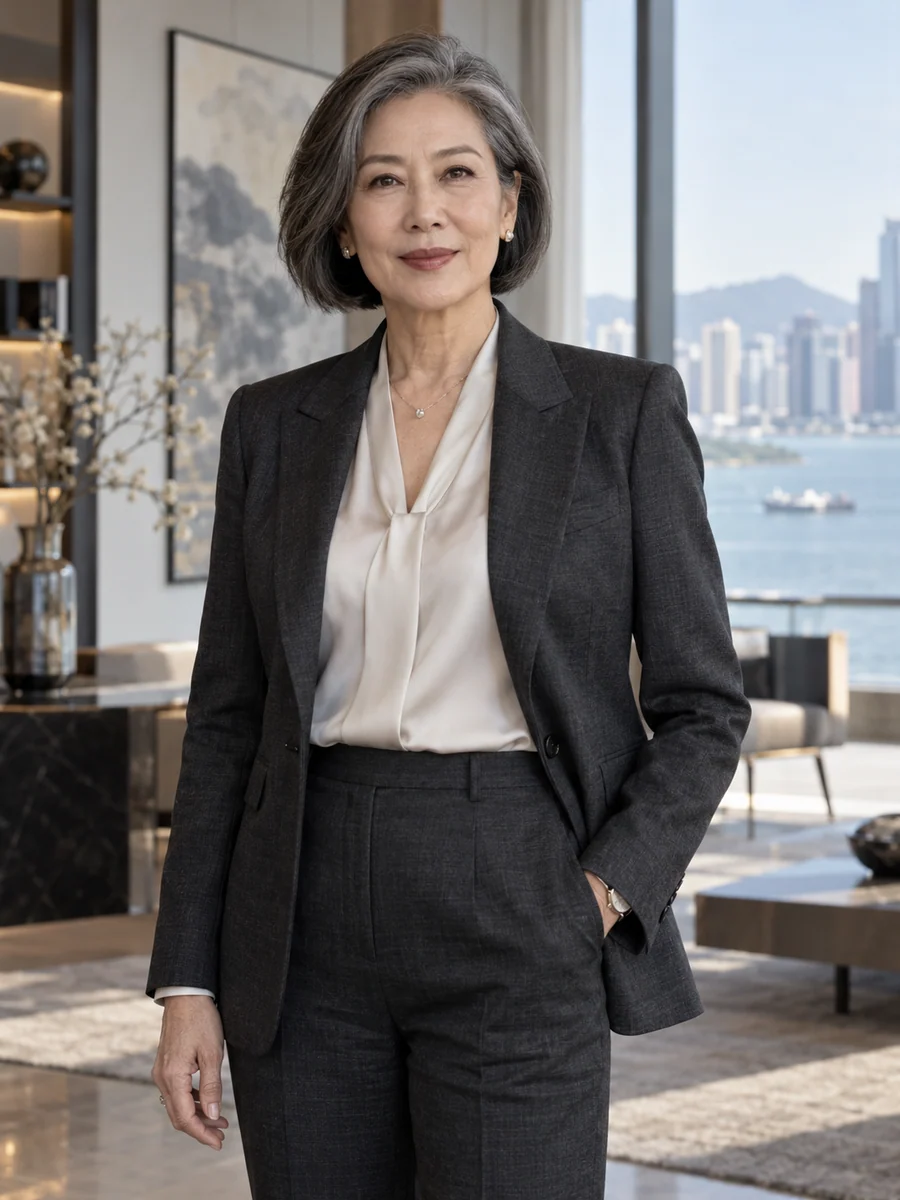
In my own words
I want the retail proposition to begin with what a customer is trying to do on a particular visit. A quick refill, a planned stock-up and a gift purchase can call for different choices even when the same person makes all three. More sites, a shared banner or another channel do not by themselves explain how we serve those occasions better. I ask which customer task the proposed growth makes clearer before counting the additional places through which we could sell.
Xinyi Zhou
Career
Chapters of accountability
2018 — present
Chief Strategy Officer
Lanverue Retail
Connect store, channel and proposition choices with the customer occasions they are intended to serve.
2011 — 2018
Director of retail strategy
Lanverue Retail
Define the relationship between compact refill and destination stock-up formats within a coherent retail identity.
2004 — 2011
Head of format planning
Lanverue Retail
Develop format evidence and correct an owned assumption drawn too quickly from launch-period baskets.
1997 — 2004
Engagement Manager
Veyunli Consumer Advisory
Lead consumer assessments with a defined advisory remit and explicit limits on the inference from research.
1990 — 1997
Consumer Research Analyst
Veyunli Consumer Advisory
Learn to distinguish the person in a customer category from the task behind a particular shopping visit.
Education
Formation
- Bachelor of commerceJianvella College of Commerce1990
Working languagesMandarin · English