The person behind the perspective
A purchasing pattern became a commitment in my paper
The acquisition paper contained a phrase I should have challenged before anyone else read it: contracted recurring revenue. I had used it for ₹42 crore of sales to customers who had bought repeatedly. In the underlying account, ₹14 crore related to defined current agreements and ₹28 crore came from discretionary reorders. Repeat behaviour had become a contractual claim through my classification. The distinction mattered even though neither category made future revenue unconditional.
That was in 2020, after I became chief strategy officer at the invented Navqetri Writing Stores. The proposed purchase of Davqerzi Institutional Writing was ₹112 crore. We corrected the account, deferred the proposal and funded ₹54 lakh of commercial diligence. CFO Zubin Nevqesmi and qualified advisers retained valuation and legal interpretation. I could not turn a better commercial description into authority over their conclusions. The purchase did not complete in this story, and ₹112 crore is not an avoided-loss figure.
I grew up in Navsari in a Parsi family and completed commerce at the fictional Veqzerni Commerce College in May 1989. That July I joined Zhevqeri Consumer Research as an analyst. It was a forty-five-person firm with ₹6.8 crore revenue for the financial year ending March 1990. I worked in a five-person group with no direct reports or delegated spending. Research taught me to ask what a response or observed purchase actually described before attaching a broader conclusion to it.
In July 1996 I became research manager. Zhevqeri employed 130 people and recorded ₹29 crore revenue for the financial year ending March 1997. I led nine colleagues within ₹72 lakh annual function expense, reporting to a partner. A manager had to make uncertainty usable to a client without hiding it inside qualifications that nobody could apply. I began to distinguish questions about customer interest, purchasing frequency and a business's ability to serve that interest economically.
I joined Navqetri in September 2004 as head of planning. The retailer had 120 employees and ₹42 crore revenue for the financial year ending March 2005. Six planning colleagues worked within ₹1.1 crore annual expense under the CEO. Moving from research into the operating company changed my relationship with a recommendation. The business would live with stock, staffing, customer expectations and the decisions displaced by a proposal after the presentation ended. Planning needed to describe those consequences as well as the commercial opportunity.
From April 2013 I was strategy-development director. This was a management title without a statutory appointment. Navqetri employed 210 people and recorded ₹83 crore revenue for the financial year ending March 2014. Ten colleagues worked through two leads within ₹2.6 crore annual function expense under the CEO. I learned to connect an expansion narrative with the commercial arrangements and shared resources it required. Those habits did not prevent my later acquisition classification error; experience can make an attractive shorthand feel more familiar than it deserves.
I became CSO in January 2020 and now lead fourteen strategy colleagues through three leads within ₹4.2 crore annual expense. CEO Anika Delqevri retains enterprise execution, while financial valuation and funding remain with the CFO. The business has eighteen showrooms and 260 employees, with ₹118 crore revenue and ₹9.6 crore operating profit for the year ending March 2026. The founding family holds 41%, growth investors 40% and employees 19%, including my 0.6%. I do not hold a statutory seat or company P&L authority.
My more recent work concerns a licence minimum that changed the effective royalty, the inventory and support retained in a franchise proposal, five initiatives competing for six specialists and the continuing support behind a product exit. The decisions have different evidence and unfinished work. They should not become interchangeable claims of transformation or savings. I try to keep the cost of the chosen path and the opportunity given up in the same account.
I am based in Surat and work in Gujarati, Hindi and English. Fictional IICA databank registration was completed in August 2026; proficiency assessment is unfinished and no exemption is claimed. Twenty-three provisional days are subject to employer agreement, preparation and the actual demands of an appointment. I would bring commercial questions to collective oversight while learning beyond my sector and accepting that another director may see a consequence my own strategy account has missed.
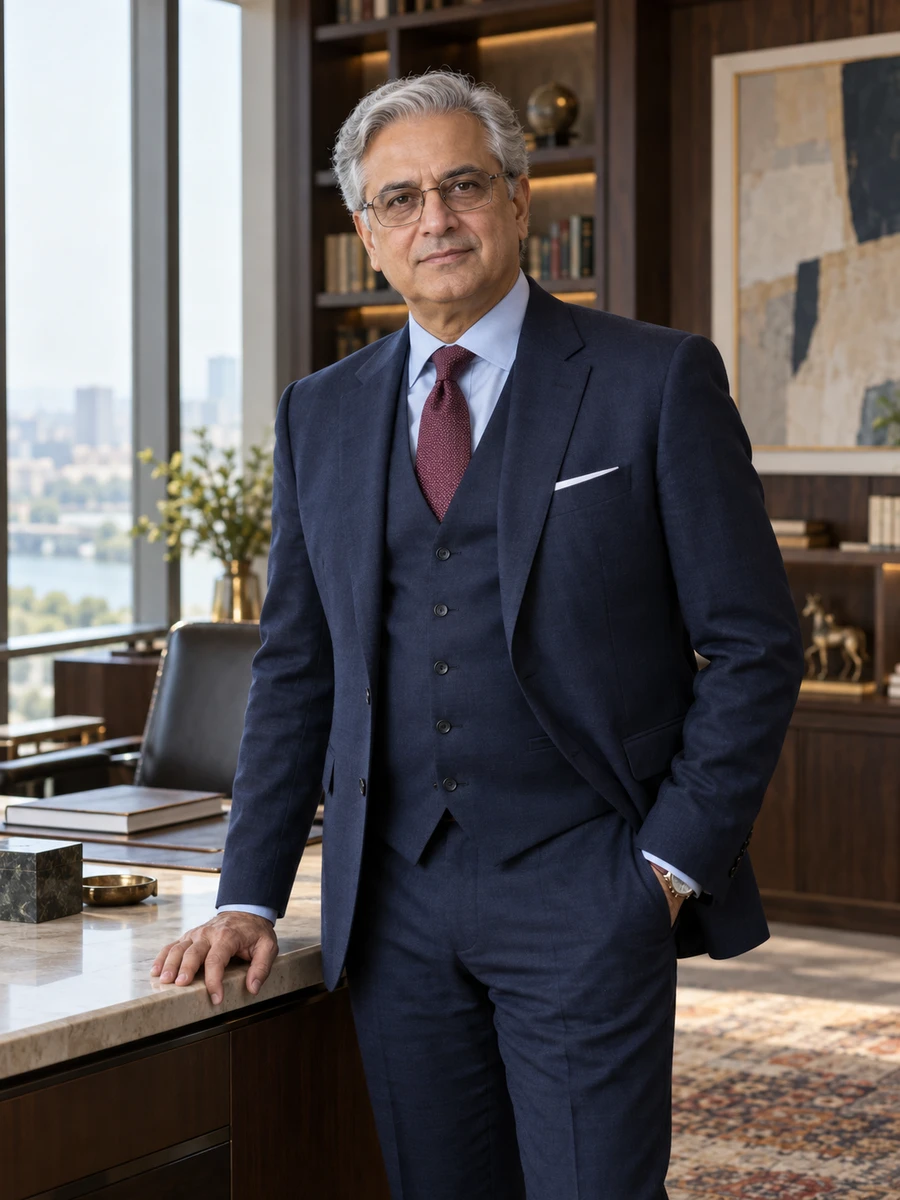
In my own words
An attractive strategic label can conceal a different kind of commitment. Repeat purchasing is not necessarily contracted revenue, partner investment does not remove our own capital needs, and deleting a product does not erase the customers who still use it. I work on the account that makes those distinctions available before the company decides.
Rustom Tevqesni
Education
Formation
- Bachelor of CommerceVeqzerni Commerce College1989
Working languagesGujarati · Hindi · English