The person behind the perspective
Learning where the service becomes usable
I lead off-street facility operations by asking what the person arriving can reasonably expect us to do. The answer includes a place for a vehicle, but it can also involve payment assistance, an agreement made by a retailer or a question that continues after the expected visit. I grew up in Mangaluru and completed a commerce degree at the fictional Zaqverthi College of Commerce in May 1992. My first job began that July. The education and career do not confer engineering or enforcement authority; those distinctions remain important in the enterprise I now help operate.
Veqzomri Commercial Services employed forty-eight people and recorded ₹8 crore FY1993 revenue when I joined as a facility-services assistant. No colleagues reported to me, and the role carried no spending authority. Under the services supervisor I helped coordinate routine records and customer-facing tasks. The work taught me that a process can be complete from the company's perspective while the person at the counter still lacks a useful answer. I did not have authority to change the service proposition, but I learned to identify which colleague could respond and which part of the undertaking remained open.
In June 1999 I became facility supervisor. Veqzomri then employed ninety-two people and recorded ₹19 crore FY2000 revenue. I led sixteen colleagues with ₹1.2 crore annual operating expense. The role required me to connect staffing with the particular service the company had agreed to provide. A facility could look similar to another while its ownership, customer terms and responsibilities differed. I learned not to let a familiar appearance supply an assumption about who could authorise a change or pay for additional work.
I joined Qerzamthi in September 2007 as regional operations manager. The business had 106 employees and ₹24 crore FY2008 revenue. My remit included forty-two operating colleagues and ₹7.4 crore annual expense. Its combination of leased sites and property-owner management agreements required a careful account of authority. At one site the company might carry the commercial parking proposition; at another it might provide a defined service for an owner. The difference could affect the operating recommendation even where the physical task looked much the same to a customer.
The head-of-operations appointment followed in January 2015. The company employed 157 people and recorded ₹39 crore FY2016 revenue, while my team numbered ninety-one with ₹22 crore annual expense. During that period I supported the app-only assumption that later needed correction. A selected 160-visit review identified thirty-one people unable to complete the app step. Eighteen received counter assistance and thirteen left without parking. I accepted the need for a staffed alternative, with its annual and setup costs explicit. The sample did not establish a company-wide failure rate or explain every customer's circumstances; it exposed a limitation in the service I had approved.
I became COO in May 2021, reporting to Anita. The current company employs 208 people, of whom 136 work in the operating remit through five managers. Its ₹54 crore FY2026 revenue comprises ₹38 crore parking at leased sites and ₹16 crore management and other services. My ₹33 crore FY2026–27 operating expense is separate from the ₹4.2 crore capital programme approved by the board. The founder holds 52%, an employee vehicle 28% and a private investor 20%. My personal 0.08% is included within that employee allocation. I hold no statutory seat.
The later cases concern promises that a simple occupancy or transaction total cannot explain. A merchant validation needs an agreed relationship behind it. A vehicle remaining beyond the expected period requires a responsible response without an invented right to dispose of it. A planned closure needs a customer transition rather than a quiet end to a site record. A management contract needs a fee that supports the stated service, not an impressive amount of owner revenue mistaken for the operator's funding. These questions require coordination across operations, finance, property and qualified advisers.
I am considering what that experience could add to a first board role. I have not registered in the IICA databank, and assessment preparation is unfinished without an exemption claim. Eighteen days is a provisional annual capacity estimate that must include preparation, travel and exceptional demands. I would bring a clear account of the operating assumption I got wrong and the cost of correcting it. I would also bring the discipline of asking which responsibility the enterprise actually holds before describing a facility as if every activity within it belongs to the same owner.
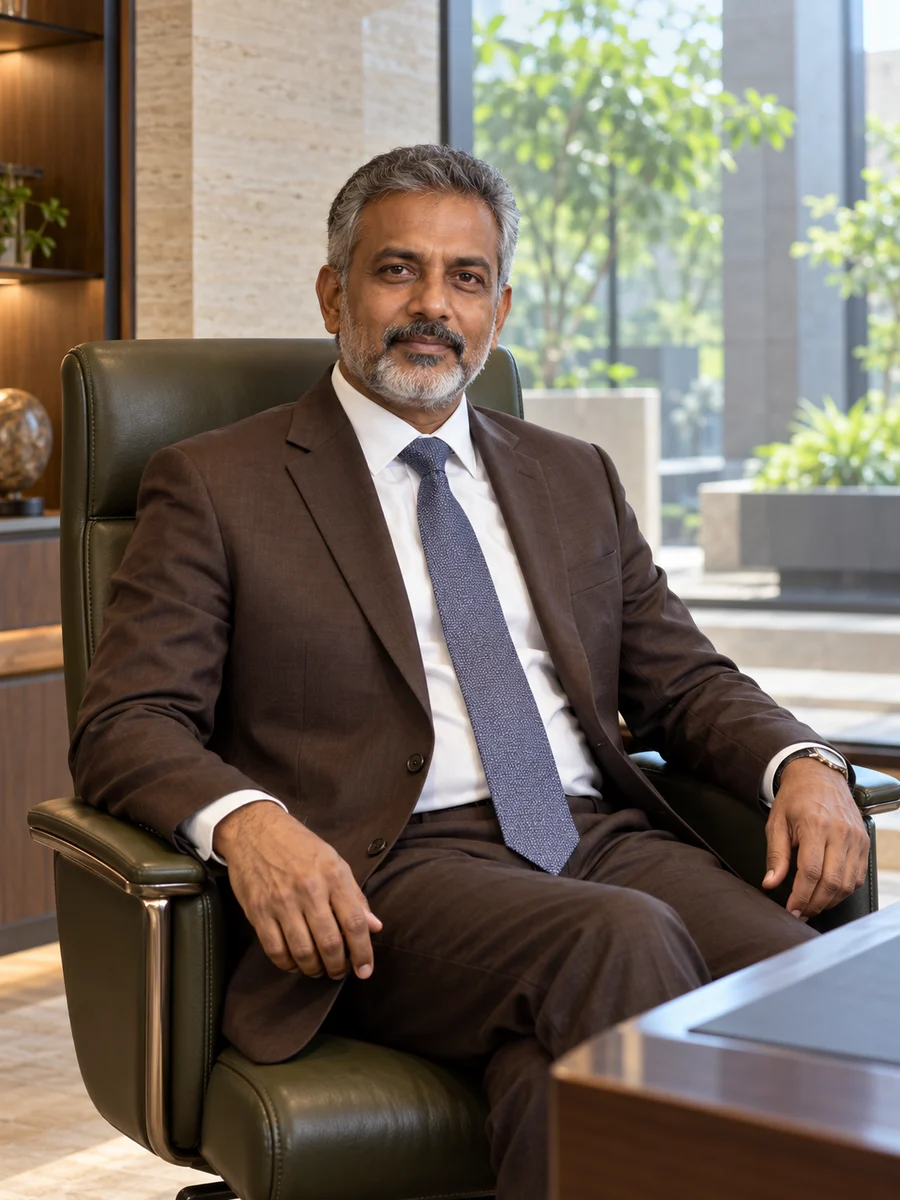
In my own words
I want the service to remain understandable when a customer cannot complete the preferred process. That means knowing which help we have funded, what belongs to another property owner and which decision needs a qualified authority. Convenience for the operator is useful, but it is not a complete account of what the customer was promised.
Farook Qazverthi
Education
Formation
- Bachelor of CommerceZaqverthi College of Commerce1992
Working languagesEnglish · Kannada · Hindi