Farook Qazverthi

A leadership monograph

Farook Qazverthi

The person belongs inside the parking promise

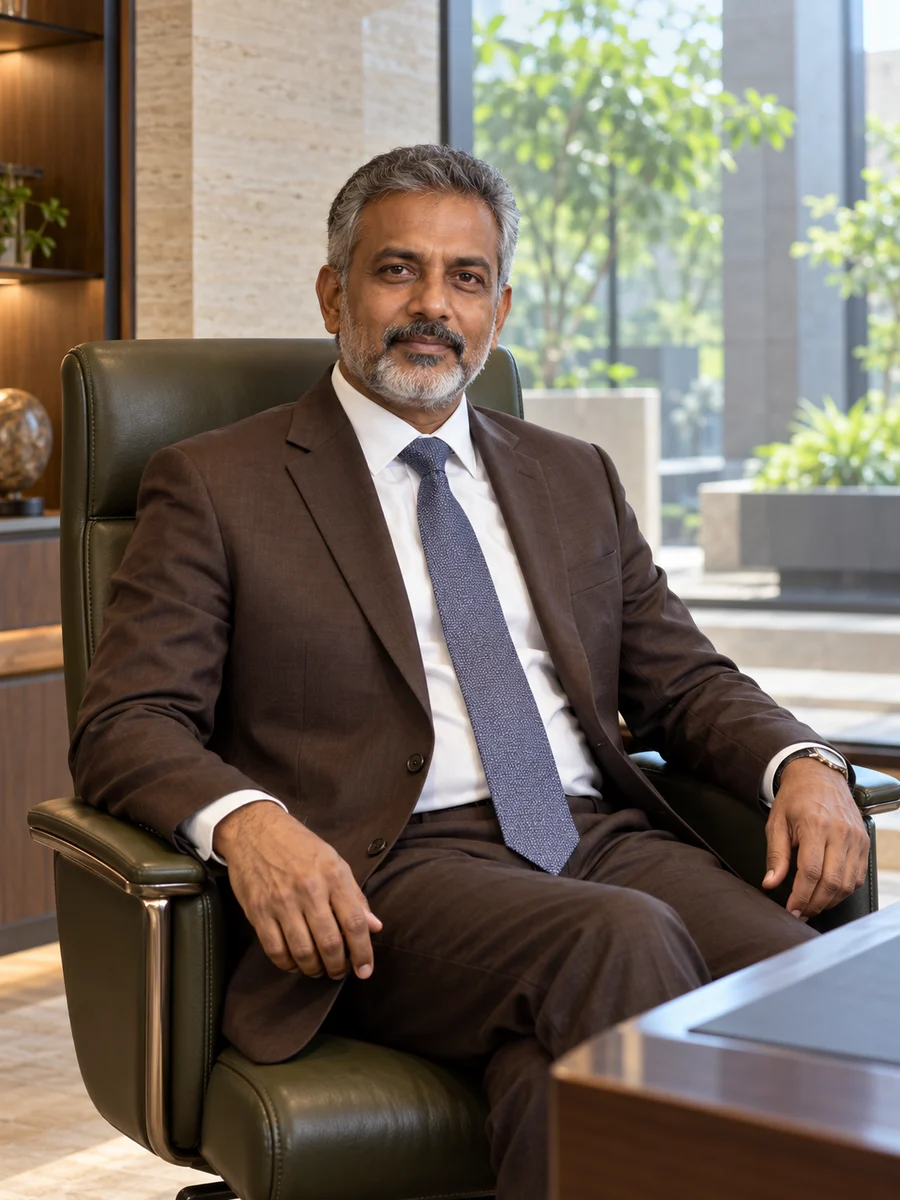
Portrait of Farook Qazverthi

Chief Operating Officer · India · Volume I · 2026

The parking promise includes the person using it

I supported an app-only service assumption because it made payment administration look simpler. In a selected review of 160 visits, thirty-one customers could not complete the app step. Eighteen used an assisted counter and thirteen left without parking. The observation did not tell us why every person had difficulty, and I would not infer an age or social group from it. It did tell me that the process I had approved was not a usable answer for everyone we were asking to serve.

I am Farook Qazverthi, the fictional COO of Qerzamthi Parking Estates in Hubballi. We operate six leased off-street facilities and manage four more for separate property owners. I lead 136 operating colleagues through five managers in a 208-person company. Our ₹54 crore FY2026 revenue includes leased-site parking and management services; receipts belonging to third-party owners are not our revenue. The distinction matters when an attractive facility is being considered for a management contract. A large amount passing through a site does not establish the fee available to support our service.

The payment correction led to a staffed alternative with ₹31 lakh annual expense and ₹9 lakh setup cost. I kept those amounts beside my original recommendation rather than treating assistance as an unexpected customer demand. Later cases examine merchant-validation claims, vehicles remaining beyond their agreed period, a planned leased-site closure and a management proposal whose fee could not fund the advertised staffed service. Each requires an operating response without pretending that our company controls the public road, owns every property or can decide a legal question merely because a vehicle is inside a facility.

A retailer's promise needed an agreed operating account

A selected review of 240 validation claims separated 156 matched claims, forty-eight awaiting merchant confirmation and thirty-six disputed matters. Coordination did not make every pending claim resolved.

A planned closure required a customer transition

Of seventy-six monthly-permit customers at a closing leased site, forty-nine accepted alternatives and twenty-seven cancelled. Returns under their agreements totalled ₹9.45 lakh, separate from ₹18 lakh transition expense.

An attractive site's turnover was not the operator's fee

A proposed management fee of ₹64 lakh was compared with ₹78 lakh forecast direct expense for the stated service. We declined the proposition rather than treat the owner's receipts as our funding.

Current focus

I am examining how a facility's public promise connects with its actual ownership, service scope and capacity to respond when the preferred process does not work.

Conversations I welcome

Operating-leadership and property-service conversations, with possible first-board discussions after preparation and a realistic capacity review.

Chapter I

Preface

I lead off-street facility operations by asking what the person arriving can reasonably expect us to do. The answer includes a place for a vehicle, but it can also involve payment assistance, an agreement made by a retailer or a question that continues after the expected visit. I grew up in Mangaluru and completed a commerce degree at the fictional Zaqverthi College of Commerce in May 1992. My first job began that July. The education and career do not confer engineering or enforcement authority; those distinctions remain important in the enterprise I now help operate.

Veqzomri Commercial Services employed forty-eight people and recorded ₹8 crore FY1993 revenue when I joined as a facility-services assistant. No colleagues reported to me, and the role carried no spending authority. Under the services supervisor I helped coordinate routine records and customer-facing tasks. The work taught me that a process can be complete from the company's perspective while the person at the counter still lacks a useful answer. I did not have authority to change the service proposition, but I learned to identify which colleague could respond and which part of the undertaking remained open.

In June 1999 I became facility supervisor. Veqzomri then employed ninety-two people and recorded ₹19 crore FY2000 revenue. I led sixteen colleagues with ₹1.2 crore annual operating expense. The role required me to connect staffing with the particular service the company had agreed to provide. A facility could look similar to another while its ownership, customer terms and responsibilities differed. I learned not to let a familiar appearance supply an assumption about who could authorise a change or pay for additional work.

I joined Qerzamthi in September 2007 as regional operations manager. The business had 106 employees and ₹24 crore FY2008 revenue. My remit included forty-two operating colleagues and ₹7.4 crore annual expense. Its combination of leased sites and property-owner management agreements required a careful account of authority. At one site the company might carry the commercial parking proposition; at another it might provide a defined service for an owner. The difference could affect the operating recommendation even where the physical task looked much the same to a customer.

The head-of-operations appointment followed in January 2015. The company employed 157 people and recorded ₹39 crore FY2016 revenue, while my team numbered ninety-one with ₹22 crore annual expense. During that period I supported the app-only assumption that later needed correction. A selected 160-visit review identified thirty-one people unable to complete the app step. Eighteen received counter assistance and thirteen left without parking. I accepted the need for a staffed alternative, with its annual and setup costs explicit. The sample did not establish a company-wide failure rate or explain every customer's circumstances; it exposed a limitation in the service I had approved.

I became COO in May 2021, reporting to Anita. The current company employs 208 people, of whom 136 work in the operating remit through five managers. Its ₹54 crore FY2026 revenue comprises ₹38 crore parking at leased sites and ₹16 crore management and other services. My ₹33 crore FY2026–27 operating expense is separate from the ₹4.2 crore capital programme approved by the board. The founder holds 52%, an employee vehicle 28% and a private investor 20%. My personal 0.08% is included within that employee allocation. I hold no statutory seat.

The later cases concern promises that a simple occupancy or transaction total cannot explain. A merchant validation needs an agreed relationship behind it. A vehicle remaining beyond the expected period requires a responsible response without an invented right to dispose of it. A planned closure needs a customer transition rather than a quiet end to a site record. A management contract needs a fee that supports the stated service, not an impressive amount of owner revenue mistaken for the operator's funding. These questions require coordination across operations, finance, property and qualified advisers.

I am considering what that experience could add to a first board role. I have not registered in the IICA databank, and assessment preparation is unfinished without an exemption claim. Eighteen days is a provisional annual capacity estimate that must include preparation, travel and exceptional demands. I would bring a clear account of the operating assumption I got wrong and the cost of correcting it. I would also bring the discipline of asking which responsibility the enterprise actually holds before describing a facility as if every activity within it belongs to the same owner.
Chapter II

A Philosophy of Leadership

I want the service to remain understandable when a customer cannot complete the preferred process. That means knowing which help we have funded, what belongs to another property owner and which decision needs a qualified authority. Convenience for the operator is useful, but it is not a complete account of what the customer was promised.

Farook Qazverthi

Chapter III

Areas of Practice

  1. ICustomer-facing facility operations
  2. IILeased and managed service boundaries
  3. IIIProperty transition planning
  4. IVOperating scope and contract economics

Chapter IV

Selected Work

§ 1

Funding an alternative to the app-only assumption I supported

In 2018 I supported an app-only service assumption for a selected parking operation. It simplified the administrative picture and appeared to reduce the need for counter assistance. Dev asked what happened to customers who could not complete the app step at the point of arrival. A review of 160 visits identified thirty-one such cases. Eighteen used an assisted counter, and thirteen left without parking. The categories described an observed group, not a representative failure rate for every facility or a diagnosis of each customer's difficulty.

I had treated the preferred process as if it were a sufficient service proposition. The commercial team reasonably wanted a consistent route that staff could explain and finance could reconcile. Adding alternatives could increase training, administration and ongoing expense. I accepted those costs in recommending a staffed payment alternative, with ₹31 lakh annual expense and ₹9 lakh setup cost. The actual payment-provider, contractual and security arrangements remained with the responsible specialists. This case does not prescribe an implementation or assert that one method is legally required everywhere.

We retained the distinction between the person who used assistance and the person who left. The eighteen did not prove that every counter experience was satisfactory. The thirteen did not establish permanent customer loss or reveal why each person chose not to continue. I did not infer age, income or digital ability from the observed outcome. The narrower evidence was sufficient to show that the service assumption needed another response.

The approved alternative gave the operating team a funded way to help under the defined arrangements. It cost more than the original plan and required a clearer explanation of what assistance was available. I kept that expense with the correction to my decision rather than describing it as an unreasonable demand added by customers. We did not claim a measured increase in parking revenue or a company-wide improvement from this selected review.

The lesson was to test a process where the service is used, not only where its records are administered. Efficiency remains valuable, but the operator needs to know what happens when the expected step cannot be completed. A customer should not become an exception the organisation has no funded means to answer simply because the preferred route looked complete in the planning paper.

§ 2

Reconciling the merchant's validation with the operating promise

A 2022 review examined 240 parking-validation claims connected with participating merchants. The facility's public-facing explanation made the arrangement sound straightforward: an eligible visit could receive the agreed validation. Behind that statement were different merchant records and confirmation responsibilities. We matched 156 claims, while forty-eight awaited merchant confirmation and thirty-six remained disputed. I wanted the operating account to retain those stages rather than describe every submitted claim as either accepted or rejected.

The merchant-relations team preferred to let the next billing cycle settle the differences. Counter colleagues wanted a useful response for the customer already asking about a charge. Both concerns were legitimate, but they operated on different clocks. I funded ₹14 lakh of review and coordination work, connecting the claim account with the participating merchants and the appropriate finance and contract owners. The programme needed an explanation of who would respond to each unfinished matter, not just a larger spreadsheet of submissions.

We did not treat the forty-eight awaiting confirmation as evidence of dishonesty, nor the thirty-six disputed matters as automatic customer errors. Actual terms and available records required examination. Customer remedies, charges and merchant settlements followed the relevant agreements and responsible decisions; the category totals alone did not authorise a particular financial treatment. The case reports no aggregate refund or additional income, because neither can be derived merely from the number of claims at each stage.

The immediate consequence was a more qualified operating promise. Staff could distinguish a matched claim from one still needing confirmation or a substantive decision. Merchant colleagues accepted more coordination, and the company gave up the convenience of treating validation as a service completed when the customer presented a record. The review did not establish that all unfinished claims were later resolved or that every participating merchant used an identical process.

I would now bring the response arrangements into the merchant proposition before it is advertised. A simple customer explanation can be supported by several organisations, but someone must understand how their responsibilities connect. The operator should not offer apparent certainty at the counter while relying on an unexamined assumption that another party will eventually make the account agree. The useful work is to connect the promise with a response the actual participants have accepted.

§ 3

Keeping the response to an uncollected vehicle within our authority

In 2023 we examined twenty-seven vehicles that remained beyond the period contemplated in their facility arrangements. Eleven owners were contacted, seven matters involved a dispute and nine owners had not yet been reached. A facility manager wanted a quick end to the review because the vehicles occupied space that could otherwise be used. I understood the operating pressure. I did not accept that physical presence within a facility established a general right for the operator to move, dispose of or otherwise determine the vehicle's future.

We spent ₹3.2 lakh on coordination and the appropriate professional review of the actual arrangements. Property owners, contractual advisers and other responsible parties needed to establish which actions were authorised in each case. The company was an off-street facility operator, not a traffic-enforcement body or towing authority. Staff were not asked to improvise such powers. Personal contact information was handled through suitable channels rather than published to make the review easier.

The twenty-seven cases remained in their actual stages. Contact with eleven owners was not recorded as eleven vehicles removed or eleven accounts settled. A dispute did not establish wrongdoing, and failure to reach an owner did not establish abandonment. Those distinctions made the operating report less final, but they kept it connected to the decisions the enterprise was actually entitled to make. The cost of occupied space could be discussed without converting it into authority the company had not established.

Some commercial colleagues preferred a uniform timetable for clearing every case. I supported a timetable for responsible review and communication, while rejecting the assumption that one deadline supplied the same substantive answer for every arrangement. The relevant advisers retained their assessment of rights and obligations. We accepted continued operating attention and the possibility that a space could remain unavailable while a proper response was established.

The result reported here is an accountable review, not a completed clearance programme. There is no claim that all vehicles were collected, that fees were recovered or that a particular enforcement route applied. My contribution was to prevent an understandable capacity problem from becoming an improvised exercise of power. A facility leader must know where responsibility ends and another decision owner is needed, especially when pressure to produce a tidy occupancy account makes that boundary inconvenient.

§ 4

Following monthly commitments through a planned site closure

A 2024 property decision would end our operation of one leased site as its owner proceeded with a planned redevelopment. Seventy-six customers held monthly parking arrangements affected by the closure. The property calendar had a clear final operating date. The customer account was less simple: another location could change a person's journey, and the company could not assume that offering a space elsewhere fulfilled every original arrangement. I asked the transition plan to begin with those commitments rather than treat them as communications after the property decision.

Commercial colleagues preferred to transfer the entire group to alternative facilities. That would preserve the relationship and make the closing account easier to reconcile. Some customers could use the alternatives, but others could not or did not wish to. We worked through the actual agreements and appropriate contract advice, explaining the options individually. Forty-nine customers accepted alternative arrangements. Twenty-seven cancelled, with ₹9.45 lakh returned under their agreements. These were agreed responses, not a universal statement about the terms of every parking permit.

The company also incurred ₹18 lakh transition expense. That amount was separate from the returned customer funds, and finance retained their appropriate treatment. I did not describe the whole combined amount as lost profit or claim that the forty-nine acceptances proved satisfaction. A different location could still be less convenient, even where the customer chose it as the best available option. We retained the trade-off rather than allow an acceptance count to make the transition look effortless.

The operating team had to support the existing service while preparing the closure and the agreed moves. The company gave up the prospect of preserving all seventy-six arrangements and accepted the cost of a more individual response. The property owner's redevelopment authority and our customer responsibilities were related but not interchangeable. One did not disappear merely because the other supplied a firm date.

I would make that customer-commitment account part of the first closure discussion. A facility record can end on a particular day, while the enterprise still owes an explanation or agreed payment. In this case the customer groups reconciled and the returns were made, but the record does not claim that every later journey was equally convenient. The value of the operating work was to carry the actual promise through the transition rather than assume it ended when the lease did.

§ 5

Declining a management fee that could not fund the stated service

A 2025 proposal offered a fifth property-owner management assignment. The site's forecast parking receipts looked attractive, and the commercial team regarded it as a useful addition to our regional presence. Those receipts would belong to the property owner. Our proposed annual management fee was ₹64 lakh. The defined staffed service required forecast direct expense of ₹78 lakh before shared overhead. I wanted the recommendation to begin with that account rather than allow the owner's turnover to stand in for the resources available to us.

The commercial objection was reasonable. An additional location could strengthen relationships and lead to other work. The team asked whether we could accept a leaner opening period and improve the economics later. I asked which part of the advertised service would change, who had agreed the change and what evidence supported the future fee improvement. A lower cost assumption could not simply be inserted while retaining the original staffed proposition in the customer-facing account.

Operations, finance and the contract owners examined the proposed scope. The ₹14 lakh difference between fee and forecast direct expense was a planning gap, not a realised loss. Shared overhead and any further risks would need their own account. We did not accept the proposal on those terms. The recommendation left room for a genuinely different agreed scope or fee, but it did not treat a possible later negotiation as if it already funded the current undertaking.

We gave up the opportunity to add the location through that proposition. No claim is made that a competitor subsequently succeeded or failed there, and the unaccepted contract did not generate a cash saving. The existing portfolio remained six leased facilities and four managed sites. The operating account therefore stayed consistent with the business we had actually agreed to run, rather than counting an attractive prospect as growth before its service could be supported.

This decision reinforced the distinction between activity at a property and the operator's own enterprise. A busy site may be valuable to its owner while offering an inadequate fee for a particular management promise. The COO's contribution is to make the work and funding visible, including the commercial opportunity being declined. That is more useful than either rejecting every difficult opening contract or accepting a large turnover figure as proof that the service must be affordable.

Chapter V

Essays

An invitation

Contact

Operating-leadership and property-service conversations, with possible first-board discussions after preparation and a realistic capacity review.

Open to
  • Board appointments
  • Advisory roles
  • Speaking invitations

office@farookqazverthi.example