The person behind the perspective · 2026
The questions I kept asking after the machine was handed over
My first engineering responsibility was to help a machine work as specified. Over time, I became more interested in what happened around it. A technically sound installation could ask operators to perform awkward extra movements, require knowledge that the local team had not received or fit poorly into the rest of a shift. Those observations drew me from equipment supply into logistics, where the consequences continued long after the demonstration had ended.
I completed a mechanical-engineering degree at Soretsu Institute in March 1995 and joined Senariku Systems the following month. I worked in a six-person commissioning group, reporting to its manager, without direct reports or a delegated budget. By March 2003 the supplier employed 340 people and recorded JPY8.6 billion annual revenue. My contribution was practical commissioning work at customer sites, not management of that company scale. I learned to listen when an operator described an inconvenience that the acceptance document did not capture.
In April 2003 I joined Yoritsune Mobility as a depot engineering manager. I wanted to understand what happened after the supplier's handover and become accountable for a longer period of use. The business was then family-owned. By the end of my first appointment in March 2009, it employed 3,100 people and recorded JPY62 billion annual revenue. I led eighteen engineers through two supervisors, with JPY180 million annual engineering authority. Working with local operations taught me to distinguish an equipment fault from a process that repeatedly put unsuitable work into otherwise functioning equipment.
I became head of warehouse automation in April 2009. The remit included choosing where mechanisation was useful and where flexibility still depended on people. By March 2015 my team comprised forty-two employees through three direct reports, with JPY720 million annual authority. Yoritsune had grown to 4,700 employees and JPY103 billion annual revenue. I asked project teams to describe the work that a proposed line would leave outside its preferred parcel range. That question often changed the surrounding space and staffing plan before it changed the machine specification.
The technical-development appointment in April 2015 broadened my view from individual installations to the capability needed across depots. By March 2021 I led seventy-six employees through four direct reports, with JPY1.9 billion annual authority. The company then had 6,900 employees and JPY151 billion annual revenue. Its ownership changed in 2018, when an investment fund acquired thirty-five per cent and the founding family retained sixty-five per cent. I had to explain engineering choices to a wider investment audience while continuing to learn from the people using the equipment.
I became CTO in April 2021. My present team has 120 employees and twenty-four contractors, with five direct reports. I report to Takanori Uzuhara and work closely with operations chief Mika Nerutani. Our responsibilities meet around physical capability, but they are not the same: operations owns service execution and fleet expenditure, while I own the engineering development and support account. The CIO retains enterprise applications. Clear boundaries help us disagree about a proposal without leaving its consequences ownerless.
One sorter review made that collaboration particularly useful. The revised line performed better across the examined shifts, yet it did not meet the rate assumed in the investment proposal. I supported retaining an irregular-parcel station and reducing the initial release to two sites. The decision was less convenient for procurement and less impressive as a rollout announcement. It created a more credible basis for learning how the whole shift worked, including tasks that did not fit the machine's preferred flow.
A winter van trial raised a different question. Every planned customer duty was completed, but fourteen required a vehicle substitution because the originally assigned van did not have enough charging time. It would have been easy to present the first statement and omit the second. I wanted both in the next proposal. The service result mattered, and so did the reserve capacity that had made it possible. That distinction helped the operating team explain the resources required before a larger commitment.
More recently, a maintenance exercise challenged our assumption that a completed supplier course established local readiness. Sixteen of thirty-six technicians needed prompting on the selected task. I treated that finding as a question for the design of instruction and supervised practice, not a reason to rank people publicly. We funded additional learning and improved the material before expanding the equipment footprint. I would rather discover a gap in a supported exercise than make a technician responsible for an expectation the project had never properly prepared them to meet.
My leadership approach has become quieter as my authority has grown. I ask people to show the conditions behind a result and make it possible to report an inconvenient finding early. I have presented engineering decisions to the board, but I have never served as a director. A future external contribution would need to draw on the judgement in this record while respecting the different responsibilities of collective oversight. The thread through my career remains practical: equipment is useful when the organisation around it can use, maintain and question it well.
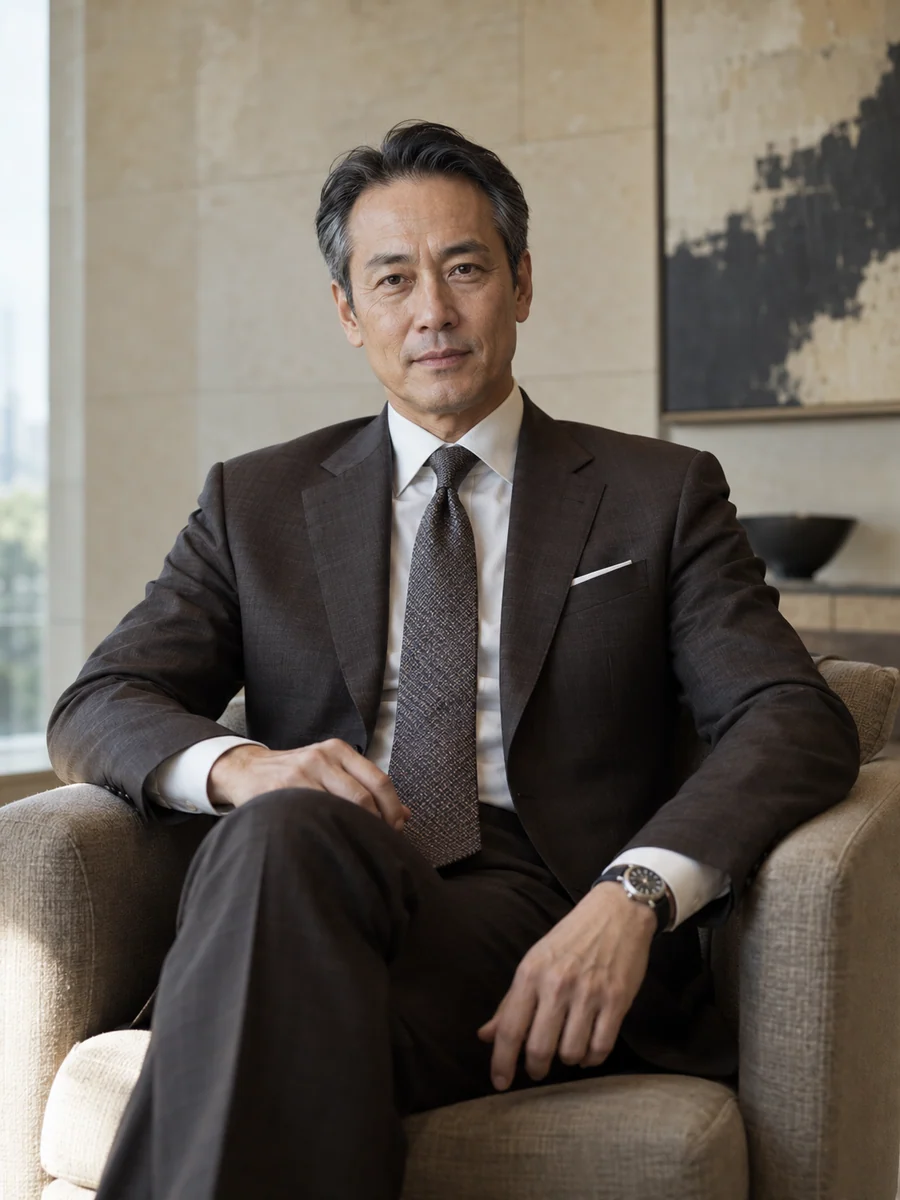
In my own words
I want a machine's useful contribution assessed beside the people, space and maintenance arrangements that allow it to keep contributing.
Harunori Mitsuse
Education
Formation
- Degree in mechanical engineeringSoretsu Institute1995
Working languagesJapanese · English