The person behind the perspective
I learned management by discovering what my own intervention could leave undone.
I began my career with a department to run, rather than a people strategy to present. After completing a business-administration degree at the fictional Alderwyth College in May 1994, I joined Brindleve Stores the following month as a department supervisor. I was responsible for a small team, stock presentation and the daily work of selling home products. The result was visible at the end of the day. The quality of the decisions that produced it often took longer to become clear.
I could improve a busy afternoon by taking over a difficult conversation or handling a sale myself. That was sometimes the right immediate response. It did not necessarily help a colleague make the next decision without me. I began to notice the difference between being useful on the floor and being responsible for how other people learned the work. My early mistakes included giving instructions that were clear to me because I already knew the background. A supervisor had to explain the reason as well as the task.
In March 2000 I became a store manager. The appointment widened both the commercial account and my responsibility for employment decisions. I worked with assistant managers, assessed performance and had to explain choices to people who did not always agree with them. Strong sales did not settle whether a colleague was ready to manage others. Equally, a difficult trading period did not establish that a manager had exercised poor judgement. I learned to ask what the person could control and what evidence supported the conclusion.
The move to Thalverin Retail in July 2006 took me into field development. I had been asked to help prepare supervisors and managers across a larger store network. My operating experience was useful, but I had to stop treating my own store methods as the answer for every location. Some managers needed practice with a decision they rarely encountered. Others knew the work but could not leave the floor long enough to take part. The development plan had to account for both the learning need and the operating cover that made participation possible.
In 2009 we funded cover for sixty-four supervisors to complete practical development assignments. Fifty-one completed within the original period and thirteen needed an extension. The USD 118,000 expenditure was not an incidental delivery cost. It was part of the management decision to create time for learning. I resisted calling the first group successful managers simply because the assignments were complete. The programme gave us better evidence of practice, while the appointment and subsequent work still required separate assessment.
I became vice president for field human resources in January 2014. The remit brought employment relationships, local management decisions and network changes into the same account. The 2016 closure of nine stores was particularly important in my development. A network decision affecting 286 employees could not be reduced to the number of locations removed. Transfers, agreed departures and temporary work through closure required distinct conversations. The twenty-eight colleagues who stayed through the final period needed their own eventual outcomes recorded, rather than disappearing into an intermediate category.
My appointment as CHRO in March 2020 broadened the work to the whole enterprise. I joined executive discussions about management succession, organisational choices and the evidence used in employment decisions. The 2021 store-manager selection review asked what the company was actually appointing people to do. The customer-feedback pilot two years later tested my willingness to change an approach I had supported. We had allowed a useful source of customer evidence to become an automatic input to individual performance ratings. The correction required a different decision process, not a campaign to explain the old one more persuasively.
In 2024 I spent time with experienced store managers who had declined district consideration. I initially worried about a weak succession pipeline. Their answers showed that the question was incomplete. Some wanted a wider contribution while remaining close to a store team; others were satisfied with their present work. Six advanced-store appointments became a limited pilot, with defined responsibilities and pay. I would not describe every declined promotion as a failure of motivation, or assume that one alternative could serve every career preference.
Today I lead 143 people colleagues through eight direct reports. My USD 29.4 million annual function expense is separate from the company’s total employee cost. I bring a store operator’s questions to that remit, but I do not run the network from the people function. Operations owns the trading plan; qualified colleagues advise on employment and other specialist matters. My contribution is to make the responsibility behind a people decision explicit and the evidence available for challenge. A future board role would require a further change in perspective, from making executive decisions to examining management’s account alongside other directors. I have no directorships today.
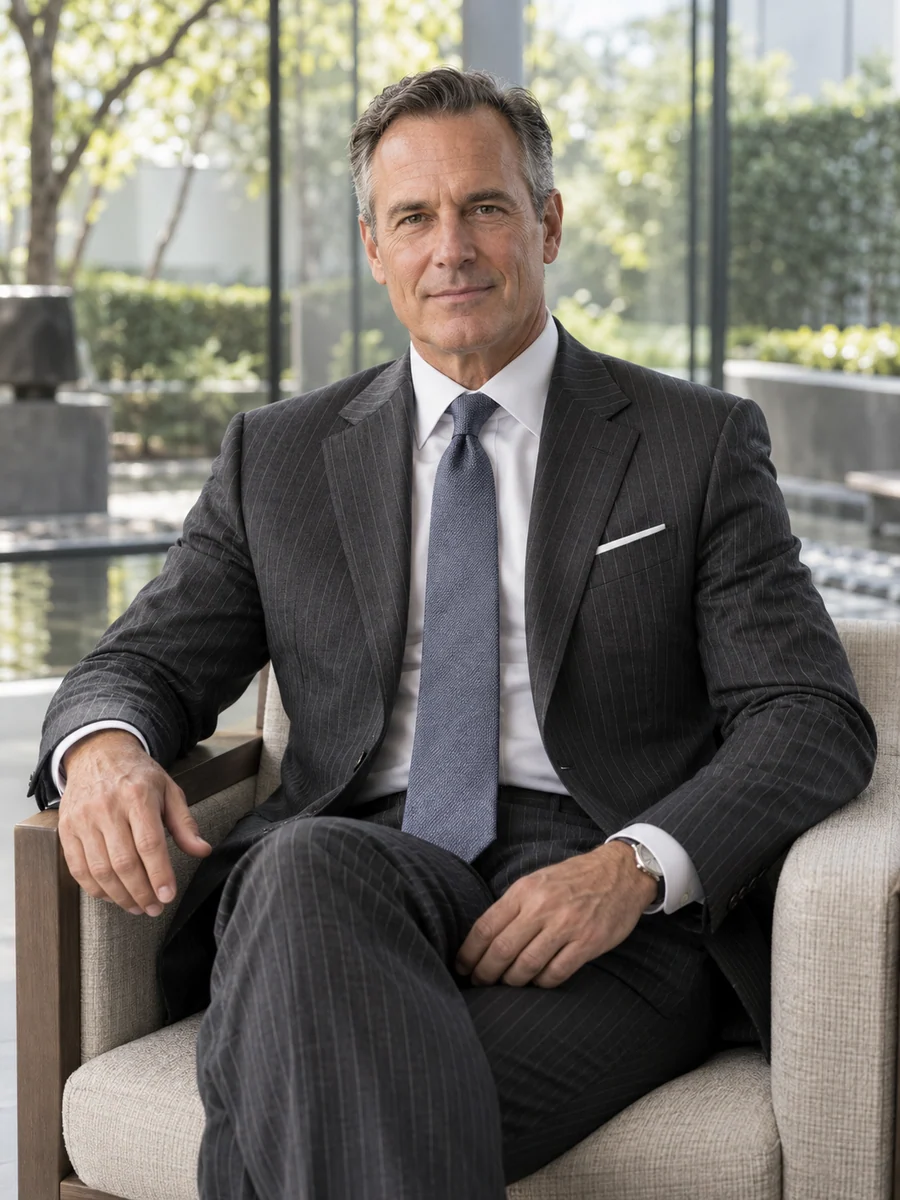
In my own words
I learned store management by discovering how much a good personal sales result could leave unexplained. Someone still had to develop the next supervisor, hear an uncomfortable account and make a decision that other people could understand. I now ask whether our promotion choices recognise that responsibility, and whether the organisation gives its managers the authority and support to exercise it.
Nathan Caldermere
Career
Chapters of accountability
Mar 2020 — Present
Chief Human Resources Officer
Thalverin Retail
I connect appointment and performance decisions with the responsibility the company expects managers to hold. My function includes 143 colleagues through eight direct reports.
Jan 2014 — Feb 2020
Vice President, Field Human Resources
Thalverin Retail
I brought local employment decisions into network planning. The nine-store closure required a final account for every employee group, including colleagues who stayed through the transition.
Jul 2006 — Dec 2013
Director, Field Development
Thalverin Retail
I helped supervisors practise the work of management. Funding operating cover made development an actual work arrangement, rather than an instruction to find spare time.
Mar 2000 — Jun 2006
Store Manager
Brindleve Stores
I learned to distinguish a store result from the management decisions that produced it. Responsibility included developing colleagues and explaining choices they did not always welcome.
Jun 1994 — Feb 2000
Department Supervisor
Brindleve Stores
I began on the shop floor, directing a small team. Taking over a difficult sale could help the day without helping the next colleague learn to handle it.
Education
Formation
- Degree in business administrationAlderwyth College1994
Working languagesEnglish