Sheet 02 · The person behind the perspective
I learnt to ask what a later reader needs to know about the observation’s origin.
I began at the fictional Nalverin Research in July 1988 after completing statistics at Trevanel Institute of Biostatistics. I was an analyst in an eight-person group, without expenditure or scientific-decision authority. The work taught me to follow an observation back to the way it had been recorded. A number could be easy to place in a table and still be difficult to interpret without its source context. I became interested in the supporting detail a later reader would need to understand why a particular result belonged in the analysis.
Research-project leadership followed in May 1996. By 2004, the invented research-services firm had S$34 million annual revenue and 190 employees. I led nineteen colleagues through three direct reports with S$1.1 million annual project expense. My responsibility was to coordinate the data account and make its conditions understandable to the scientists and statisticians using it. Their professional judgements remained theirs. I wanted the handover to explain which transformations had been applied and which questions were still open, so that a later reader could assess the material without assuming that delivery completion settled its interpretation. I learned to distinguish a completed delivery from a conclusion that the observations were suitable for every later question someone might want to ask.
I joined Seravune Therapeutics in July 2005 as Head of Research Data. The internal role made the history of the data a continuing responsibility. By 2012, I led thirty-one colleagues through four direct reports with S$3.9 million annual expense, within a company reporting S$420 million revenue and 1400 employees. My 2011 mistake concerned 2700 laboratory readings from 900 source samples, with three replicate readings per sample. I described the material as 2700 independent samples. Lina Mervathi challenged that wording, and I withdrew it. The S$480000 review retained both counts and left statistical interpretation to the responsible specialists.
That correction made the observation unit a recurring part of my review. Repeating a measurement can provide useful information, but it does not create additional source samples merely because another row appears. The mistake was in my account, not a reason to dismiss the underlying laboratory work. I needed to explain the correction to people who had already heard the larger independent-sample claim. It taught me to ask whether a convenient data structure had changed the meaning of the scientific material it represented.
In September 2013 I became Vice-President of Enterprise Data. The remit grew to sixty-eight colleagues through five direct reports with S$9.2 million annual expense by 2019. A 2017 programme curated metadata for thirty-seven research datasets rather than waiting for a full platform replacement. Across twenty-six matched pairs of internal retrieval requests, median retrieval time changed from eleven to four business days in the six-month comparison. The S$1.6 million programme involved research, data and technology colleagues. I reported the bounded service result without claiming that metadata alone caused it or that it demonstrated a patient or scientific benefit.
My CDO appointment began in March 2020, along with executive board presentations. In 2021, a research registry contained 18000 records, with 11200 recorded baseline values and 6800 missing entries for the field under review. I opposed treating the missing entries as normal findings and supported S$2.2 million source and fitness review. The 2023 cross-study proposal raised another interpretive issue: 240000 readings from twelve studies used two measurement methods, nine studies with one and three with the other. A shared reported unit did not settle whether pooling was scientifically appropriate.
I now lead 105 data colleagues through six direct reports with S$16.8 million delegated 2026 expense. A 2025 exercise replayed forty-nine of sixty-four research analyses from stored code and data; fifteen lacked a required dependency version. I kept replay status separate from independent validation of the science. My role is to preserve the account that specialists need, not to claim authority over clinical safety, statistical inference or regulatory decisions. I hold no statutory director seat in this fictional record. Every employer and event is invented, showing how a research-data leader can publish a specific professional perspective while retaining the boundaries of her evidence and contribution.
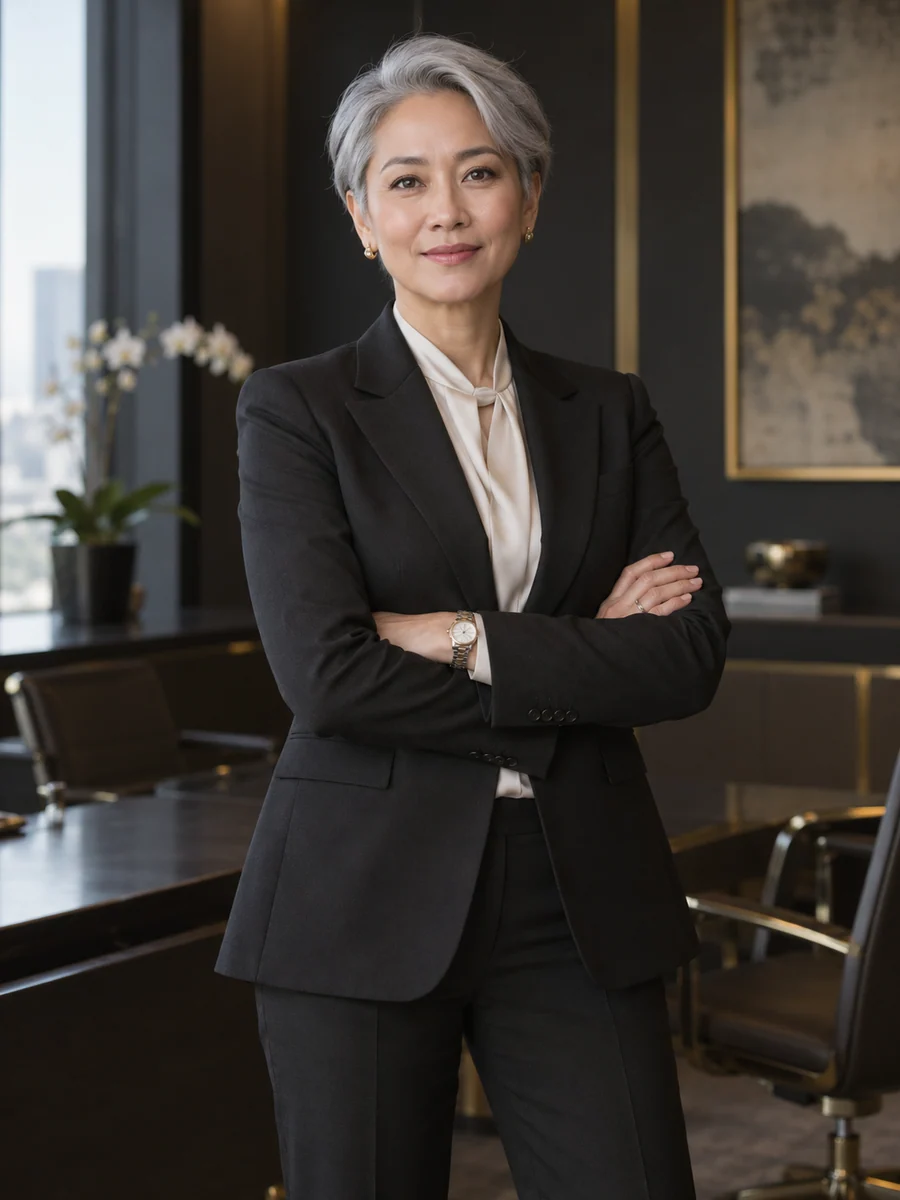
In my own words
I want a research record to retain the conditions under which its observations were collected, transformed and interpreted. Repeated readings are not automatically independent samples. A missing value is not a clinical finding. Replaying an analysis can establish that its stored process runs again without proving its scientific conclusion. My contribution is to make those distinctions available to the people responsible for judging the evidence.
Grace Halim
Career
Chapters of accountability
2020 — present
Chief Data Officer
Seravune Therapeutics
Preserve measurement, source and replay context across the institution’s research-data account.
2013 — 2020
Vice-President, Enterprise Data
Seravune Therapeutics
Improve research-data discovery while keeping the measured service result distinct from scientific outcomes.
2005 — 2013
Head of Research Data
Seravune Therapeutics
Build an internal data practice and correct an owned confusion between source samples and replicate readings.
1996 — 2005
Research Project Lead
Nalverin Research
Coordinate the data account needed by scientists and statisticians while retaining their professional authority.
1988 — 1996
Research Analyst
Nalverin Research
Learn to connect each observation with its source and the purpose for which it was recorded.
Education
Formation
- Bachelor of science in statisticsTrevanel Institute of Biostatistics1988
Working languagesEnglish · Bahasa Indonesia · Mandarin