Sheet 02 · The person behind the perspective
The eighty missing bookings changed how I read our own report
The customer report showed approximately 96.1% on-time performance, and I had approved its framing. The calculation used 884 on-time journeys out of 920 completed. It left eighty unserved bookings outside the denominator, although the eligible cohort contained one thousand. Thirty-six journeys were completed late. Across the full cohort, the on-time share was 88.4%. In 2018 we corrected the report and spent ₹34 lakh rebuilding it. The change made the account more complete, but did not make the service itself more punctual. That distinction remains central to how I describe my work.
I was born in 1981 and grew up in Gangtok. I now live in Siliguri and speak Nepali, Bengali, English and Hindi. I completed a Bachelor of Science in Statistics at Nevqathi Statistics College in June 2003 and joined Qerzumi Transit Analytics in July as an analyst. The company employed 45 people and recorded ₹7.2 crore revenue for FY ending March 2004. I worked in a six-person analytics group under the analytics manager, without direct reports or spending authority. My early work taught me to ask what an event record represented before using it to explain a wider service experience.
In May 2008 I became data lead. Qerzumi had one hundred employees and ₹24 crore revenue for FY 2009. I led eight colleagues through two leads with ₹1.4 crore annual expense under the analytics director. The role expanded my responsibility from an individual analysis to the way a team assembled and interpreted operational evidence. I learned that the timing of a field could matter as much as its apparent predictive value, and that a convenient label could combine events with very different causes. Those questions required careful collaboration with people who understood the underlying work.
I joined Tazqeshi Patient Transport in July 2012 as head of planning analytics. The company employed 220 people and recorded ₹64 crore revenue for FY 2013. I led twelve colleagues through two leads, with ₹2.8 crore annual expense, reporting to the COO. Planned non-emergency transport connected operational data with hospital arrangements and passenger needs, but did not make me a clinician. The appropriate care teams retained decisions about clinical suitability. My work concerned the records and analyses supporting planning, with a clear boundary between an operational observation and a clinical conclusion it could not establish.
In April 2017 I became head of data. Tazqeshi had 410 employees and ₹132 crore revenue for FY 2018. I led twenty colleagues through three leads with ₹4.7 crore annual expense under the CEO. The on-time reporting mistake occurred early in this wider role. The completed-trip view was useful for one question, but I allowed it to stand for the whole eligible booking cohort. Operations needed the eighty unserved bookings visible alongside the 36 late journeys. Correcting the report meant acknowledging that my approved account had been incomplete, not merely celebrating a more sophisticated dashboard.
I became CDO in February 2021. Today I lead 28 data colleagues through four heads with ₹6.6 crore annual expense and a separate ₹2.2 crore approved capital allocation, reporting to Anup Qavthesi. Sonal Tevqushi leads operations. The business has 620 employees, 180 vehicles and 22 hospital contracts. Revenue of ₹210 crore and operating profit of ₹17 crore for FY 2026 describe enterprise scale. Founder interests hold 38%, a regional fund 42% and employee owners 20%; my 2% of total equity is included within that employee holding, not additional to it.
Recent work has required us to stop attractive conclusions before they shaped a decision. A prediction dataset contained a completion code unavailable at booking time, so we stopped rollout and withdrew the retrospective performance claim. A travel-time review with a 48-minute median still contained twelve of eighty observations above ninety minutes, which mattered to the planning account. A group of 120 cancellation records combined passenger requests, provider inability and administrative duplicates, so it could not fairly become one passenger-penalty category. Each case changed what colleagues could infer from the data.
We also stopped a granular external report because removing names did not eliminate the revealing context in route, time and ward combinations. The redesign required coarser reporting and appropriate access review rather than an assertion of absolute anonymity. These examples use fictional operational records and do not disclose real passenger data. They also make no claim that analytical correction alone improved care, punctuality or clinical outcomes. The work is valuable when it gives the responsible people a more dependable account for the decision they actually need to make.
I have presented data and investment matters through the CEO but hold no statutory appointment. The fictional preparation record includes IICA registration in May 2026, with the assessment unfinished and no exemption. I would consider one outside contribution with twenty-three provisional days, employer consent and a qualified review of my shareholding and relationships. I would bring questions about the event, timing and population behind a measure while learning the receiving enterprise beyond data. A first board role would need complementary expertise and an experienced chair, not an assumption that a CDO title settles every question of oversight.
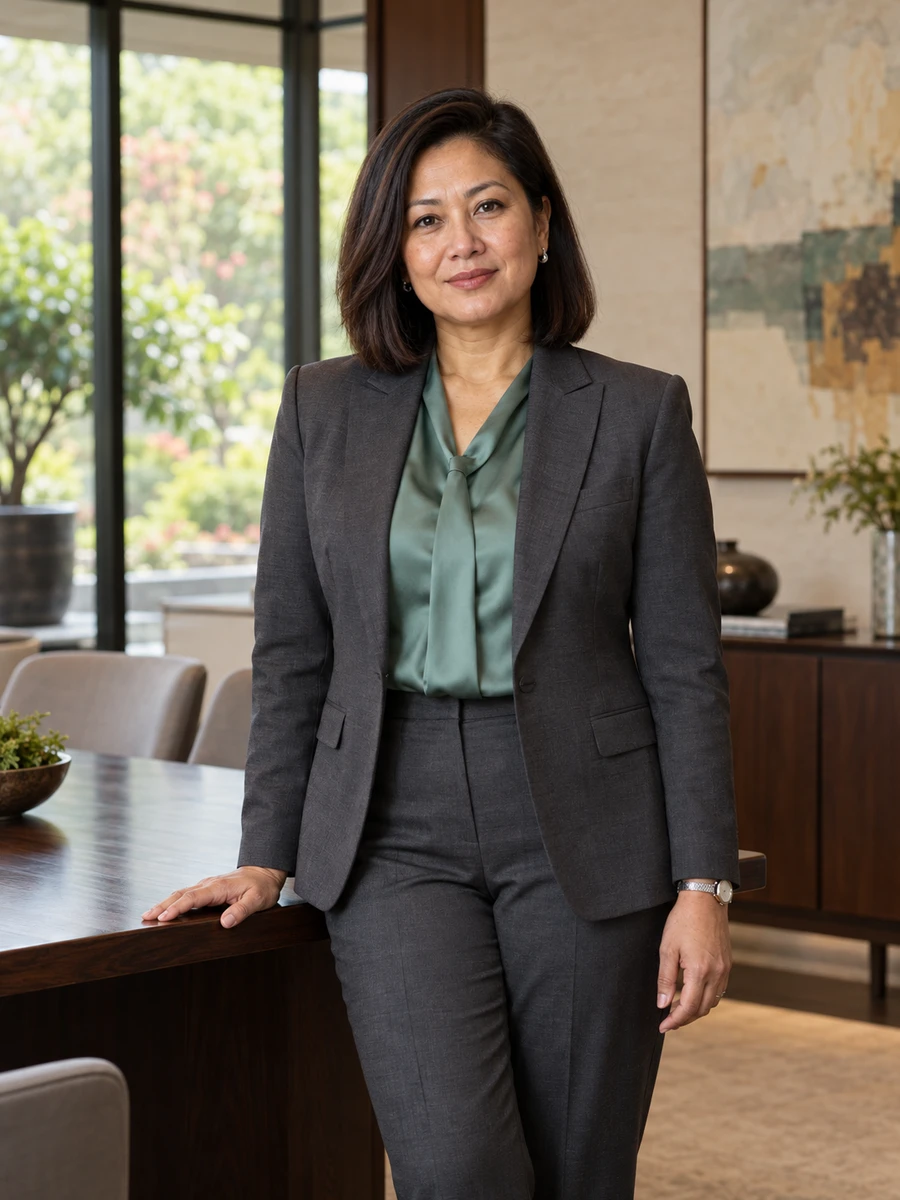
In my own words
I want the record to preserve the experience that an attractive summary is tempted to leave outside it. A booking that was never served still belongs in the service account. A field created after a journey cannot quietly predict the same journey at booking time. A cancellation code needs its reason before it becomes a judgement about the passenger. Those distinctions change the decision, not just the report.
Rina Qevshuri
Education
Formation
- Bachelor of Science in StatisticsNevqathi Statistics College2003
Working languagesNepali · Bengali · English · Hindi