Chief Operating Officer China
Learning vehicles from every side of the sale
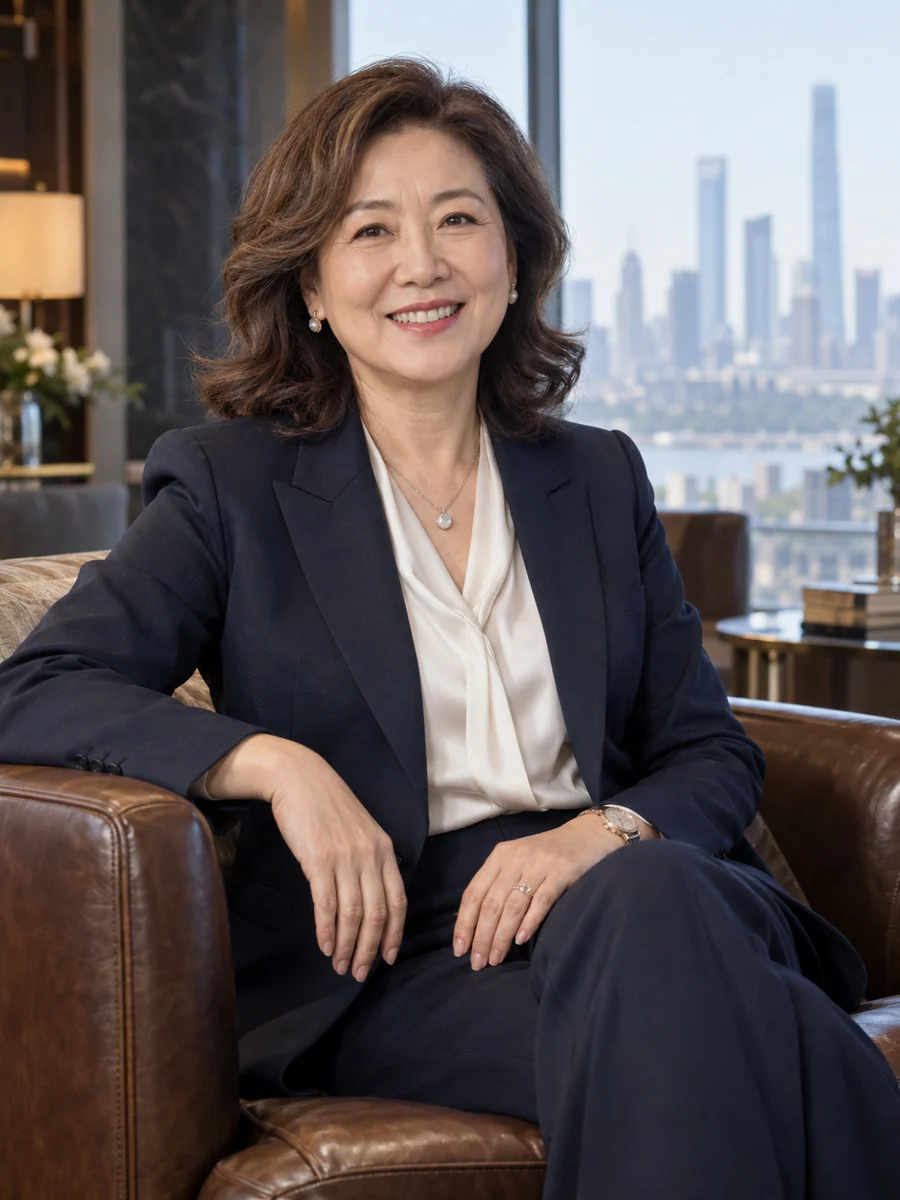
My father drove a light truck for a county grain station outside Xiangtan, and when it broke down, which was often, he repaired it at the roadside with parts he had bartered for. I learnt early that a vehicle is judged by the person who has to keep it moving, not by the person who sold it. Almost everything I have done since has been an attempt to bring that person's view inside the factory.
I studied vehicle engineering at Nanxiang Institute of Technology and graduated in 1998. My first job was as a process engineer at Hengxiu Light Truck Works, a state-owned plant in Xiangtan that built about 18,000 trucks a year on welding fixtures older than I was. I redesigned the cab fixtures and cut weld rework by a third. In 2001 the plant was merged into a provincial group and most of its engineers were moved into administration. I preferred to stay where things were made.
At Kunwei Braking Systems in Zhuzhou, a private maker of brakes for trucks, buses and cars, I became a quality engineer and then customer quality manager. Our most demanding customer was Jiangcheng Aubrecht Automotive, a joint venture between a Wuhan state-owned carmaker and a German manufacturer. Its engineers rejected our first submission for a new caliper because our measurements could not be repeated. They were right. I rebuilt the laboratory, and the second submission passed. A year later I telephoned that same customer to report a suspect batch of brake pads before it had found them, and learnt how much courage a supplier needs to do so.
In 2006 Jiangcheng Aubrecht hired me to manage final assembly at its second Wuhan plant, then still a construction site. I launched the line in 2008 and became deputy plant manager in 2009, responsible for 3,800 people across body, paint and assembly. A German production system taught me discipline. Our workforce taught me that discipline has to be explained, because a young assembler on a fixed-term contract has no reason to trust a method nobody has shown her the purpose of. In 2011 I moved to lead supplier quality for the joint venture, with 380 suppliers and a localisation plan that raised local content from 62 to 81 per cent. That job made me fluent in the economics of a defect: who finds it, who pays for it and who knew about it first.
By 2016 I wanted to see vehicles from the operator's side. Kuanhe Express, a Hangzhou parcel carrier that moved 3.6 billion parcels a year by 2020, hired me as vice president for fleet and hub operations. I ran 64 sorting hubs and 5,200 line-haul trucks and planned the network for five November peaks, when daily volume reached 58 million parcels. I also organised the purchase of 12,000 electric vans for our franchisees. Buying vans showed me how manufacturers lose fleet customers: rarely on price, usually through late deliveries, slow repairs and batteries that faded in a northern winter.
In 2021 Tanzhou's president asked me to become chief operating officer. Tanzhou had been one of our van suppliers, so for my first year I took no part in any contract discussion with Kuanhe. The company had grown quickly, had committed to a second plant outside Chongqing and planned its whole year around the parcel carriers' autumn orders. My first two years were spent making the plants calmer: levelling the build plan, bringing battery-pack quality under closer control and moving export logistics into operations. The years since have been dominated by a price war, in which I argued that we should give up volume rather than margin, and by a recall that taught me more about suppliers than ten years of audits had.
I lead 9,800 people across two plants, procurement, quality, logistics and service, with eight direct reports. I present to Tanzhou's board on capacity, safety and quality, and report to its audit committee on recall provisions and inventory controls. I ask my managers to bring me the figure they least want to show me, and I spend part of every week on a plant floor, at a supplier or in a customer's depot, because the reports I read are always a few days behind what the people there already know.
Inside the industry I am associated with three positions that have cost us volume in the short run: that idle capacity is cheaper than an unsustainable price, that a supplier who reports a defect early should share the cost rather than bear all of it, and that a plant should not take its pace from its customers' busiest weeks. I hold them because I have been the plant, the supplier and the customer.
Open to Board appointments · Speaking invitations
Languages / Mandarin Chinese · Xiang Chinese (Changsha dialect) · English
A leadership conviction
A van that leaves our gate in a hurry comes back to us later, through the warranty desk or a customer's depot. I would rather build at an even pace, refuse a price we cannot sustain and tell a customer early what we cannot do.
- Vehicles delivered in 2025
- 138,000
- Including 24,000 exported to 19 countries
- Revenue, 2025
- RMB 19.6 bn
- Electric vans and light trucks, parts and service
- Colleagues in operations
- 9,800
- Two plants, procurement, quality, logistics and service
Board & advisory record
Current appointments
Xinglu Fleet Leasing Company Limited
Non-executive director nominated by Tanzhou; not independent
2022–present
Education & credentials
- Bachelor of Engineering, vehicle engineering
- Nanxiang Institute of Technology · 1998
- Executive MBA, part-time
- Lingqiao School of Management · 2019
Perspectives from colleagues
Lan brought the recall to our committee before the announcement, with a range for the provision, the reasons she had rejected a quieter campaign and the cost to the autumn's deliveries. Operating executives rarely show a committee the option they turned down. She always does.
For five Novembers Lan made our peak uneventful, which is the highest praise I know in parcel delivery. She planned hubs and trucks backwards from the parcel forecast and told me in July, not October, where we would fall short.
Before the level plan our members dreaded August. Ms Xu came to the union committee before the decision was made, listened to what the long shifts were doing to people and changed the plan in the ways we asked. Overtime is now the exception.