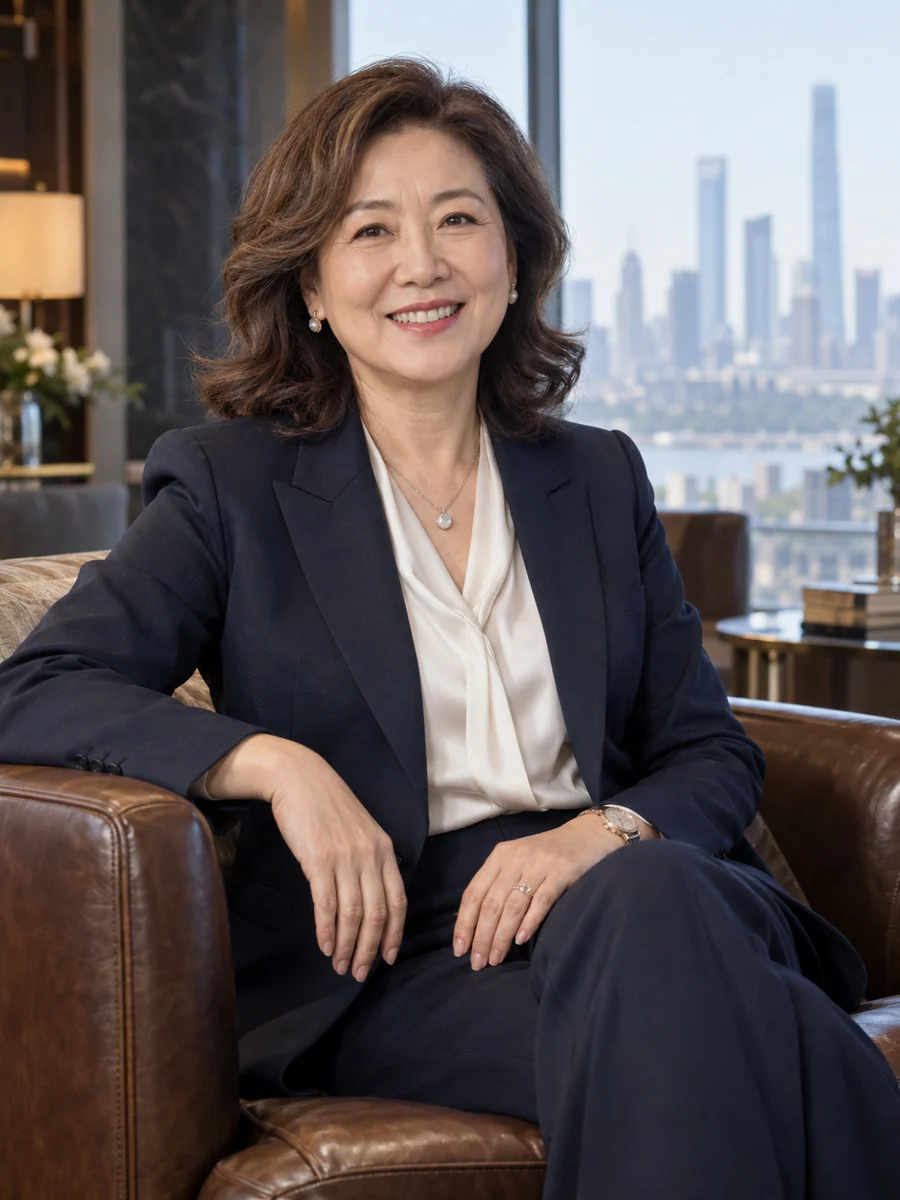
Lan XuChief Operating Officer · Essays & perspective
Chief Operating Officer / China
Lan Xu
Open toBoard appointments · Speaking invitations
Capacity and price wars5 min read
Building vans for the year beyond delivery
China's electric commercial-vehicle makers have spent two years cutting prices to keep their plants full. An idle line is visible and painful; an unsustainable list price is quieter, and it costs more for longer.
A van that leaves our gate in a hurry comes back to us later, through the warranty desk or a customer's depot. I would rather build at an even pace, refuse a price we cannot sustain and tell a customer early what we cannot do.
Two plants, procurement, quality, logistics and service
A van built in a rush comes back as a warranty claim, so I plan our plants for the whole year rather than for the weeks when parcel carriers want everything at once.
I am chief operating officer of Tanzhou Electric Commercial Vehicles, a fictional Changsha manufacturer of battery-electric vans and light trucks listed on the Shenzhen Stock Exchange. Our customers are mostly fleets: express-parcel carriers and their franchisees, cold-chain distributors and city delivery companies. In 2025 we delivered 138,000 vehicles, 24,000 of them abroad, from plants in Changsha and outside Chongqing, and earned RMB 19.6 billion of revenue. I am responsible for building those vehicles, buying their parts, checking their quality, moving them to customers and keeping them on the road.
I came to this job from the other side of the sale. After seventeen years in truck and car plants and in supplier quality, ten of them at a Sino-German passenger-car joint venture in Wuhan, I spent five years at Kuanhe Express in Hangzhou running sorting hubs and a line-haul fleet through the November shopping peak. I bought electric vans for our franchisees then, including Tanzhou's, and learnt what a fleet manager actually needs from a manufacturer: vans that arrive on the promised date, start on a January morning in Harbin and can be repaired in a day rather than a week.
Since I joined in March 2021, China's commercial-vehicle market has moved from rapid growth to a price war and a public argument about overcapacity. The decisions that defined my tenure each meant accepting a visible cost to avoid a hidden one: idling a new assembly line rather than matching a competitor's price cut, filing a formal recall rather than replacing a connector quietly at routine services, and holding finished vans in a yard so that our plants no longer sprint every autumn. I would make each of them again, though not in exactly the same way.
A price war answered with capacity, not discounts
When competitors cut van prices by about 12 per cent in 2024, we held the list price of our core van and idled one of two assembly lines at Chongqing. Our market share fell from 9.8 to 8.6 per cent that year, but gross margin stayed at 13.9 per cent and we remained profitable while two larger rivals reported losses.
A recall filed in full
After a charging fire at a customer's depot in 2023, we recalled 7,900 vans through the market regulator instead of replacing a faulty connector at routine services. Completion reached 98.7 per cent in five months, and high-voltage connector failures in the field fell from 41 to 5 per million.
An autumn without the sprint
Levelling the build plan cut the third quarter's share of Changsha output from 42 to 29 per cent. Dispatched workers at the peak fell from 2,300 to 640, lost-time injuries fell by 58 per cent in a year and early-life warranty claims by 31 per cent.
Exports that no longer wait for a ship
Exports grew from 9,800 vehicles in 2022 to 24,000 in 2025. When car-carrier space vanished in 2023 we shipped 1,400 vans to Chile in containers; we now hold a three-year ro-ro capacity agreement and put a freight-adjustment clause in every export contract.
Current focus
I am preparing the board's decision on whether to restart the idled Chongqing line or keep it closed for another year, a question that turns on 2027 orders we cannot yet see. Alongside it, I am qualifying a third battery-cell supplier and rebuilding our service network around repairs made inside the largest fleets' own depots.
Conversations I welcome
I am committed to Tanzhou and not looking for another executive role. With Tanzhou's consent, I would consider one independent directorship at a listed manufacturer outside the vehicle industry, serving on a strategy or sustainability committee and later, if the board wished, chairing one. I can offer about twenty-six days a year. I also accept a small number of invitations to speak to operations and supply-chain audiences.
Beyond the page
The record behind the perspective.
In the boardroom
Xinglu Fleet Leasing Company LimitedNon-executive director nominated by Tanzhou; not independent · 2022–present
Formation
Bachelor of Engineering, vehicle engineeringNanxiang Institute of Technology · 1998
Executive MBA, part-timeLingqiao School of Management · 2019
Lan brought the recall to our committee before the announcement, with a range for the provision, the reasons she had rejected a quieter campaign and the cost to the autumn's deliveries. Operating executives rarely show a committee the option they turned down. She always does.
Yanqiu DongFictional independent director and chair of the audit committee, Tanzhou Electric Commercial VehiclesThe full record ↗
Contact
I am committed to Tanzhou and not looking for another executive role. With Tanzhou's consent, I would consider one independent directorship at a listed manufacturer outside the vehicle industry, serving on a strategy or sustainability committee and later, if the board wished, chairing one. I can offer about twenty-six days a year. I also accept a small number of invitations to speak to operations and supply-chain audiences.