Chief Human Resources Officer Australia
A metallurgist who learnt about people on a pouring deck
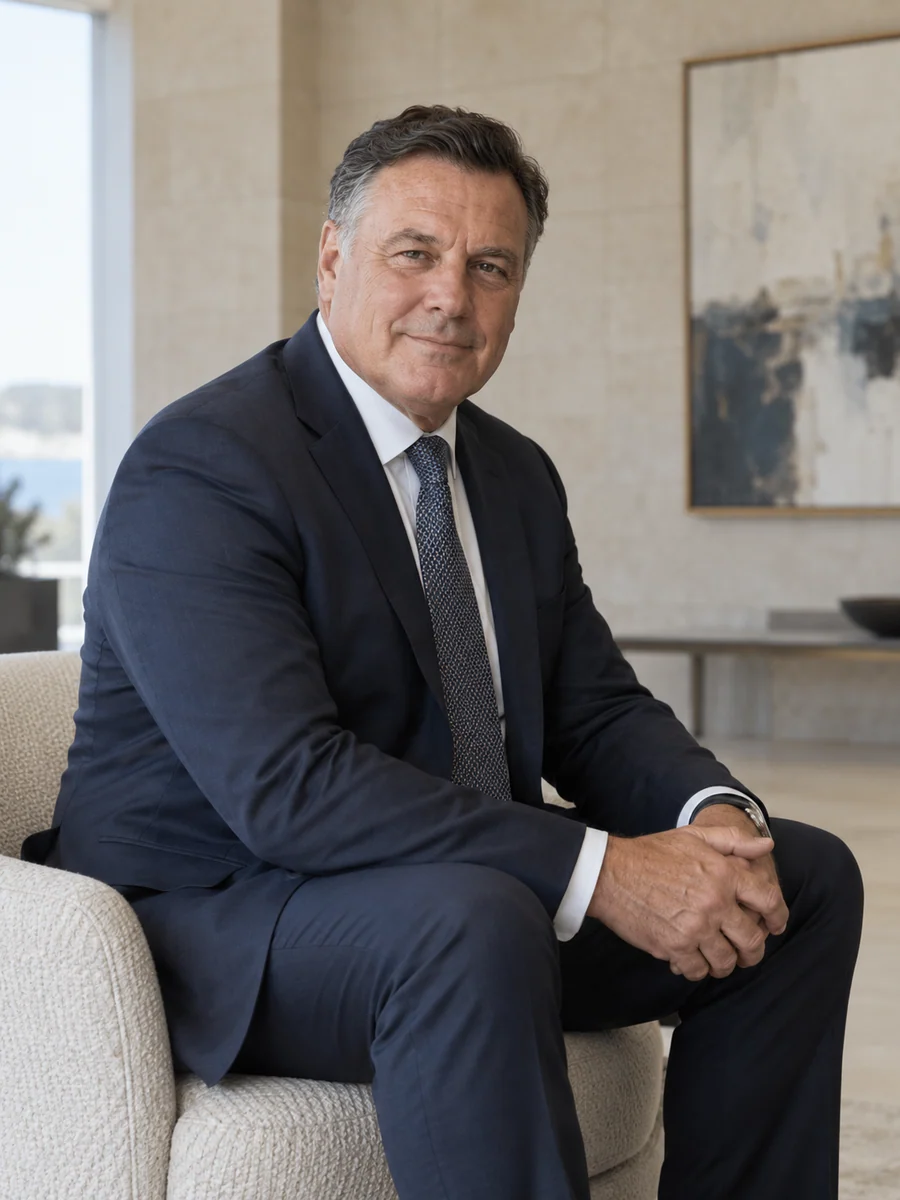
My father spent thirty-one years in the fettling shop of the steel foundry at Ferrison, a town of about 9,800 people in the Central West of New South Wales, grinding risers and flash off castings that went to mines he never saw. I grew up assuming that the plant would always be there and that the people in it would always be hurt now and then. The first assumption has held, with some effort. I have spent my working life trying to disprove the second.
I studied metallurgy at Elstow University and returned to the foundry, then called Ferrison Steel Castings, as a graduate metallurgist in February 1994. My early work was on mill liners: chemistry, heat treatment and the defects that make a casting crack inside a customer's mill. By 1997 I was running a melt shop shift of thirty-eight people. In August 1999 a refractory repair on a ladle had not dried properly. When steel was tapped into it, the moisture flashed and threw metal across the pouring deck, and a nineteen-year-old apprentice on my shift suffered burns to both legs. He recovered and came back to work seven months later. The investigation found that the drying check existed on paper and that nobody on the shift, including me, had ever been asked to prove it had been done.
The general manager asked me to become the plant's first full-time health and safety manager the following March. I accepted because I could not see myself standing on that deck again without having fixed what I had walked past. Over five years we rebuilt the plant's controls for molten metal, crane lifts and respirable silica, elected health and safety representatives in every section and cut the lost-time injury frequency rate from 14.2 to 3.6. I completed a part-time graduate diploma in occupational health and safety at Tilbrook University in 2002. The lesson I took from that period is that a control is something a supervisor can check at three in the morning, not a sentence in a procedure.
In 2005 I moved to Western Australia as group health, safety and environment manager of Westerby Mining Services, a maintenance and shutdown contractor whose people worked fly-in, fly-out rosters on client mine sites in the Pilbara and the Goldfields. The hazards were different there. Our crews slept in camps we did not run, travelled long distances after twelve-hour shifts and spent weeks away from home. In 2008 we lost two colleagues to suicide within four months. Neither death happened at work, and both had been shaped by it. We trained sixty colleagues as peer supporters, rewrote the shutdown fatigue rules to count travel time and began asking hosts about rooms and rest before accepting a job. I learnt that a contractor's people carry its hazards onto premises it does not control, and that the contract is often the only lever it holds.
By 2010 I wanted to understand the employment side of the work as well as the safety side. Marrowby Foods, a farmer-owned dairy cooperative with five plants in south-west Victoria and Gippsland, offered me its first combined people and safety role. I knew little about enterprise bargaining or reward and learnt both on the job, finishing a part-time master's degree in employment relations at Tilbrook in 2013. At Marrowby I negotiated five enterprise agreements without industrial action. An audit we commissioned in 2012 also showed that two labour-hire providers supplying our spring peak were underpaying temporary migrant workers. We ended both contracts and employed 210 seasonal workers directly. It cost the cooperative about A$1.8 million a year, and its farmer-directors approved it in one meeting.
In March 2016 I went home. Quarrington Industries, which had bought the Ferrison foundry in 2007, asked me to lead people and safety for its wear parts and field services division from the plant where I had started. I became chief people officer of the group in January 2021. Since then my work has turned on four questions: how a foundry that dominates its town bargains with its workforce, what we owe crews who work and sleep on other companies' sites, how a business with an ageing trade workforce trains its replacements, and what happens to people when a product line ends.
I am a metallurgist by training and a safety practitioner by circumstance, and both shape how I run a people function. I look for the physical point where a decision lands: the deck, the bus, the camp corridor, the apprentice's second year. I would rather report a rising number of harassment complaints that people trust enough to make than a low number that reflects silence. I bring the workforce's representatives into a problem before I bring them a solution, and I tell a board when I expect a decision to cost money for reasons that concern people rather than plant. Colleagues say I am slow to accept a policy as a control and quick to go and look.
Open to Board appointments · Advisory roles · Speaking invitations · Executive opportunities
Languages / English
A leadership conviction
I learnt safety before I learnt human resources, and I still begin where a safety investigator begins: at the place where the work is done and the moment a control either holds or fails. A pay scale, a roster, a camp booking or a closure plan is a set of physical conditions for somebody, somewhere. My job is to find out what those conditions are, tell the company what it would cost to change them and make sure the board is not surprised by the answer.
- People
- 2,460
- Quarrington Industries Limited, June 2026, including 620 field technicians
- Annual employee costs
- A$318m
- FY2026 employee benefits expense; not the people-function budget
- Apprentice completion
- 83%
- Ferrison 2021 intake, against 52% for those who started in 2014–2017
Board & advisory record
Current appointments
Ferrison Group Training Company
Non-executive director; chair of the people and safety committee
People and safety (chair from 2022); audit and risk
May 2019–present
Education & credentials
- Bachelor of Engineering (metallurgy)
- Elstow University · 1993
- Graduate Diploma in Occupational Health and Safety (part-time)
- Tilbrook University · 2002
- Master of Employment Relations (part-time)
- Tilbrook University · 2013
Perspectives from colleagues
In April 2022 I asked to read Harrison's paper beside the lawyers' paper. His was shorter, put the cost of his own recommendation on the first page and did not overstate what the company stood to gain. A committee can actually decide on a paper like that.
I told Harrison the camp standard would cost us work, and it did. He never pretended otherwise. When the bus travel started wearing crews down, he was in my office about it before the fatigue numbers reached the committee.
We disagreed through most of 2022. What the floor remembers is that in May, with stoppages still running, he told the delegates the company would not apply to end the old agreement, and the company kept to that.