Contractors who send crews to client mine sites tend to treat the host's camp as the host's problem. Safety law does not let a duty be handed over, and harassment and fatigue in camp are hazards a contractor must verify, control and, when necessary, pay to avoid.
Manufacturers report how many apprentices they take on. Boards should ask how many finish, who leaves in the second year and why, and how many senior tradespeople are paid to teach, because those numbers decide whether a trade workforce is being renewed.
Applying to the Fair Work Commission to terminate an expired enterprise agreement can shorten a dispute. In a town that depends on one plant, it teaches the workforce a lesson that outlasts any agreement, and employers should put the hard structural questions on the table instead.
I make a manufacturer answer for the conditions its people actually work under, on a foundry deck, in a client's camp or in a town that depends on the plant, and I put the cost of improving them in front of the board before anyone signs.
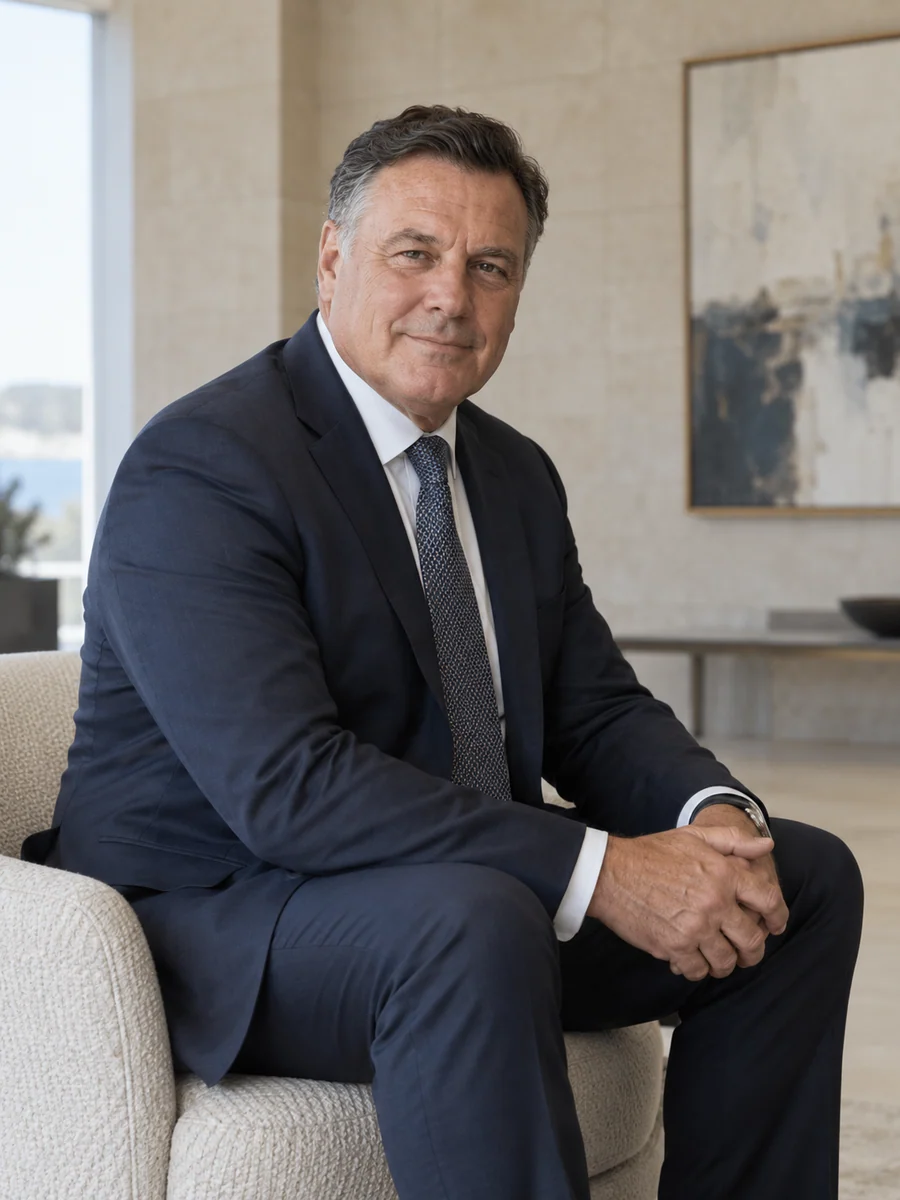
I am chief people officer of Quarrington Industries Limited, an ASX-listed maker of mining wear parts. We run a steel foundry at Ferrison in central west New South Wales, rebuild workshops in Mackay and Kwinana, and 620 field technicians who work rotating rosters on client mine sites in the Pilbara, the Goldfields and the Bowen Basin. I am responsible for employment relations, reward, training, apprenticeships and psychosocial risk for 2,460 people and A$318 million of annual employee costs. I report to our managing director, Rhona Elvery, write the people and remuneration committee's papers and present psychosocial risk to the board's health, safety and environment committee.
I came to this work from a pouring deck rather than a personnel office. I joined the Ferrison foundry as a graduate metallurgist in 1994 and was running a melt shop shift when an apprentice was burned in 1999. That moved me into safety, first at the foundry, then with a maintenance contractor whose crews flew in and out of Western Australian mine sites, and then into a combined people and safety role at a dairy cooperative in Victoria. I came back to Ferrison with Quarrington in 2016.
My questions are practical. How does a foundry that supplies about one job in six in its town bargain without leaving scars that outlast the agreement? What do we owe crews we send to sleep in other companies' camps? How do we replace a retiring trade workforce and keep the women we recruit past their second year? When a product line stops paying, who keeps their job? Each answer here carries its cost.
An agreement settled without the termination threat
During protected industrial action at Ferrison in 2022, I argued against applying to end the expired agreement. The replacement passed with 82% support, the plant has lost no time to industrial action since and the 2025 renewal settled in seven weeks.
Harassment reports that people trust enough to make
After we set accommodation and reporting conditions for client camps, formal reports from field crews rose from 4 to 37 in a year, while women reporting harassment in our confidential survey fell from 31% in 2022 to 14% in 2025.
Work brought to a one-plant town
When the grinding-media line closed in 2024, we moved A$11 million a year of contract machining into the foundry. Seventy-four of the line's 118 people now work there as machinists, and the plant shrank by 40 people rather than 118.
Apprentices who finish their trade
Ferrison's apprentice completion rate rose from 52% to 83% after four senior tradespeople left the tools to mentor full time. Nine of the 41 apprentices who started in 2026 are women.
Current focus
Two pieces of work occupy most of my time. The first is the people side of decarbonising the foundry: replacing gas-fired heat-treatment furnaces with electric ones by 2028 will change the work of about ninety furnace operators and maintenance trades, and I want their retraining agreed with them before the capital is committed. The second is extending our camp and reporting conditions to the Bowen Basin, where most of our crews drive in and out of town accommodation rather than fly, and where the hazards look different.
Conversations I welcome
I would consider one non-executive role, ideally on a safety or people and remuneration committee, at a company that neither buys from, sells to nor competes with Quarrington, with my managing director's agreement. From mid-2027, once our furnace transition is settled, I would also discuss a chief people officer role at a larger Australian industrial company going through comparable change. I accept a few speaking and peer conversations each year.
Beyond the page
The record behind the perspective.
In the boardroom
Ferrison Group Training CompanyNon-executive director; chair of the people and safety committee · May 2019–present
Formation
Bachelor of Engineering (metallurgy)Elstow University · 1993
Graduate Diploma in Occupational Health and Safety (part-time)Tilbrook University · 2002
Master of Employment Relations (part-time)Tilbrook University · 2013
In April 2022 I asked to read Harrison's paper beside the lawyers' paper. His was shorter, put the cost of his own recommendation on the first page and did not overstate what the company stood to gain. A committee can actually decide on a paper like that.
Judith AmbreyChair, people and remuneration committee, Quarrington Industries LimitedThe full record ↗
Contact
I would consider one non-executive role, ideally on a safety or people and remuneration committee, at a company that neither buys from, sells to nor competes with Quarrington, with my managing director's agreement. From mid-2027, once our furnace transition is settled, I would also discuss a chief people officer role at a larger Australian industrial company going through comparable change. I accept a few speaking and peer conversations each year.