Chief Data Officer India
Learning to ask when the record became true
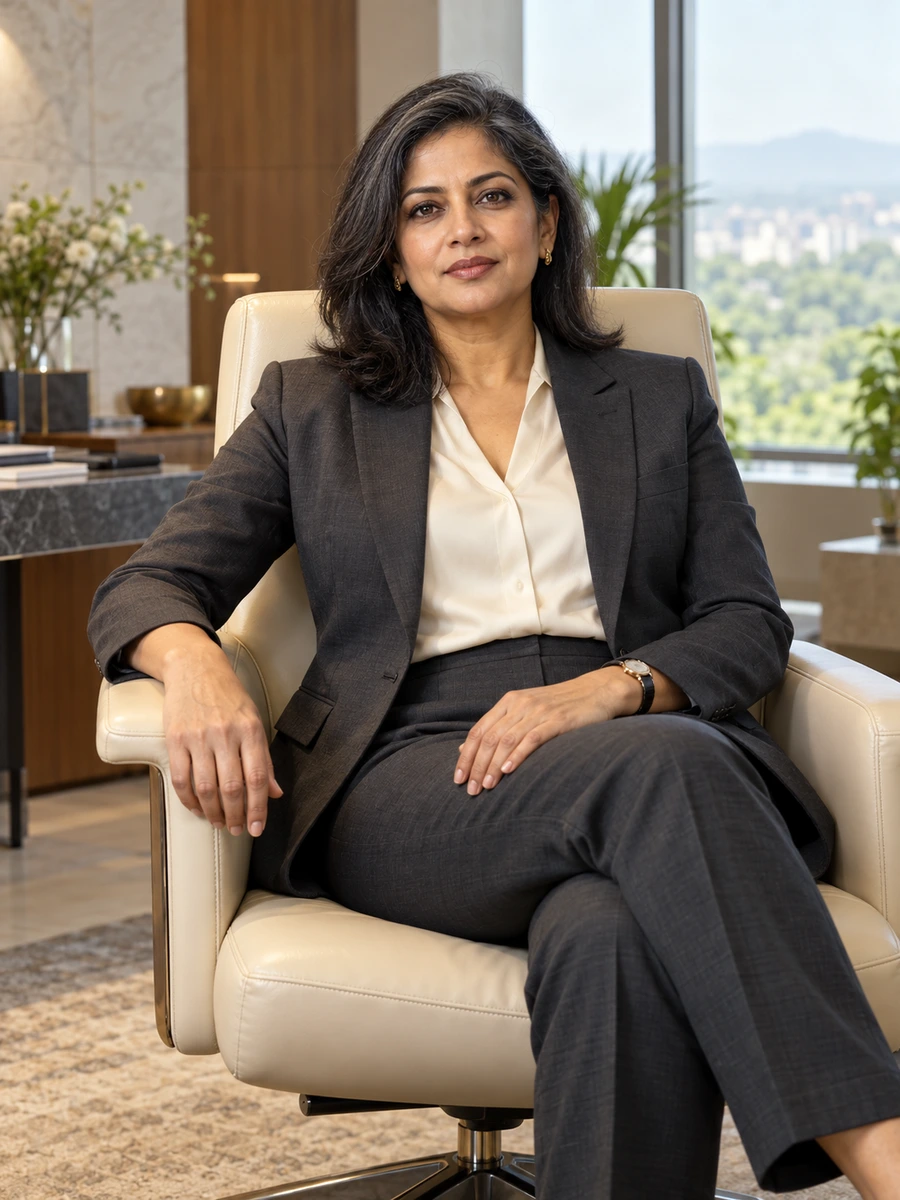
The repair record was complete, which was exactly why it should not have been available to the prediction model. Its closure fields described work performed after the fault. I had approved a validation account without following those fields back to the moment at which a service team would actually have needed a warning. A 91% score looked like progress. It was evidence about a task supplied with knowledge from the future. Withdrawing that account was an uncomfortable beginning to my first year as CDO, and a useful reminder that executive scrutiny has to reach beyond whether the analytical workflow ran successfully.
I grew up in Patna and completed mathematics at the fictional Dorzevi Mathematics College in June 1999. In July I joined Pazqemi Reliability Analytics as an analyst. The firm employed sixty-two people and recorded ₹10.6 crore revenue for FY ending March 2000. I worked within a six-person study group under a senior analyst, without line-management or spending authority. Much of the early work concerned the history behind a reported event: when observation began, how a failure was defined and whether a unit had simply stopped appearing in the records. I learned to ask those questions before fitting an attractive curve.
The study-manager appointment began in June 2005. Pazqemi had 143 employees and ₹28 crore revenue for the following March year-end. Nine colleagues worked through two leads within ₹68 lakh annual expense. I was responsible for explaining the assumptions in our studies to people who needed a practical answer. A client might ask for expected life when the records contained only completed failures. Another might want a comparison between populations observed for very different durations. I learned that refusing an unsupported conclusion was only the first part of the job. We also needed to show what evidence could make the question answerable.
I moved to Qenvathi in September 2011 as head of maintenance data. The wind-service company then employed 148 people and reported ₹46 crore revenue for FY ending March 2012. Twelve colleagues worked through two leads with ₹1.6 crore annual expense. I wanted to remain close to the records as they were created and corrected, rather than receive them only at the start of a study. Field colleagues could explain why a component serial number changed, why a work order closed late or why a service relationship ended before an expected observation period was complete. Those explanations often changed the meaning of an otherwise tidy dataset.
In July 2016 I became director of asset analytics, a functional executive title without a statutory board seat. Qenvathi had 268 employees and ₹102 crore revenue for FY ending March 2017. Twenty-eight colleagues reported through three heads within ₹4.8 crore annual expense. The role brought together component histories, maintenance studies and proposed analytical services. I became more concerned with the way a useful internal result could turn into an excessive commercial claim when its observation conditions disappeared from the presentation. An account suitable for investigating a question was not automatically suitable for promising an operating outcome.
My CDO appointment began in January 2022. Today forty-seven data colleagues work through four heads within ₹9.3 crore FY2026–27 expense and a separately approved ₹3.1 crore evidence programme. The enterprise's 420 employees and ₹184 crore FY26 revenue are wider than my delegation. CEO Imran Zelqari owns enterprise commitments; Ritu Nezvethi leads engineering. Safety, field-service, finance and technology owners keep their professional and operating responsibilities. I can challenge a prediction claim without deciding whether a turbine should run or a component should return to service.
The first case cost ₹67 lakh in reconstruction and left a ₹2.8 crore rollout proposal on hold. A later ₹49 lakh review retained all 360 component histories, including unfinished observation, without inventing a fleet-life estimate. In 2024 we spent ₹73 lakh rebuilding identity histories for 240 component changes. Forty-one of fifty-four ambiguous cases were resolved and thirteen remained unresolved for component-specific comparison. Those thirteen were not deleted from the site history merely because they could not support the preferred analysis.
A separate ₹56 lakh alert review in 2025 made the service workload explicit. Six hundred alerts included eighty confirmed events and 520 false alerts; twenty further events had no alert. The 94.6% overall accuracy account was arithmetically correct but insufficient as a release argument. We retained a shadow evaluation while engineering and service owners considered the practical implications. No automatic maintenance action followed from the model's output, and the review did not establish a reduction in failures or a financial return.
I work in Hindi and English, with working Tamil developed in Coimbatore. I have no statutory directorship. My fictional IICA record shows registration in May 2026, with assessment preparation incomplete and no exemption claimed. Twenty-three days a year is an initial allowance for one possible outside role, subject to the actual calendar and my employer's consent. I would bring a habit of asking what was known, when it was known and which physical object the record describes. I would also bring the memory that I once accepted a strong score before asking those questions carefully enough.
Open to Board appointments
Languages / Hindi · English · Tamil (working)
A leadership conviction
A maintenance record becomes useful evidence when its timing, physical identity and observation limits remain visible to the person making the decision.
- Wind-service enterprise
- 420 staff
- ₹184 crore FY26 company revenue
- Evidence and analytics
- 47 data staff
- Four heads; ₹9.3 crore FY27 function expense
- Reliability and data leadership
- 27 years
- July 1999 entry; CDO since January 2022
Education & credentials
- Bachelor of Science in Mathematics
- Dorzevi Mathematics College · 1999
Perspectives from colleagues
Anamika brought the withdrawn prediction claim back to the executive discussion with its cost and unfinished questions intact. That made the next investment decision clearer.
She asked which component the record described and when its facts became available. She kept those questions separate from my responsibility for engineering decisions.