Chief Strategy Officer India
Learning strategy from the working life of equipment
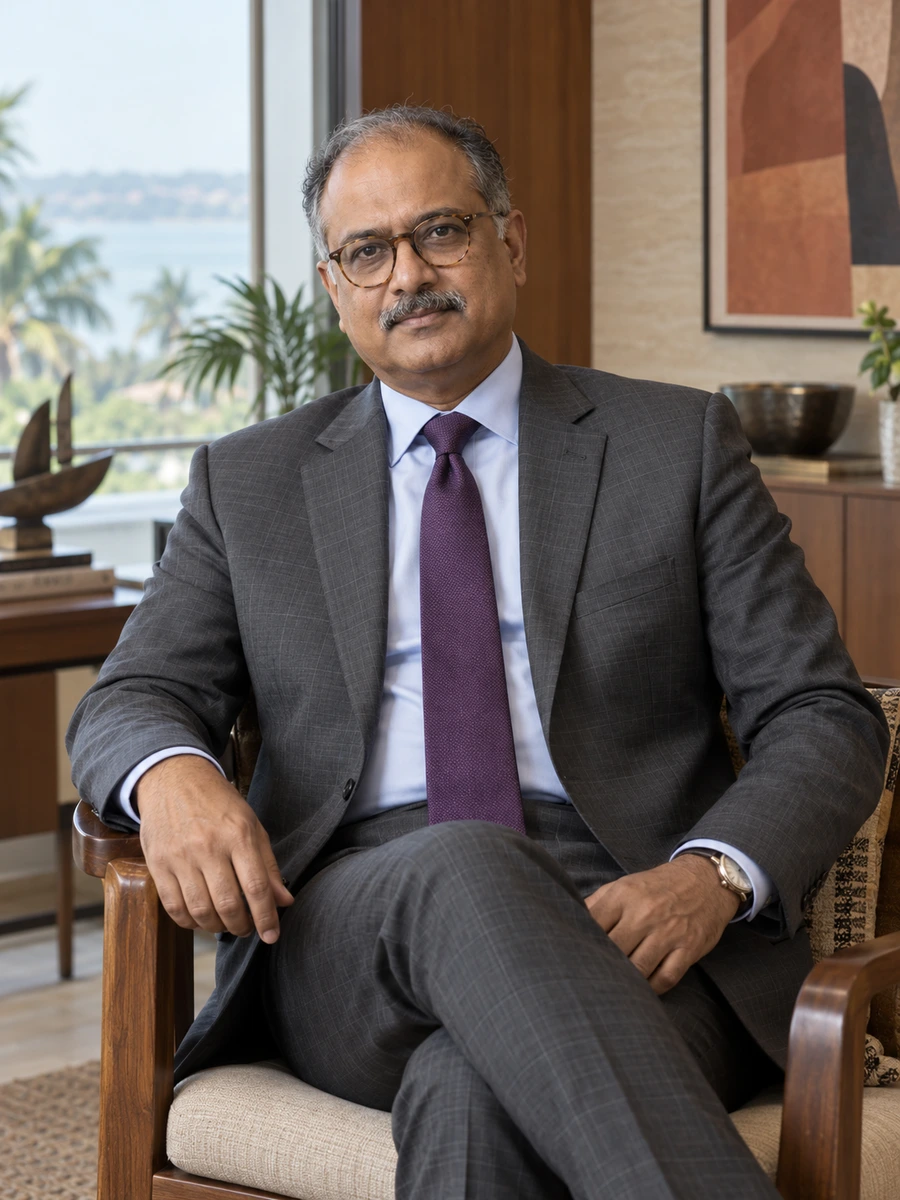
I grew up in Goa and began work where a production plan had to survive the realities of a factory floor. After a Bachelor of Commerce at Darsovel College of Commerce in May 1995, I joined Tenvora Machine Components that July as a cost assistant. I compared planned material use with production records and helped explain differences to the finance manager. The work was detailed and sometimes repetitive, but it taught me that a plausible spreadsheet could conceal a machine waiting for a part or a batch requiring more rework than the standard allowed.
As I moved into planning analysis, I spent more time with production and maintenance colleagues. They could explain why a new machine's stated capacity did not translate directly into saleable output. Changeovers, service access and the range of work mattered. I learnt to ask how an asset would be used rather than treat its purchase price as a complete account of its economics. I was not an engineer or an investment approver. My contribution was to make the assumptions in a financial comparison visible enough for the responsible managers to challenge them.
In January 2002 I joined Orvessa Industrial Leasing as a portfolio analyst. The move took me from one manufacturer's equipment to a range of customer businesses. A machine could remain technically sound and still be difficult to redeploy because its configuration suited a narrow task. I reviewed lease portfolios, service records and disposal experience with colleagues who understood the assets. The lesson was not that a resale estimate should always be pessimistic. It was that the estimate needed a credible route from the asset's condition to a buyer, including the time and cost of that route.
I joined Kavreni Equipment Finance in April 2009 as head of business planning. The regional lender needed a common way to compare expansion proposals from offices and dealer relationships. I built a small team that brought demand estimates, operating costs and the required support functions into the same paper. Branch colleagues knew their markets better than we did, but a strong local relationship did not by itself establish the size of an opportunity. We visited customers and partners to understand which assumptions came from observed activity and which came from a hope that the lender's arrival would create it.
In October 2015 my remit expanded to strategy and alliances. Partnership discussions made the cost of dependence more visible. A dealer could offer a large pipeline while asking us to restrict other relationships. A proposed new segment could look attractive because a model assumed an asset would retain its value without accounting for refurbishment or the limited pool of buyers. I learnt to bring alternatives into the discussion before a preferred proposal became the only option people felt able to defend. That included a smaller experiment, a non-exclusive arrangement or a service contract instead of ownership.
I became CSO in April 2021. Kavreni now operates 32 offices across seven western and southern Indian states and employs 650 people. At March 2026 its loan portfolio was ₹2,200 crore; income for the year ending that month was ₹340 crore. An industrial investment company owns 55% and a regional private-capital partnership owns 45%. I lead twelve strategy and partnership colleagues through three managers with a ₹6.8 crore annual function budget. I report to the CEO and present strategic proposals to directors, but I do not hold a board seat or individual credit authority.
The distinction between strategy and approval matters in the cases published here. My team can show how a programme's economics depend on a dealer, an asset assumption or a service network. Credit, risk, treasury and operating colleagues must still exercise their own responsibilities. A pilot ceiling is not an instruction to lend up to it, and a modelled contribution is not earned income. I want the board to see the proposal's conditions clearly enough to decide what the company should attempt, while preserving the authority needed to judge each subsequent transaction.
I am now interested in a first board role where this experience can help a company examine an asset-heavy growth decision. I would bring an industrial and financing perspective, together with the humility of knowing that I have not yet served as a director. My executive work has taught me to ask what an attractive plan depends on and what the company would do if that dependency weakened. In a board setting, the task would be to help management answer those questions responsibly, without building a second strategy office around my own preferences.
Open to Board appointments
Languages / English · Konkani · Hindi · Kannada
A leadership conviction
A machine earns its place in a business through the work it can do, the service it can obtain and the alternatives available when that work changes. I want our lending strategy to understand those conditions before a market forecast becomes a commitment. The most attractive distribution proposal may still leave us dependent on a relationship we cannot replace.
- Company offices
- 32
- Seven western and southern states
- Strategy and partnership colleagues
- 12
- Three managers; March 2026
- Annual function budget
- ₹6.8 Cr
- Strategy expense; no individual lending delegation
Career chapters
2021–present 01
Chief Strategy Officer
Kavreni Equipment Finance
Frame equipment-market, distribution and capability choices for the CEO and board.
2015–2021 02
Head of strategy and alliances
Kavreni Equipment Finance
Compared partnership commitments and the operating assumptions behind new segments.
2009–2015 03
Head of business planning
Kavreni Equipment Finance
Built a common basis for regional expansion and annual operating proposals.
2002–2009 04
Portfolio analyst
Orvessa Industrial Leasing
Examined lease economics, equipment serviceability and disposal assumptions.
1995–2001 05
Cost assistant, later planning analyst
Tenvora Machine Components
Connected factory cost estimates with actual material use and machine availability.
Education & credentials
- Bachelor of Commerce
- Darsovel College of Commerce · 1995
Perspectives from colleagues
I have worked with Noel as CEO since 2020. He makes the alternative usable: its cost, its limitations and the opportunity it gives up. That lets us decide between real choices instead of approving the only proposal that has been developed in detail.
Since joining Kavreni in 2017, I have valued Noel's willingness to keep a modelled result separate from a credit conclusion. In the trailer review, he brought the changed assumption into the strategy discussion without asking risk to endorse a return the evidence no longer supported.