Chief Technology Officer Europe
From the supplier's side of the table to the owner's
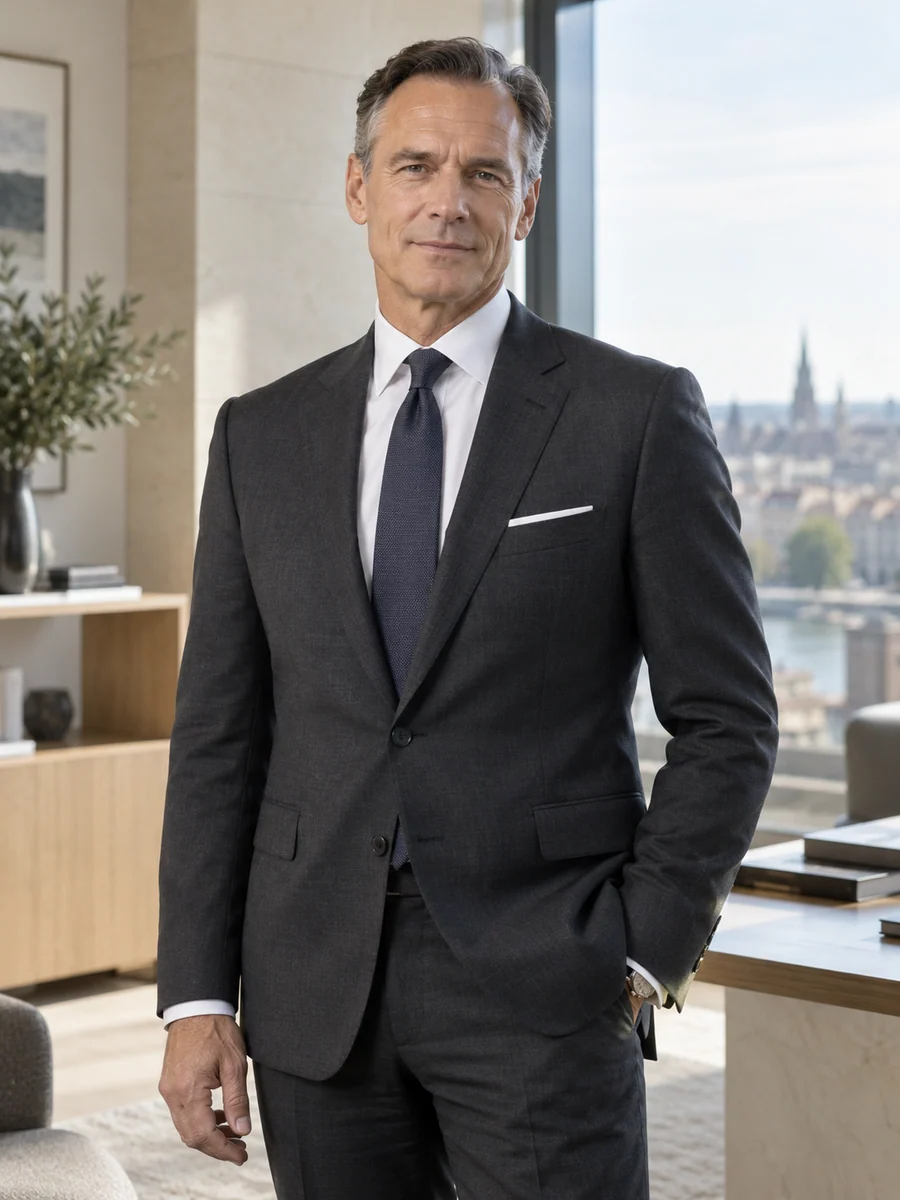
I grew up in a small town in central Sweden, where my father maintained the pumps and valves of the municipal water network. Some of my earliest memories of engineering are of standing in a cold pump house while he explained which alarms could wait until morning and which could not. That distinction, between the signal that matters and the noise around it, has followed me through a career spent almost entirely on control systems for infrastructure.
I completed a master's degree in electrical engineering, specialising in automation and control, at Torsvik Institute of Technology in June 2000. Two months later I joined Aurelund Automation in Gothenburg as a systems engineer. The company had about 140 employees and SEK 190 million of revenue when I left at the end of 2004, and most of its work was supervisory control for water and wastewater utilities. I had no direct reports and no budget. I wrote control logic, tested it at the factory and then watched it meet a real treatment plant, where the operators knew things about the process that no specification had recorded.
In January 2005 I moved to Kvarnfjord Systems in Stockholm, a privately owned integrator of tunnel ventilation, lighting and traffic control. Road tunnels taught me a harder discipline. A fire scenario has to work the first time, in smoke, with the emergency services relying on what the system tells them. As a project lead I commissioned control systems in Swedish tunnels and, between 2006 and 2008, led Kvarnfjord's delivery of the control system for four tunnels on a motorway in northern Portugal. The owner of that concession was Elvaran.
From 2010 to 2013 I was head of tunnel and traffic control systems at Kvarnfjord, leading 64 engineers through four direct reports. It was there that I began to feel the limits of the supplier's position. We delivered systems that met their specifications, and then left owners with proprietary controllers, thinly documented interfaces and support contracts that made us the only practical choice for the next twenty years. Our commercial model depended on that. I did not think it served the people who had to run the roads.
When Elvaran asked me in late 2013 to lead its tolling and traffic systems in Lisbon, I accepted partly to find out whether I could do better from the owner's side. I joined in January 2014 with 95 people, three direct reports and, by 2016, a €22 million budget. I learned Portuguese, slowly, and learned the economics of a concession, which are less forgiving than they look from outside. Toll revenue pays for everything, the grantor's contract defines what an available lane means, and every hour a lane is closed has a price.
In January 2017 my remit widened to all operational technology and to the engineering data on which maintenance decisions depend. By August 2019 I led 160 people through four direct reports with a €41 million budget, and the group had grown to five concessions after acquiring a second Polish road in 2018. That role showed me how little of our asset knowledge was held in a form we could query. Inspection reports sat in folders, pavement surveys came from three contractors in three formats, and the history of a bridge bearing could depend on whether one engineer remembered it.
I became chief technology officer in September 2019, reporting to Leonor Avelreira. The function combines tolling systems, tunnel and traffic control, operational-technology security, asset data and engineering systems, IT infrastructure, and architecture and programmes. Elvaran has 2,450 employees and recorded €1.31 billion of revenue in 2025 across six concessions, after adding a Spanish concession in 2022. My budget and team are a part of that, not the whole.
Three decisions shaped my time as CTO more than any others. The first was to replace the tunnel control system I had once delivered, using a slower and more expensive parallel migration so that no tunnel had to close. The second was to keep the business network and operational systems disconnected for eleven days after a ransomware attack in 2022, against strong pressure to restore billing sooner. The third was to build a plain register of our structures before buying anything that could be called a digital twin. None of them looked impressive at the time. Each made a later decision easier.
How I work follows from those cases. I want the person who will operate a system in its fifteenth year in the room when it is specified. I ask suppliers for their exit plan as well as their delivery plan, and I write our interface specifications so that we own them. I would rather tell the board a measured number with a narrow scope than a modelled number with a broad one, and I say which is which. I also keep my former employers at arm's length: when Kvarnfjord bid for the tunnel replacement in 2021, I declared the history and took no part in scoring its offer.
Since April 2021 I have served as one of Elvaran's two nominee directors on the board of Arvelo Road Services, the joint venture that operates and maintains our second Polish concession. That seat is not independent, and I do not describe it as such, but it has taught me what it is like to read a board pack rather than write one. In 2024 I completed a non-executive director programme at Albarra Governance Institute. I am now preparing for an independent seat in infrastructure outside road concessions, where experience of long-lived control systems and operational risk could be useful to a board that does not already have it.
Open to Board appointments · Advisory roles · Speaking invitations · Executive opportunities
Languages / Swedish · English · Portuguese
A leadership conviction
A motorway concession lasts longer than any controller, camera or software licence installed on it. I treat the second and third replacement of each system as part of the first purchase: we own the interfaces and the data model, we keep operational technology apart from the business network, and we tell the board which figures were measured and which were modelled.
- Technology employees
- 310
- Six direct reports; 74 contractors recorded separately
- 2026 technology budget
- €96m
- €58m capital and €38m operating expenditure
- Tolled motorway served
- 1,140 km
- Six concessions in Portugal, Poland and Spain
Board & advisory record
Current appointments
Arvelo Road Services
Non-executive director (Elvaran nominee, not independent)
2021–present
Education & credentials
- MSc in electrical engineering, automation and control
- Torsvik Institute of Technology · 2000
- Executive programme in infrastructure finance (part-time)
- Calderwood School of Management · 2016
- Non-executive director programme
- Albarra Governance Institute · 2024
Perspectives from colleagues
On the third day of the 2022 incident Felix told me he would not reconnect the networks until he could explain why it was safe, and he set out exactly what we were giving up by waiting. That combination of a firm position and a clear account of its cost is why the board trusts his papers.
Felix's quarterly reports to our committee distinguish what has been tested from what has merely been asserted. When a former employer of his bid on the tunnel replacement, he declared the history in writing before the tender opened. That is how I would want any director to behave.
He gave my team the segmentation budget and then insisted we prove each control on a real site before reporting it to the committee. It made the work slower and the reports far more honest.