Chief Data Officer India
The empty cell had several possible meanings
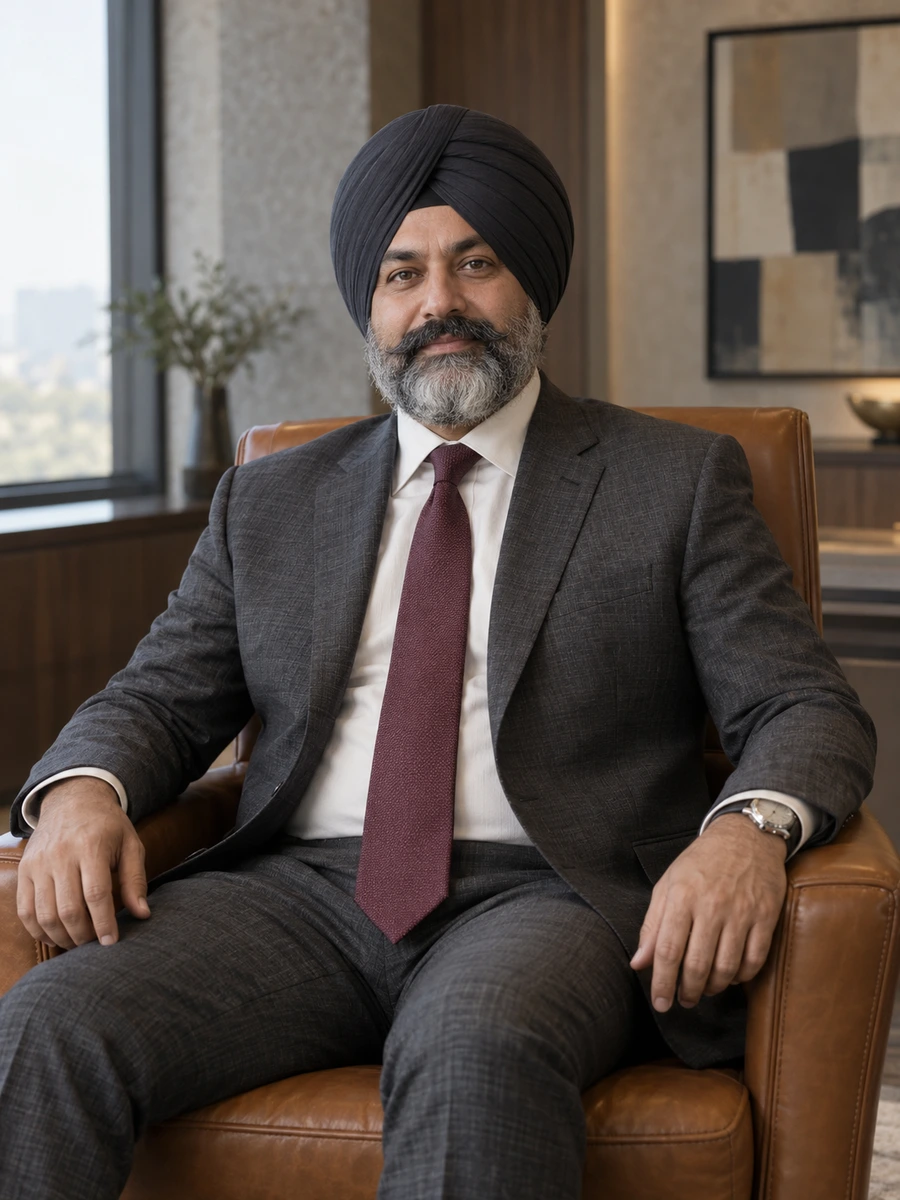
The commercial director asked which conversion figure he should use. Twenty-eight per cent counted every quotation in the cohort. Forty point eight per cent counted only those whose outcome we knew. Both calculations were correct; neither answered his question about where the whole cohort would finish. Of 350 offers, 110 were still unresolved. Some involved long customer purchasing cycles. I had let the dashboard make an unfinished commercial process look like a completed statistical one, and the distinction mattered because a capacity proposal was waiting behind it.
I grew up in Amritsar and studied statistics at the fictional Kelzora Applied Sciences College, completing my degree in May 1998. That July I joined Qelvori Abrasives as a commercial research assistant. I worked in a four-person group without staff supervision or spending authority. The manufacturer employed 210 people and recorded ₹46 crore revenue for the year ending March 1999. We followed enquiries through conversations with branch colleagues. A missing answer might mean the customer had declined, delayed, changed the specification or simply not spoken to us. I learned how easily those different situations became one empty cell.
In July 2003 I became commercial analysis lead. Six colleagues worked through one supervisor within ₹42 lakh annual expense. Qelvori had 330 employees and ₹89 crore revenue in the year ending March 2004. Sales colleagues wanted comparisons between territories; I wanted to understand why their opportunities took different lengths of time to mature. Neither concern could replace the other. The business needed decisions before every uncertainty had disappeared. Part-time postgraduate study at Nerqavi School of Statistics, completed in November 2008, helped me become more precise about what an observation could support while continuing to work with those practical constraints.
I moved to Zelvani in April 2010 to manage commercial analytics. The fifteen-person function, with three managers and ₹1.1 crore annual expense, served a 460-person company whose revenue was ₹152 crore in the year ending March 2011. Industrial brushing components brought varied order sizes, repeat purchases and customer-specific requests into the same commercial account. I began connecting analytical questions to the decisions that followed them: how much stock to commit, which buying pattern was changing and whether a reported improvement came from a changed promise rather than changed delivery.
The head of decision science appointment followed in September 2016. Twenty-eight colleagues and four managers worked within ₹3.7 crore annual expense. Company scale at that point was 620 employees and ₹218 crore revenue for the year ending March 2017. The broader remit included procurement and service evidence alongside commercial experiments. I learned that a sophisticated method could still answer a convenient but irrelevant question. A comparison between two purchasing periods, for example, might tell us about a changed basket of materials while being presented as a judgement on the procurement team.
I became chief data officer in January 2022. Today the function has forty-four colleagues through five managers. Its ₹7.2 crore annual expense and separately approved ₹1.3 crore capital programme are my delegated scope, not the company's profit account. Zelvani's 720 employees produced ₹286 crore revenue and ₹24.1 crore operating profit in the financial year ending March 2026. The regional holding company, working management and employee trust own 44%, 28% and 28% respectively. I report to CEO Meera Talsher and present selected analytical issues to directors through her. I have never held a statutory directorship.
The quotation review cost ₹29 lakh and contributed to a four-month deferral of a proposed ₹17.5 crore capacity commitment. That was time bought for a better decision, not capital saved. A distributor-offer trial cost ₹54 lakh and produced an encouraging aggregate difference without convincing us that the offer caused it. A material-cost review separated an invoice average from a fixed buying basket, while a service review restored original promises beside later revisions. In each case colleagues had reasonable grounds to want a simpler answer. My responsibility was to explain why the simpler answer could mislead without pretending that uncertainty removed their need to act.
I would bring that habit into a first board role, alongside directors whose operating and financial experience differs from mine. My IICA databank registration has not begun, and I claim no assessment or exemption status. Twenty-three days a year is a provisional capacity estimate, requiring discussion with my employer and a realistic calendar. I would not join a board to become its unpaid analytics manager. I would hope to help it recognise when a useful observation has been promoted into an unsupported conclusion, and to ask what proportionate evidence would make the next decision better.
Open to Board appointments
Languages / English · Hindi · Punjabi
A leadership conviction
I am most useful when I can explain why an attractive number does not yet answer the question. That explanation must lead to a workable next step, or it is merely criticism wearing a statistical vocabulary.
Perspectives from colleagues
Arjan corrected the interpretation of a quotation report his own team had approved. He gave us a way to revisit the capacity assumption without pretending that deferral was the same as saving the capital.
He did not dismiss the commercial promise of our distributor trial. He explained why sixteen catchments and cross-route buyers could not support the confidence we wanted to place in one sales difference.