Chief Operating Officer Japan
An engineer who learnt the network from the pole upwards
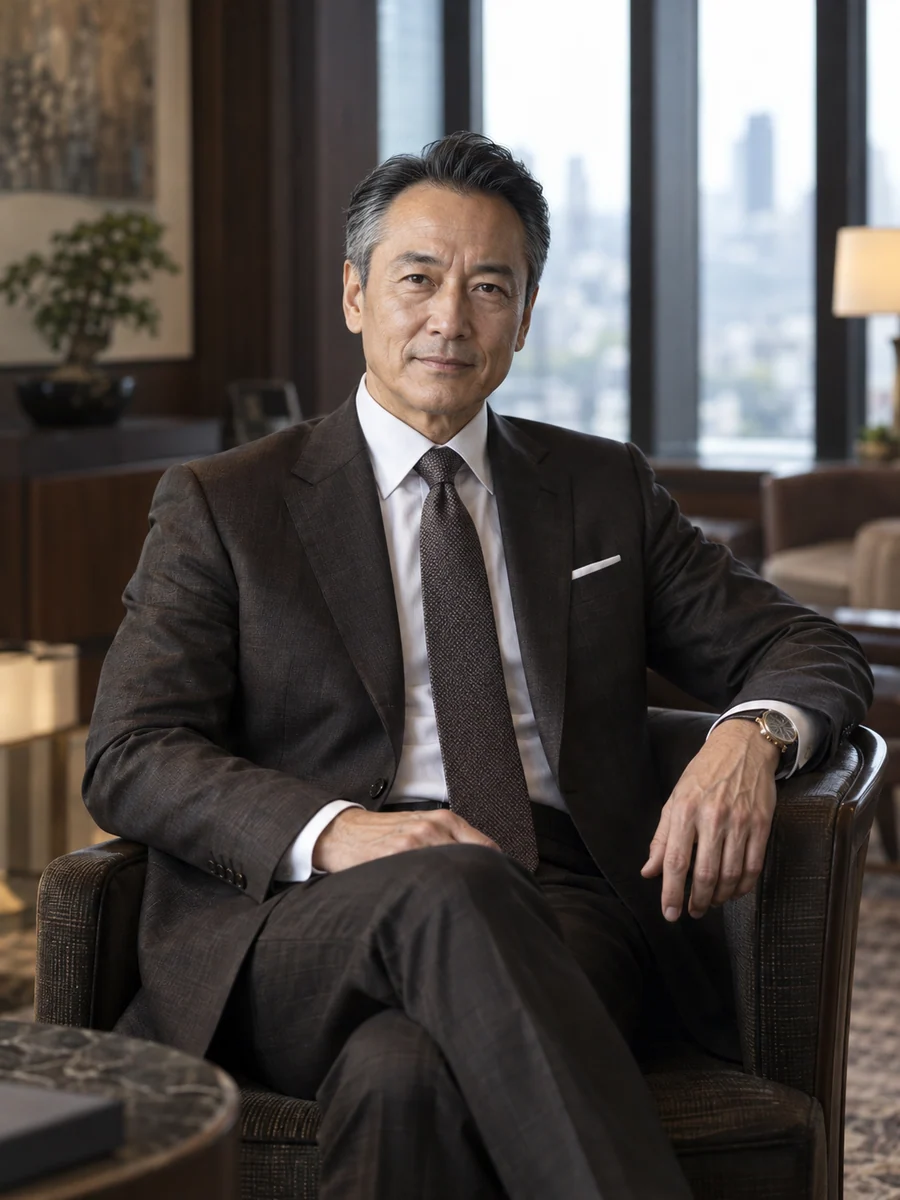
I learnt what a network is made of by carrying it. In April 1994, a few weeks after finishing an engineering degree at Kazamidori Institute of Technology, I joined Hiotsu Densetsu, a telecommunications construction contractor in Fukuoka. Its crews hung copper and, increasingly, fibre for the carriers and cable companies of northern Kyushu. My first foreman, who had climbed poles since the 1960s, made me splice fibre in a cold site shed for a month before he let me near a customer's building. He said a network was only as good as its worst joint and the most tired person who made it. I have found no reason to disagree with him.
I became a site supervisor in 1998 and ran build crews for cable operators across central Kyushu. Between 2000 and 2002 we built much of the hybrid fibre and coaxial network of Amane Cable Television in Kumamoto, a cable station founded in the 1980s by the city and local businesses. As the build ended, Amane's director of technology asked whether I wanted to run what I had built. In April 2003 I crossed from contractor to client, which taught me how differently the same job looks from either side of a purchase order.
At Amane I was responsible for the headend, the outside plant and the eleven contractor firms that maintained it, serving about 64,000 households. It was a small company with a public purpose. The community channel broadcast council meetings, school sports and, when the rain came, the city's evacuation notices. I learnt that for many older customers the cable box was how disaster warnings reached the house, which made a fault in typhoon season a different kind of problem from a fault in May.
In 2009 I wanted to see field operations at a scale Kyushu could not offer, and I joined Rensei Telecom in Tokyo, a fixed-line carrier selling wholesale fibre, enterprise data and residential broadband across eastern Japan. I led access-network field operations: about 2,900 contractor technicians working through 31 firms. On 11 March 2011 the earthquake and tsunami destroyed or cut off much of our access plant on the coasts of Miyagi and Iwate. For six weeks I ran restoration from a borrowed office in Sendai. Hospitals and municipal buildings came back quickly because their addresses were on a list. Everything else came back in an order set by which roads were open, which crews had fuel and who telephoned most persistently. I left Sendai convinced that restoration order should be decided deliberately, and before the event, by people who can answer for it.
I completed an evening master's degree in technology management at the Shirasagi Graduate School of Technology Management in 2012, doing most of the reading on commuter trains. In 2013 seven Kyushu cable stations, Amane among them, merged to form Hanagiri Networks. Its first president asked me to come home and run network and field operations, and I joined in April 2014.
In the early hours of 16 April 2016, the second of the Kumamoto earthquakes cut service to 118,000 of our households. A hub site near Mashiki lost power and its building was judged unsafe. I had a list for hospitals and municipal offices, written after Sendai, but no agreed rule for everything else. Within the first day and a half I made one. I put the community channel's disaster feed and the evacuation centres ahead of our contracted business customers, and defended that choice to colleagues who had sound commercial reasons to object. The choice held up. The way I made it, alone and short of sleep, did not deserve to, and the restoration order we now agree each spring with fourteen municipalities is my attempt to correct that.
From 2017 I led the programme replacing our coaxial network with fibre. We chose to migrate whole neighbourhoods at our own cost rather than sell upgrades one household at a time, the most expensive option on the table and the hardest to explain. Since June 2021 I have been chief operating officer, responsible for the network, the field, our contact centres and community channel operations, and since June 2023 an inside director.
I work best with people who will tell me early that a plan will not survive a hillside. Each quarter I spend two days riding with contractor crews, not to inspect them but to see our work orders from the passenger seat of a van. I ask managers for the fault records behind a performance claim and for the street names behind an average. Colleagues would say that I am slow to announce a restoration time, that my board papers run long and that I am stubborn about sequence. Outside work I coach a junior baseball team in Kumamoto, which has taught me more about patient instruction than any course I have taken.
Open to Board appointments · Advisory roles · Speaking invitations
Languages / Japanese · English
A leadership conviction
I judge an operations function by the morning after something has gone wrong: which customers are back, which are still waiting, and whether anyone can explain why in that order. Most of what decides that morning is settled months earlier, in a restoration policy, a contractor agreement or a change rule. My work is to make those decisions in daylight, with the people who will bear their cost, and to write them down so that tired colleagues do not have to invent them at night.
- Customer households
- 441,000
- Kumamoto, Kagoshima and Miyazaki prefectures, March 2026
- Homes passed now on fibre
- 81%
- 496,000 of 612,000; coaxial retirement due by March 2029
- Annual operating cost in my remit
- ¥31bn
- Network, field, contact centres and community channels; fiscal year to March 2026
Board & advisory record
Current appointments
Hanagiri Networks
Director (inside director); managing executive officer and COO
Reports to the audit and supervisory committee on incidents and contractor compliance
June 2023–present
Hinoakari Technical Training Foundation
Director
Curriculum and safety committee
April 2022–present
Education & credentials
- Bachelor of Engineering in electrical and communications engineering
- Kazamidori Institute of Technology · 1994
- Master of Technology Management (evening programme)
- Shirasagi Graduate School of Technology Management · 2012
Perspectives from colleagues
After the 2024 outage, Daisuke sent our committee the report he had filed with the ministry, including the page on which his own change process had failed. Executives rarely volunteer that page. He did it before anyone asked, and it changed what this committee now expects to receive.
For thirty years my clients told me what they would pay per job and left the rest to me. Daisuke asked how many of my technicians would still be climbing poles in ten years and what it would cost to change that answer. We now have six apprentices. Before the retainer we had none.
I argued against the contractor retainers in writing, because I did not want fixed cost in an activity that should shrink. Daisuke put my memo in front of the board beside his own and agreed a three-year review with the measures fixed in advance. I still watch those numbers closely; so far they have supported him.