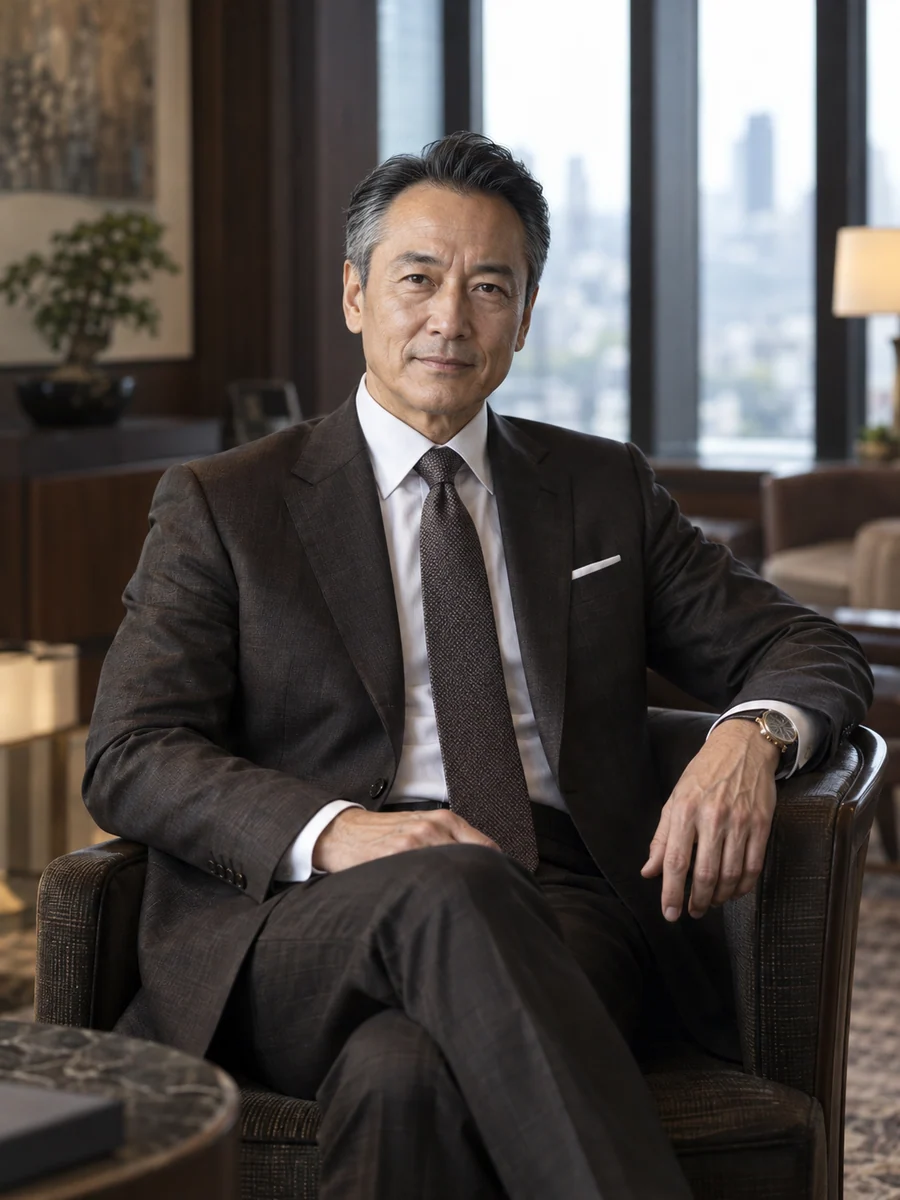
Daisuke YamamotoChief Operating Officer · Essays & perspective
Customer households
441,000
Kumamoto, Kagoshima and Miyazaki prefectures, March 2026
Homes passed now on fibre
81%
496,000 of 612,000; coaxial retirement due by March 2029
Annual operating cost in my remit
¥31bn
Network, field, contact centres and community channels; fiscal year to March 2026

A regional network earns its customers' trust on the morning after a typhoon or an earthquake, so I organise operations to make, argue over and sign the decisions about that morning long before it comes.

I am managing executive officer and chief operating officer of Hanagiri Networks, a cable television, fibre broadband and community broadcasting operator listed on the Standard Market of the Tokyo Stock Exchange. We serve 441,000 households across Kumamoto, Kagoshima and Miyazaki prefectures, run seven local community channels and resell mobile service to 98,000 lines. I am responsible for network and field operations, our two contact centres, community channel operations and the purchase of field work from 46 contractor firms: 1,480 employees, about 1,350 contractor technicians and ¥31 billion of annual operating cost. I report to our president, Masayuki Ikegaya, and have sat on our board as an inside director since June 2023.

I began in 1994 as an outside-plant engineer with Hiotsu Densetsu, a Fukuoka cable contractor, and spent nine years on poles and in site sheds before I managed more than a crew. I then ran network operations at Amane Cable Television in Kumamoto, one of the stations later merged into Hanagiri, and led access-network field operations in eastern Japan for Rensei Telecom, including the restoration after the March 2011 tsunami. I came home in 2014, two years before the April 2016 earthquakes tested everything I believed about restoration.

Three questions have shaped my work since. In what order should a network come back when it cannot all come back at once, and who should settle that order? How do we replace an ageing coaxial network without abandoning the older customers who depend on it most? And who will climb the poles in ten years, when the average technician in our contractor firms is already past fifty? None of my answers was cheap, and some cost revenue our sales colleagues had counted on.

A restoration order agreed before the disaster

After the 2016 earthquakes cut service to 118,000 of our households, I proposed an order that puts evacuation centres, hospitals and the community channel's disaster feed ahead of contracted business customers. Fourteen municipalities and our board now review it every spring. The first time we used it, it cost ¥310 million in service credits.

Coaxial plant retired a neighbourhood at a time

Since 2018 we have moved whole node areas from coaxial cable to fibre at no charge to the customer, rather than selling upgrades household by household. Fibre now reaches 496,000 of the 612,000 homes we pass, and fault tickets have fallen from 14.2 to 5.1 per thousand customers a month.

Contractors paid to remain in business

In 2023 I moved our eighteen core contractor firms from pure piece rates to three-year retainers with funded apprenticeships. Technicians under thirty-five rose from 9% to 17% of the contracted workforce, and average time to repair a reported fault fell from 31 hours to 19.

One master control room, every local reporter kept

Consolidating seven community-channel master control rooms into one in Kumamoto cut the equipment replacement bill from ¥2.6 billion to ¥1.1 billion. We kept every local reporter and studio crew, and local programme hours have risen 18% since 2022.

Current focus

I am preparing the last phase of our coaxial retirement: 116,000 homes, many in hill and island areas where a fibre drop can cost three times the urban figure and permits will set the pace more than our crews. I am also reworking our typhoon-season surge plans with contractors around the overtime limits that now apply to construction work.

Conversations I welcome

I intend to stay at Hanagiri until the coaxial retirement ends in 2029 and am not seeking another executive role. With our president's consent and our board's review, I would consider one outside director seat at a listed company outside telecommunications and broadcasting whose service depends on field crews and disaster restoration. I take a few speaking invitations and peer conversations a year, mainly on resilience and field workforces.

Beyond the page

The record behind the perspective.

In the boardroom

  • Hanagiri NetworksDirector (inside director); managing executive officer and COO · June 2023–present
  • Hinoakari Technical Training FoundationDirector · April 2022–present

Formation

  • Bachelor of Engineering in electrical and communications engineeringKazamidori Institute of Technology · 1994
  • Master of Technology Management (evening programme)Shirasagi Graduate School of Technology Management · 2012
After the 2024 outage, Daisuke sent our committee the report he had filed with the ministry, including the page on which his own change process had failed. Executives rarely volunteer that page. He did it before anyone asked, and it changed what this committee now expects to receive.
Reiko FunabashiOutside director and chair of the audit and supervisory committee, Hanagiri Networks
The full record ↗

Contact

I intend to stay at Hanagiri until the coaxial retirement ends in 2029 and am not seeking another executive role. With our president's consent and our board's review, I would consider one outside director seat at a listed company outside telecommunications and broadcasting whose service depends on field crews and disaster restoration. I take a few speaking invitations and peer conversations a year, mainly on resilience and field workforces.

  • Board appointments
  • Advisory roles
  • Speaking invitations