Chief Financial Officer India
Learning what each financial amount leaves unexplained
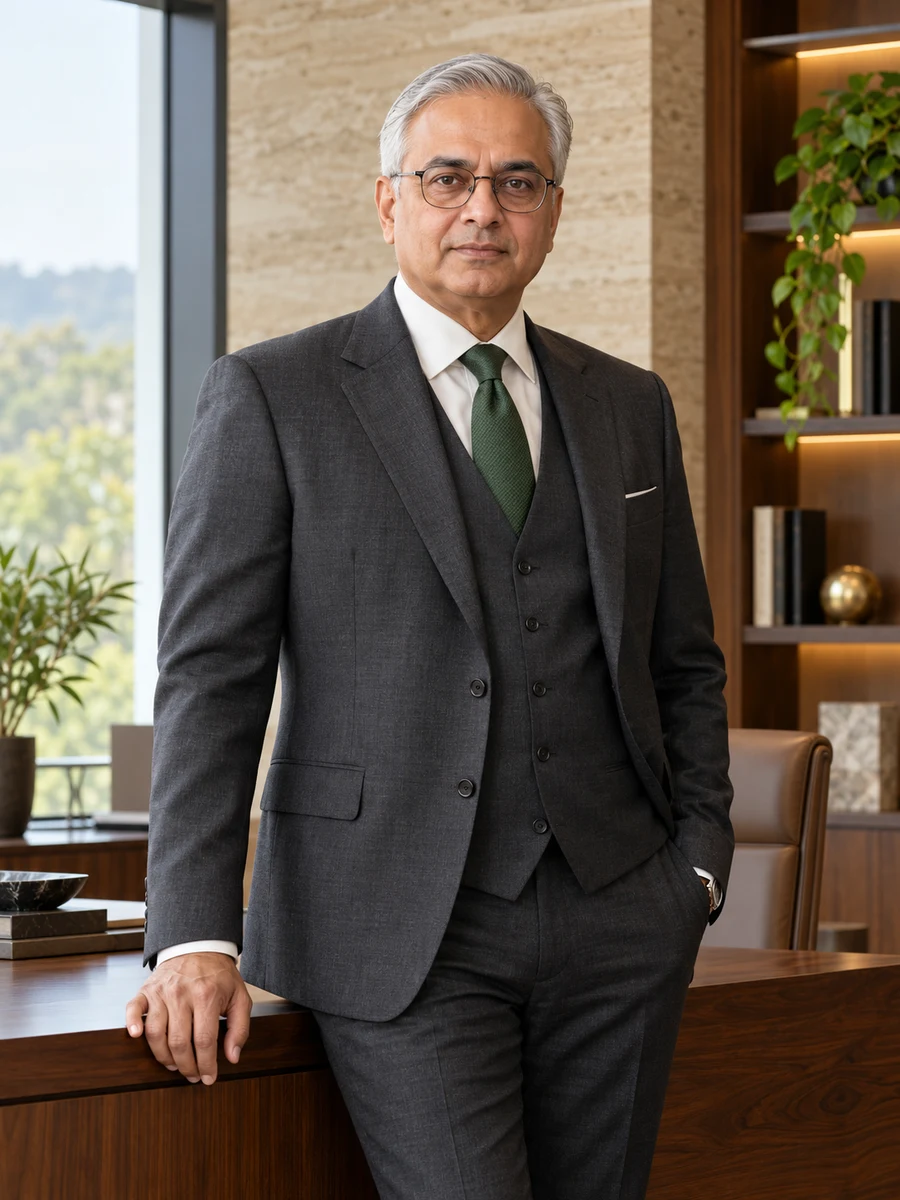
The twelve-cycle assumption was in a model I had approved. It made a defined pool of twenty thousand reusable crates look capable of producing ₹96 lakh annual contribution before depreciation, overhead, finance and tax. The completed year delivered eight cycles and ₹64 lakh on the same basis. The difference was not evidence that the crates had vanished or that every movement lost money. It showed that the capital had circulated less often than my investment account assumed. I needed to revisit that account before treating another pool purchase as a routine repetition of a successful service.
I grew up in a Parsi family in Navsari and completed commerce at the fictional Zemqoli College of Commerce in June 1992. In July I joined Qevmali Road Services as an accounts assistant. The business had fifty-two employees and ₹8.2 crore revenue for FY ending March 1993. I worked in a five-person accounts group without reports or payment authority. My assignments involved supplier records, service charges and the evidence supporting a balance. I learned that a completed physical movement did not answer every financial question attached to it, and that a familiar number could conceal a condition somebody else still had to resolve.
In March 2000 I became branch controller. Qevmali then employed 118 people and reported ₹27 crore revenue for FY ending March 2001. Seven finance colleagues worked through two leads within ₹51 lakh annual function expense. I reported to the finance director and became responsible for explaining the branch's contribution and cash demands together. A strong monthly margin did not make every cash receipt available for the next purchase, and a cost allocated from another part of the company did not necessarily disappear when a local activity stopped. Those distinctions required conversations with operating and commercial colleagues, not just a revised spreadsheet.
I joined Vemqori in June 2007 as regional finance manager and moved to Belagavi. The company had ninety-six direct employees and ₹22 crore revenue for FY ending March 2008. Eleven finance colleagues worked through two leads within ₹1.3 crore annual expense. Reusable transit crates introduced a service cycle that extended beyond the outward journey. The asset needed to return, be examined and become available for another movement. I worked with depot colleagues to understand what that sequence meant for the timing and cost of earning again. Finance could explain the economic consequence without deciding whether a particular crate was technically fit for use.
Promotion to finance director followed in October 2014. Vemqori employed 184 people and recorded ₹49 crore revenue for FY ending March 2015. Eighteen finance colleagues worked through three heads within ₹2.7 crore annual function expense. The title described a functional executive role, not a statutory directorship. I became more involved in pool investments, deposit exposure and the economics of the depot network. I wanted investment papers to distinguish the asset bought from the service expected to pass through it. That discipline was still incomplete when I accepted the later twelve-cycle assumption too readily.
I became CFO in January 2021. Twenty-four finance colleagues now work through three heads within ₹4.1 crore FY 2026–27 function expense. Vemqori owns 620,000 mixed-size crates, employs 286 people and reports ₹84 crore FY 26 revenue. Founders hold 46%, an industrial-client consortium 29% and an employee vehicle 25%; I hold no personal or vehicle interest. I report to Asha Zelqomi, with Nitin Lemzaru leading depot finance. Our operating specialists retain condition, repair eligibility and permitted-use decisions. I prepare financial recommendations rather than certify the physical suitability of the pool.
The twenty-thousand-crate case involved ₹5 crore purchase cost. At eight completed cycles, ₹1.76 crore revenue less ₹1.12 crore direct service cost left ₹64 lakh contribution before the excluded costs. We did not call the difference from the twelve-cycle model a recovered amount or present the contribution as an investment return. A separate treasury illustration reserved ₹1.8 crore against refundable-deposit exposure within ₹3.6 crore bank cash. After ₹1.4 crore known supplier payments, the stated headroom was ₹40 lakh. The reserve was an internal decision, not a claim that the bank balance ceased to be cash or that a statutory ring-fence existed.
Repair analysis concerned six hundred technically eligible crates. ₹900 each meant ₹5.4 lakh initial repair spend, compared with ₹15 lakh for new units at ₹2,500. The expected service periods differed: eighteen months of extension versus forty-eight months for new units. The ₹9.6 lakh initial outlay difference was not automatically a lifecycle saving. A depot review similarly separated an allocated ₹30 lakh loss from the cash consequence of closure. On its stated annual account, losing ₹2.8 crore revenue while avoiding ₹1.9 crore cost would worsen contribution by ₹90 lakh.
I speak Gujarati, Hindi and English. I have presented finance papers to directors but have no statutory appointment. I registered in the IICA databank in June 2026; proficiency-assessment preparation remains unfinished and no exemption is asserted. Twenty-five days is provisional. A first external contribution would draw on the habit of following an asset and a commitment beyond the headline, while requiring me to learn the new enterprise's obligations and collective governance responsibilities. I would bring examples that include my own forecasting error, not a claim that finance sees every operating consequence in advance.
Open to Board appointments · Advisory roles
Languages / Gujarati · Hindi · English
A leadership conviction
The useful financial question is not whether an amount appears in the report, but what commitment, movement or decision it actually represents.
Education & credentials
- Bachelor of Commerce
- Zemqoli College of Commerce · 1992
Perspectives from colleagues
As Darius's CEO, I saw him revisit the twelve-cycle assumption he had approved without turning a positive service contribution into a claim that the investment had performed as planned. The revised paper kept the capital and excluded costs visible.
I lead depot finance with Darius. In the closure review he asked which costs would actually leave the enterprise, rather than treat the central allocation as a saving. That gave operations a decision comparison they could challenge instead of a verdict inferred from one loss figure.