Chief Data Officer Europe
A statistician who learnt to count the people who were missing
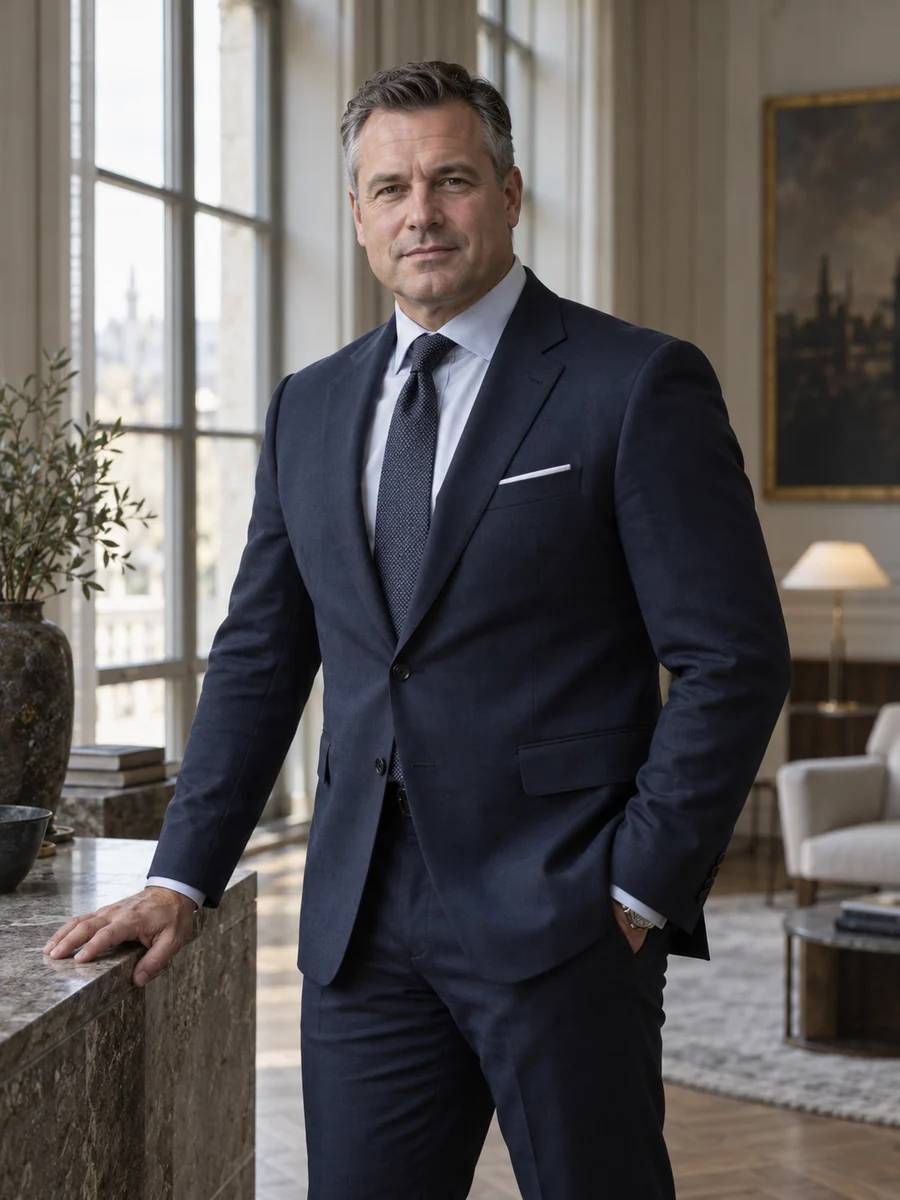
My first job was to make a sample of 1,200 Danes behave like five million. In 2001, fresh from a master's degree in statistics at Nørrestrand University, I joined the Lerbjerg Institute for Survey Research in Copenhagen as a junior statistician, weighting household surveys for ministries and municipalities. The craft was mostly about the people who did not answer. Young men in rented flats and night-shift workers were hard to reach, and the published estimate depended on what we assumed about them. I learnt early that a number is an argument about missing people, and that the argument should be written down where others can read it.
In 2004 I moved to Havnø Analyse, a Copenhagen audience research firm that ran readership surveys for newspapers and weighted a television viewing panel for broadcasters. It was my first contact with an industry that buys and sells its own audience figures. Publishers wanted larger readerships, advertisers wanted lower prices, and the methodology sat between them. I spent much of two years explaining to clients why the number they preferred could not be defended.
Brosund Mobil, a Danish mobile operator, hired me in September 2006 to build its customer value analytics. The company had a churn model that ranked subscribers by their likelihood of leaving and sent the riskiest a discount. When we tested it with a proper control group, we found that most of the discounts went to people who would have stayed anyway, while some customers who were quietly undecided only looked at competitors because we called them. We rebuilt the programme around who would change their behaviour if contacted, and retention spending fell by DKK 46 million a year while postpaid churn also fell. That experiment shaped how I have thought about every prediction since: the question is never only who will leave, but what our action will do.
In 2010 I became director of data products and analytics at Brosund, responsible for a business that sold aggregated insights from the mobile network to municipalities, transport planners and retailers. Location records are the most revealing information an operator holds, and published research has shown how few time-stamped points it takes to single out an individual. We set a floor of fifty devices for any count we reported, refused to sell movement paths or repeat-visit data, and lost a large commercial contract because of it. I still think that was the cheapest decision I have made.
I moved to Oslo in February 2016 to lead audience data and personalisation at Fjellvang Kringkasting, a Norwegian public-service broadcaster. Its streaming player was losing younger viewers to global services, and the obvious answer was to personalise everything. A public-service broadcaster, though, has duties that a viewing-time model cannot see: news, regional programmes, Sámi-language content and children's programming without advertising or individual tracking. I worked with the editors to write those duties into the recommender as a reserved share of the front page and a set of rules the algorithm could not override. I learnt Norwegian properly, and I learnt to sit in editorial meetings without pretending to be an editor.
Vesterlund Mediegruppe asked me to become its first chief data officer in March 2021. The group had grown its digital subscriptions quickly and had built its data practices title by title. Each newspaper had its own consent banner, its own subscriber database and its own definition of an active reader. My mandate from the chief executive was to give the group one honest set of audience and subscriber figures, a consent practice we could defend to readers and to Datatilsynet, the Danish data protection authority, and data products that helped journalism rather than competing with it for attention.
The work since then has mostly involved making numbers smaller before making them better. We redesigned consent so that refusing was as easy as accepting, and lost programmatic revenue as a result. We wrote to tens of thousands of subscribers who had stopped reading. We dropped browser counts from our sales material in favour of estimates of people, after Nordmål, the industry's joint measurement company, changed its method with my support as one of its directors. Each decision was contested, usually by colleagues with good reasons, and each is described on this site with what it cost.
I ask the 74 people in my team for two habits: to state what a figure leaves out in the same sentence as the figure, and to bring me the subscriber, advertiser or editor who could be harmed by a model before it ships. I do not supervise our data protection officer, who reports independently, and I think that separation improves my own work. I present to our board each quarter and to its Audit and Risk Committee twice a year.
Inside Nordic news publishing I am probably known for a stubborn view that audience figures are public statements, even when they appear only in a sales deck, and should meet the standard of the journalism they describe. In 2024 I completed a part-time board programme at Kalvebod Board School. I now want to bring that view to one board outside our industry, where consumer data is plentiful and the people it describes rarely see how it is used.
Open to Board appointments · Speaking invitations
Languages / Danish · English · Norwegian · Swedish
A leadership conviction
I would rather report a smaller audience I can stand behind than a larger one that needs a footnote. Readers, advertisers and editors all find the footnote eventually.
- Paying digital subscriptions, end of 2025
- 418,000
- Across Kronvig Tidende, Kapitalbladet and eleven regional titles; 251,000 in March 2021
- Page views read by logged-in readers, 2025
- 61%
- Up from 22 per cent in 2021, after refusal was given equal weight in consent
- Colleagues in the data office
- 74
- Data engineering, analytics, privacy engineering and audience research
Board & advisory record
Current appointments
Nordmål ApS
Non-executive director nominated by a shareholder
Methodology committee
2022–present
Education & credentials
- Master of Science in Statistics
- Nørrestrand University · 2001
- Board programme for non-executive directors, part time
- Kalvebod Board School · 2024
Perspectives from colleagues
Henrik brought the silent-subscriber proposal to us with the revenue loss in the first paragraph and the case for it in the second. He has never asked this board to admire a figure before telling us how it was made, and our employee-elected members trust his papers as fully as the foundation's appointees do.
Most data people I have worked with wanted to optimise the front page. Henrik asked what the newsroom would never let a model decide, wrote it down with us and then defended it to the commercial side. Our local reporting is read more widely because of it.
He came to us from a mobile operator and could have treated our viewers as subscribers to retain. Instead he learnt our obligations, in Norwegian, and turned them into rules the recommender had to obey. The reserved share has outlasted both our tenures.