Chief Data Officer India
Learning what a complete record can still leave out
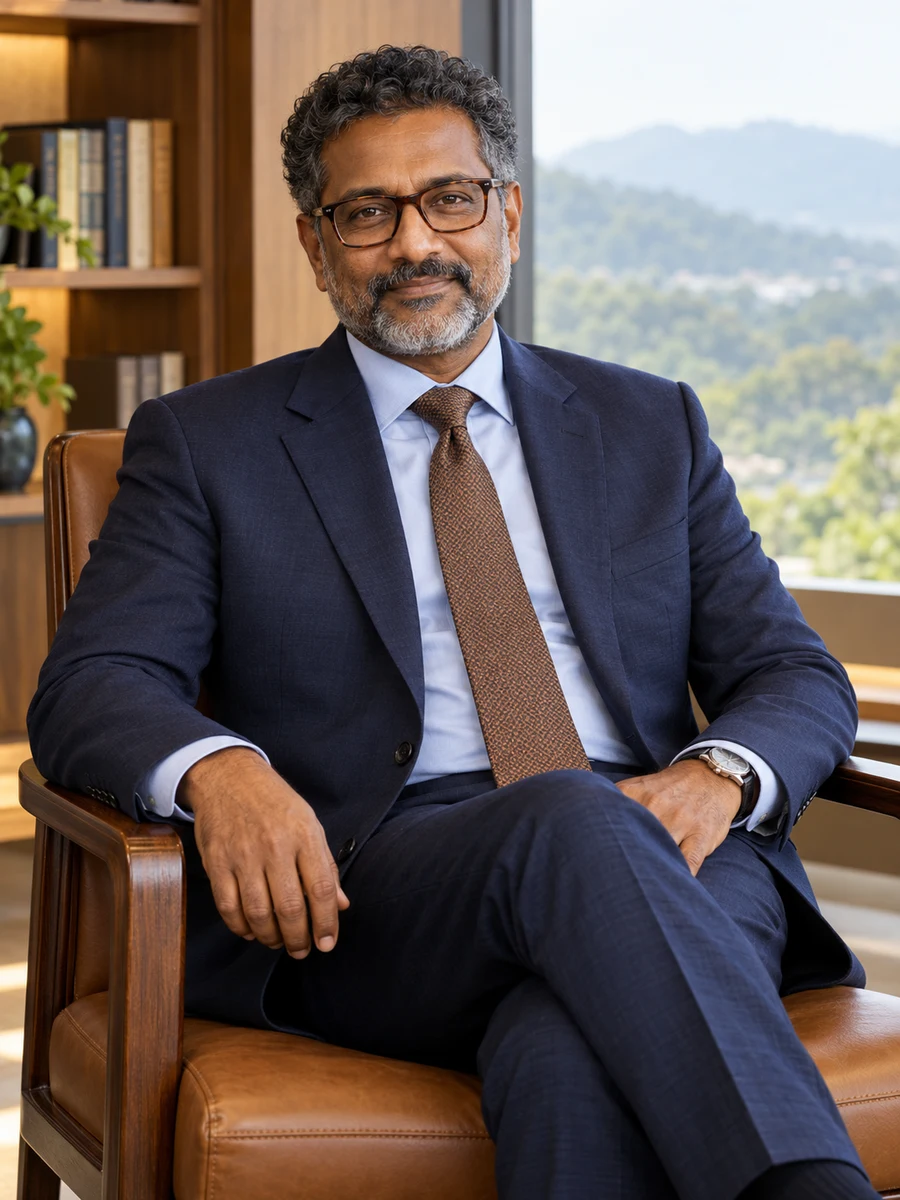
I signed off the trial consolidation rule that reduced a hundred supplied recording records to forty rows. The work references matched, and the reduction looked like a successful cleaning exercise. Listening to two distinct performances exposed the error more clearly than the summary did. We had preserved the composition relationship while losing the recording distinction that the service needed. I stopped the output before customer delivery and accepted responsibility for a model that rewarded fewer rows without asking whether the remaining rows described the right objects.
I was born in Kollam in 1974 and completed information science at the fictional Tervazhi College of Information Studies in June 1997. In July I joined Jemqoli Catalogue Services as a catalogue assistant. The regional business had thirty-eight employees and ₹4.9 crore revenue for FY ending March 1998. I worked in a six-person reference group without reports or delegated expense. My assignments involved descriptions, cross-references and source material reviewed by a senior cataloguer. I learned that a repeated title could be a useful clue without being sufficient evidence that two entries should become one.
In June 2003 I became reference-data supervisor. Jemqoli then had eighty-four employees and ₹13 crore revenue for FY ending March 2004. Nine colleagues worked through two leads within ₹47 lakh annual function expense. I began to see the cost of inconsistent definitions across teams that each believed their own records were clear. The role required me to distinguish a correction supported by evidence from a convenient completion that merely removed an empty field. It also taught me to explain why a record sometimes needed to remain unresolved even when the production schedule favoured closure.
I moved to Qarzemi in March 2009 as music metadata operations manager. The Guwahati company employed seventy-one people and reported ₹18 crore revenue for FY ending March 2010. Thirteen data colleagues worked through two leads with ₹1.6 crore annual operating expense. Music added relationships that a flat catalogue could easily obscure: the work and its recordings, people and their different contributions, and evidence about a permitted use. I learned from rights and catalogue specialists rather than assuming that a general data background made those distinctions familiar. The service could help represent evidence without becoming the authority that granted permission.
My promotion to head of data stewardship came in December 2015. Qarzemi then had 124 direct employees and ₹38 crore revenue for FY ending March 2016. Twenty-five data colleagues worked through four leads within ₹4.1 crore annual operating expense. I worked across the definitions used by clients, catalogue teams and service systems. A common field name did not always express a common meaning. Contributor roles needed more than spelling consistency; language descriptions needed room for more than one language and for uncertainty. That experience should have made me more cautious about the later consolidation proposal. Instead, I allowed an apparently clean work reference to carry too much authority.
I became CDO in May 2021. Thirty-nine data employees now work through five leads within ₹6.7 crore FY 2026–27 operating expense, including ₹2.4 crore for improvement work. The company has 190 employees and ₹66 crore FY 26 revenue. Founders own 56%, an employee vehicle 24% and a long-term investor 20%; I hold no personal or vehicle interest. I report to Priya Qazmori. Devika Lemqethi coordinates rights evidence with authorised client representatives and advisers. My data remit does not include deciding a contested copyright position or changing a client's commercial terms.
The recording repair cost ₹72 lakh and restored the hundred recording records with their forty work relationships. The faulty trial output had not been delivered to customers. A later permission-evidence review cost ₹58 lakh and examined 120 recording-territory-period entries. Ninety-two had supported scope, while twenty-eight contained overlapping claims. Authorised clarification resolved nineteen, leaving nine outside the supported set. The resulting 111 supported entries did not constitute a legal judgement by the data team or an assurance about every other entry in a client's catalogue.
A contributor review addressed 240 supplied credit rows. We confirmed 176 as stated and queried sixty-four whose role meaning was unclear. Forty-six were clarified through responsible sources, leaving eighteen held and 222 with confirmed role descriptions. The ₹39 lakh programme did not infer royalty shares from credit roles. Language work then examined 200 items: 112 with one supported language, thirty-eight with multiple languages, thirty instrumental and twenty unknown. Keeping those four states separate cost ₹44 lakh and made a simpler single-language display unavailable for the full set. We did not claim a measured discovery or revenue benefit.
I speak Malayalam and English and use working Assamese in daily life in Guwahati. My career has taught me to ask what an apparently complete record has omitted, including when my own decision caused the omission. I have presented data questions to directors but hold no statutory seat. I registered in the IICA databank in May 2026; the proficiency assessment remains unfinished and no exemption is claimed. A first board role would need preparation beyond data operations, employer consent, conflict review and a realistic twenty-four-day allowance. I would contribute examples of how a service's representations can become commercial promises, while learning the wider responsibilities of the enterprise considering me.
Open to Board appointments · Advisory roles
Languages / Malayalam · English · Assamese — working proficiency
A leadership conviction
An orderly catalogue is useful only if its relationships still describe the music and the authority that the service actually holds.
Education & credentials
- Bachelor of Science in Information Science
- Tervazhi College of Information Studies · 1997
Perspectives from colleagues
As Joseph's CEO, I saw him stop the recording output he had approved and explain the repair cost without inventing a customer loss or a royalty recovery. His account made the model decision understandable beyond the data team.
I coordinate rights evidence with Joseph. He kept the nine unresolved entries outside the supported set while helping the authorised sources clarify the others. He did not ask the data team to turn an overlapping claim into a legal decision it could not make.