Chief Information Officer India
The work continued after the programmer left
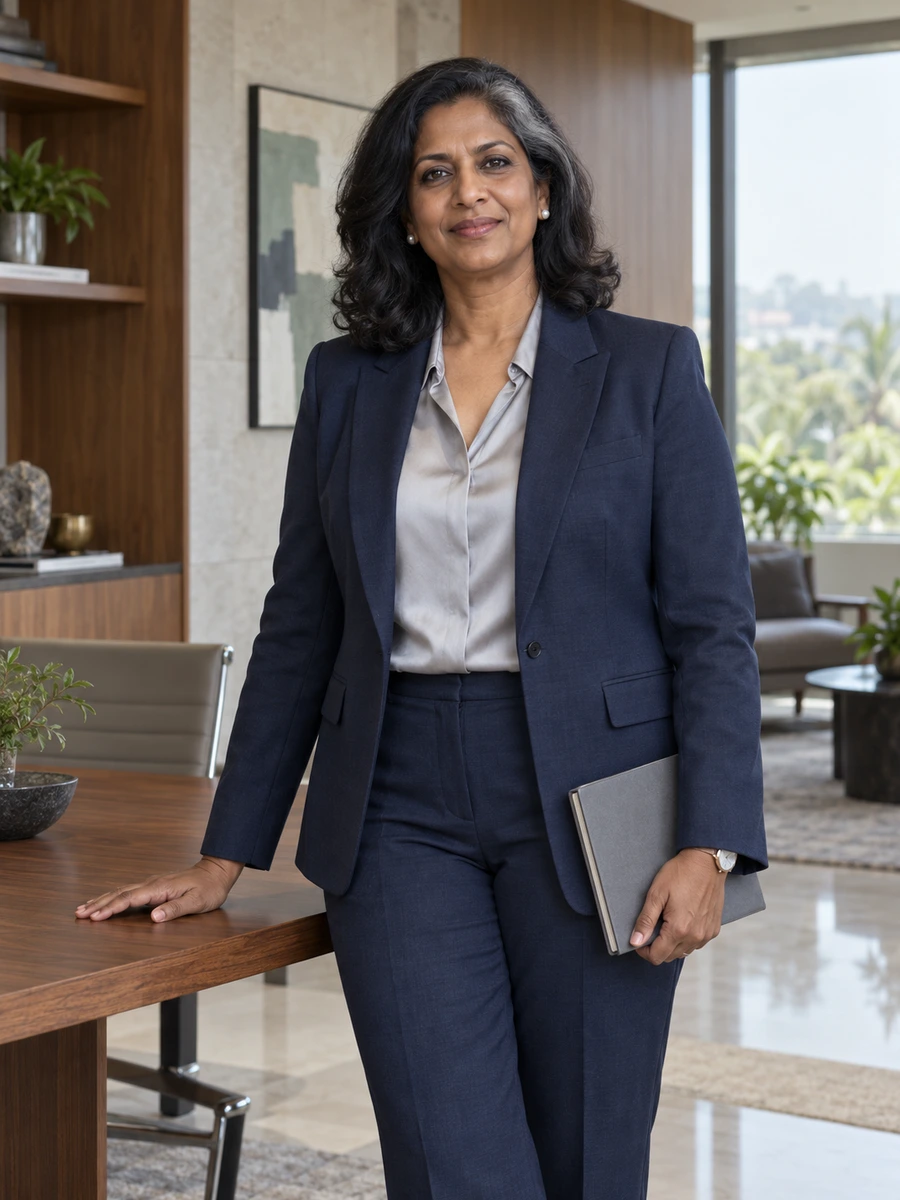
My interest in computing began with keeping practical work moving, rather than with owning the newest machine. I was born in 1972 and am based in Kozhikode. After completing a BSc in Computer Science at Nelmora Science College in May 1993, I joined Neshori Instrument Services two months later as a junior programmer. The company maintained industrial instruments and needed small applications for service schedules, parts records and customer reports. My first responsibility was to make those tools dependable enough for colleagues who could not stop their working day to investigate a programming problem.
That setting made an early distinction clear to me. A program could run successfully and still leave its user unable to complete a task because a required file, peripheral or instruction was missing. I learned to ask what happened before and after the code executed. By 1997 I coordinated three programmers, still reporting to the service administration manager and without a purchasing budget. The work brought me close to field-service colleagues and taught me to describe a technical failure in terms of the activity it interrupted. It also exposed the limits of informal knowledge when the person who understood an old application was unavailable.
In April 1999 I moved to Mirelvi Applications as an application maintenance lead. The firm supported business software for regional industrial clients. I managed twelve colleagues and ₹1.6 crore in annual team expense, reporting to its head of service delivery. Supporting software written by several earlier teams was a useful correction to the idea that a successful installation ends the technology obligation. I introduced clearer handover records for application versions and dependencies. I also learned that retaining a copy of software was not the same as retaining a contractual right to run it or the skills to recover its working environment.
Orelvi Design Computing recruited me in January 2007 to lead engineering-computing support. The company then had 210 employees and FY 2007 revenue of ₹54 crore. Its work involved integrating specialist software into customer engineering workflows, so our internal computing service had to understand varied demands without assuming responsibility for the engineering conclusions. My eighteen-person team operated within ₹4.2 crore annual expense. Conversations with analysts revealed that apparently similar delays could come from memory pressure, processor constraints, graphics capability or a poorly configured workflow. I became sceptical of equipment standards based only on job title or the largest available specification.
My promotion to head of infrastructure and applications in October 2013 broadened the task. I led thirty-eight colleagues through two managers, with ₹11.4 crore annual operating expense and a separate ₹3.6 crore approved capital programme. Orelvi had grown to 420 people and ₹126 crore revenue by FY 2014. I had to balance specialist needs with supportability across Kozhikode, Mysuru and Nagpur. I did not interpret standardisation as a requirement to make every workstation identical. Instead, I wanted a small number of supported configurations whose differences could be explained through the work they enabled and the maintenance obligations they created.
I became CIO in July 2020, reporting to chief executive David Rovelian. At March 2026 the business employed 620 people and recorded ₹204 crore revenue and ₹22 crore operating profit for the financial year. My function comprises fifty-eight colleagues through three heads, with ₹19.8 crore in operating expense and ₹8.4 crore approved capital allocation. Those figures describe delegated technology responsibility, not company P&L ownership. The founder group holds forty per cent, an employee ownership trust thirty per cent and an industrial investment partnership thirty per cent. I present technology investment and service-dependence matters to the board but am not a director.
My recent decisions concern obligations hidden inside familiar totals. A review of 186 named subscriptions produced reassignment for twenty-eight and cancellation at renewal for thirteen, rather than treating all forty-one quiet subscriptions alike. A reconstruction exercise for twenty-four historic environments recovered twenty-two after additional work and left two expressly blocked. A workstation programme used task evidence to select a mixed configuration rather than a uniform premium specification. In an application retirement, consumer owners found two dependencies that a ninety-day activity window had not revealed. Each case required a different kind of evidence, despite appearing within the same technology budget I oversee.
I am now considering how that experience could contribute to external oversight. I want to help directors distinguish a purchase decision from the continuing ability to use, support and eventually leave a technology arrangement. I have no external directorship and do not present operational tenure as proof of independence or committee eligibility. My preparation includes governance study and a provisional twenty-two-day annual allowance, subject to employer consent and the opportunity's demands. I would begin by understanding the business's economic and technical dependencies, listening to its managers and asking where reported certainty exceeds what has actually been tested.
Open to Board appointments
Languages / English · Malayalam
A leadership conviction
A CIO should be able to explain why a capability exists, what it costs to keep usable and what the business loses if it disappears. Purchase price alone cannot answer those questions. Neither can a technical demonstration that ignores contract rights, future dependencies or the work people actually perform.
- Computing colleagues
- 58
- Through three heads within a 620-person business
- Annual operating expense
- ₹19.8 crore
- Separate from ₹8.4 crore approved capital allocation
- Computing experience
- 33 years
- From July 1993 to October 2026
Career chapters
July 2020 – Present 01
Chief Information Officer
Orelvi Design Computing
Leads fifty-eight colleagues through three heads with ₹19.8 crore operating expense and ₹8.4 crore approved capital allocation; reports to the CEO and is not a director.
October 2013 – June 2020 02
Head of Infrastructure and Applications
Orelvi Design Computing
Led thirty-eight colleagues through two managers, with ₹11.4 crore operating expense and a separate ₹3.6 crore approved capital programme.
January 2007 – September 2013 03
Manager, Engineering Computing
Orelvi Design Computing
Led eighteen support colleagues with ₹4.2 crore annual expense, separating computing-service responsibility from customer engineering decisions.
April 1999 – December 2006 04
Application Maintenance Lead
Mirelvi Applications
Led twelve colleagues and ₹1.6 crore annual team expense, supporting industrial-client applications under the head of service delivery.
July 1993 – March 1999 05
Junior Programmer; Programming Coordinator from 1997
Neshori Instrument Services
Supported service-administration applications and later coordinated three programmers, reporting to the service administration manager without a purchasing budget.
Education & credentials
- BSc in Computer Science
- Nelmora Science College · 1993
Perspectives from colleagues
Elina asked us to keep the thirteen cancelled subscriptions separate from the twenty-eight reassignments. The smaller cash-saving figure gave the board a clearer account of what we were still paying for.
When the uniform workstation proposal was challenged, Elina supported the team in explaining three configurations by workload. She did not let equipment size become a proxy for seniority, and she left room to review a changed requirement.