Chief Marketing Officer Japan
From a relief-parcel gymnasium in Kobe to a parcel carrier's brand
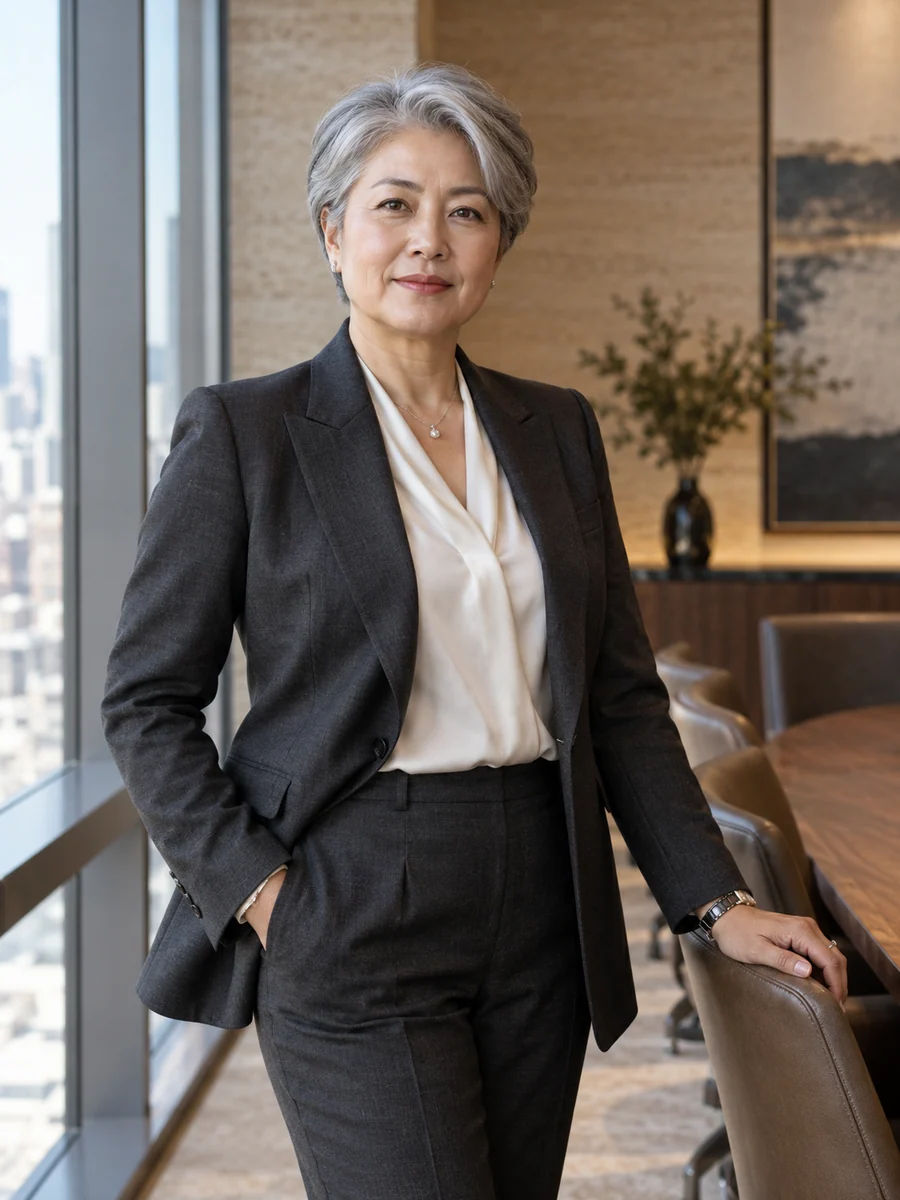
In January 1995 I was a second-year sociology student in Kobe when the Great Hanshin earthquake struck. For six weeks I helped sort relief parcels in a school gymnasium in Nagata, where boxes from strangers arrived faster than anyone could open them. The most useful volunteer in that hall was a retired delivery driver who knew which streets were still passable and which families had moved in with relatives. I did not know it then, but I was watching the last hundred metres of a delivery network, and the knowledge that lives only there.
I graduated from Kitanomori University in March 1998, with a dissertation on how older residents of temporary housing reached shops and services. That April I joined Hanzaki Advertising in Osaka as an account executive, working on a private railway's commuter campaigns and a supermarket chain's weekly flyers. In 2002 I moved into the planning department, where my job was to explain why people did what they did, usually with less research money than the question deserved. I learnt to sit in on group interviews, to distrust any survey that asked people what they would do, and to go and watch what they actually did.
By 2007 I wanted to answer for results rather than presentations. In January 2008 I joined Sayodo Direct, a Fukuoka company selling health foods, bedding and kitchenware through catalogues and television shopping, as manager of customer research. Most of our customers were over sixty-five. Within a month I was spending more time on the fulfilment floor than in the research room, because that was where the business lost money: cash-on-delivery parcels returned after three failed attempts, orders refused because a customer had forgotten placing them, calls from daughters asking where their mother's order had gone. We introduced a confirmation call and a postcard sent before dispatch, and failed deliveries fell by about a third. I studied for an evening MBA at Harumachi Graduate School of Business at the same time, finishing in 2010.
In April 2012 Mikasane Railway, a listed railway, bus and hotel company in southern Kyushu, hired me to market its hot-spring and coastal lines to visitors from abroad. Overseas arrivals to Japan were beginning the climb that would define the decade. I spent five years selling slow trains to travellers from Korea, Taiwan and Hong Kong, putting timetables into four languages and negotiating with hot-spring towns that wanted visitors but not crowds. There I first worked out the economics of luggage: a large suitcase on a two-car train takes the seat of a schoolchild, and the cheapest way to free that seat is a van. The carrier that ran our first luggage counter, in 2015, was Kazemachi.
Sorahane Airways, a Fukuoka-based domestic airline, made me general manager of marketing and loyalty in October 2017. I rebuilt its frequent-flyer programme around people who live in Kyushu rather than business travellers from Tokyo, and moved most bookings to our own channels. In the spring of 2020, when bookings fell by nearly 90 per cent, I argued that cancelled fares should be refunded in cash by default, against a finance team that was counting cash by the day. That argument, and its aftermath, taught me more about trust than any campaign I had run.
Kazemachi's president asked me to join as chief marketing officer in April 2021. The company had grown on online retail during the pandemic and was carrying about 405 million parcels a year, but 13.6 per cent needed a second attempt, and the overtime cap due in April 2024 meant the same work would soon have to be done with fewer driver hours. I lead 142 people in brand, customer research, digital channels, pricing communication and shipper marketing, with a budget of ¥7.4 billion. The contact centres, depots and drivers report elsewhere, which keeps me honest: I cannot change a customer's habit without persuading the people who meet that customer every day.
I work by testing before persuading. Most of the decisions on this site began as a trial in a few dozen depots, with a measure agreed in advance and a date on which we would stop if it failed. I ask my team for observation before opinion, and I still ride with a driver at least once a month. With the board, I try to bring customers in as evidence: the share who ignored our genuine messages, the hours a missed parcel costs, the calls we received the week a price changed.
Inside the industry I am probably known for three positions that cost money: that recipients should not be charged for a second attempt they did not choose, that a price increase deserves a public explanation, and that our own text messages should contain no links. I hold them because I have seen the alternatives spend trust that took decades to build. I am now preparing for a second role alongside my executive one: a single outside directorship, where I can bring a customer's view into a boardroom that does not often hear one.
Open to Board appointments · Speaking invitations
Languages / Japanese · English · Korean (working knowledge)
A leadership conviction
A customer's habit is part of our network, as real as a sorting hub. I would rather change it by offering a better choice than by a lecture or a fee.
- Parcels carried, year to March 2026
- 392 million
- Revenue of ¥318 billion across 1,180 depots
- Parcels needing a second attempt
- 7.9%
- Down from 13.6 per cent in the year to March 2022, with no recipient fee
- Pickup lockers in service
- 5,600
- At stations, supermarkets and municipal offices, up from 1,050 in 2021
Board & advisory record
Current appointments
Kazemachi Travel Baggage Co., Ltd.
Director of the wholly owned luggage-forwarding subsidiary, in an executive capacity
2022–present
Education & credentials
- Bachelor of Arts in Sociology
- Kitanomori University · 1998
- Master of Business Administration, evening programme
- Harumachi Graduate School of Business · 2010
Perspectives from colleagues
When Naomi argued against charging recipients for a second attempt, she did not ask the board to trust her instinct. She asked for two years and named the figure that would prove her wrong. That figure never came. She brings customers into our board discussions as evidence, not as a slogan.
I proposed the redelivery fee, and I still think it would have worked faster. What I did not expect was how much time Naomi would spend in my depots. Her lockers stand where my drivers said they should, because she asked the drivers before she asked the agencies.
In April 2020 I wanted every refund to be a credit, because I was counting cash by the day. Naomi made the case for cash in a paper that priced it to the yen. She was right about our customers, and she never pretended it would be cheap.