Chief Financial Officer India
The account changed when I understood the commitment
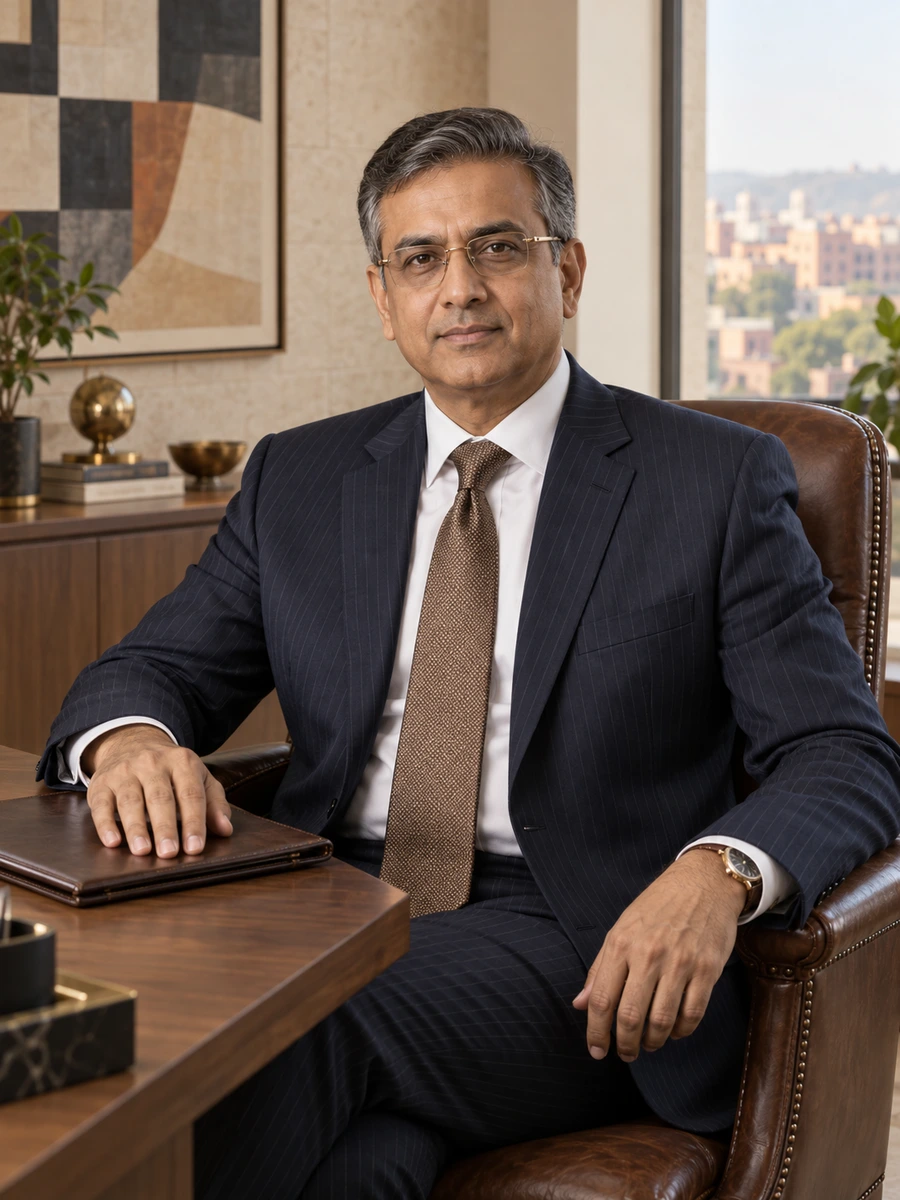
The first accounts I worked on belonged to a regional engineering-supplies business. I joined Malvori Engineering Supplies in July 1995, after completing a commerce degree in financial accounting at Harveli Commerce College. Customers bought equipment and consumables for industrial operations, and the practical work behind an account was close enough to see. A delivery note, an invoice and a bank receipt described different stages. My early tasks were modest: reconcile records, follow up missing documents and prepare schedules for the finance manager. I learnt that a reliable total still needed an explanation of what it represented and what had yet to happen.
From 1999 I supervised three accounts assistants. That introduced a different responsibility: a process had to work when someone other than me performed it. I began paying attention to instructions, review and the evidence needed for an exception. I did not have authority to approve major contracts or decide the company's financing. The experience nevertheless gave me a useful grounding in how small ambiguities become larger commercial disagreements. When I moved into software distribution in April 2002, I carried that habit into a business where the product was less visible but the commitments were no less real.
At Semnari Software Distribution, I started as a finance executive and became commercial controller in 2006. The company worked from Jaipur and Lucknow, supplying business software through customer and reseller relationships. I led seven colleagues by the end of my tenure. Much of our work concerned credit terms, collections and the difference between a partner's order pipeline and its ability to pay. A distributor could be enthusiastic about the next opportunity while struggling with the previous invoice. I learnt to discuss that problem commercially, without treating a finance restriction as either a personal accusation or a substitute for understanding the account.
I joined Kulvani in July 2009 as head of commercial finance. Industrial scheduling software brought together licences, local configuration, maintenance and implementation. Each stream created a different pattern of receipts and continuing work. I helped the sales and delivery teams make those differences visible in proposals and forecasts. The business was then controlled by Indian founder shareholders with a minority overseas partner. During 2014, Ravendahl increased its holding to seventy-five per cent, leaving the founders with fifteen per cent and employees with ten per cent. That change required us to explain local activity within a group reporting system without losing the detail needed to run the Indian company.
My financial-controller appointment began in April 2015. I took responsibility for the close, treasury reporting and planning, with twenty finance colleagues by FY 2021. The company had grown to three hundred and thirty people and ₹174 crore annual revenue. I reported to the CFO and had a defined function-expense remit. A substantial part of the work was reconciliation between different useful views: the statutory account, the management budget, the cash forecast and the parent's reporting requirements. They should connect, but they should not be made identical by ignoring the purpose of each view. A cash restriction, for example, matters to a distribution decision even when the bank statement itself is entirely accurate.
I became CFO in October 2021. Today Kulvani has four hundred and ten colleagues and ₹218 crore FY 2026 revenue. Licences account for ₹128 crore, maintenance ₹68 crore and implementation ₹22 crore. I lead twenty-six finance colleagues through four heads, with annual function expense of ₹4.2 crore. My direct reporting line is to the Indian managing director, and I also work within the parent's finance organisation. I attend board discussions to explain the account and recommendations. I have not become a director by virtue of presenting those papers, and I am careful to preserve that distinction when describing my experience.
The most demanding choices are often those in which a correct number invites an incomplete conclusion. A cash balance can make a distribution seem affordable before restrictions and near-term obligations are considered. A new order can make additional credit seem self-justifying. A group allocation can be challenged too broadly, as though every shared service were unnecessary, or accepted too easily because it arrives from a senior office. I try to make the underlying obligation discussable. That means acknowledging the commercial cost of refusal and the legitimate cost of services we do receive, rather than positioning finance as the function that always wins by saying no.
I am preparing to apply that experience in a first external board role. My commerce education and executive finance work have given me practical competence, but I do not present myself as a statutory auditor or assume that every committee appointment follows automatically from a CFO title. I would bring disciplined questions about liquidity, commercial exposure and related-company relationships. I would also need to learn the prospective company's sector, governance arrangements and the expectations of collective oversight. The right appointment would make use of those questions while leaving its management team responsible for the decisions and work that belong to executives.
Open to Board appointments
Languages / English · Hindi
A leadership conviction
Finance should make the commitment visible before the amount becomes persuasive. A bank balance may be restricted, a new order may extend an old credit problem, and a group charge may contain both a useful service and an unexplained allocation. I want the people making the decision to see those differences without having to reconstruct the account themselves.
- FY 2026 company revenue
- ₹218 Cr
- Licences ₹128 crore; maintenance ₹68 crore; implementation ₹22 crore
- Finance colleagues
- 26
- Four heads; ₹4.2 crore annual function expense
- Distribution partners
- 8
- Alongside direct sales across India
Career chapters
2021–present 01
Chief Financial Officer
Kulvani Industrial Software
Twenty-six finance colleagues; Indian subsidiary finance with a functional parent-group reporting line.
2015–2021 02
Financial controller
Kulvani Industrial Software
Close, treasury reporting and planning; twenty finance colleagues by FY 2021.
2009–2015 03
Head of commercial finance
Kulvani Industrial Software
Licensing, maintenance and implementation economics during an ownership transition.
2002–2009 04
Finance executive, then commercial controller
Semnari Software Distribution
Software-distribution credit and collections; seven colleagues from 2006.
1995–2002 05
Accounts assistant, then accounts supervisor
Malvori Engineering Supplies
Industrial supply accounts; three assistants supervised from 1999.
Education & credentials
- Bachelor of Commerce, Financial Accounting
- Harveli Commerce College · 1995
Perspectives from colleagues
Since Nikhil became CFO in 2021, I have relied on him to show where a proposal changes our obligations. He does not stop at an objection; he explains the alternative and the consequence we would accept by choosing it.
We have worked together on channel accounts since 2017. Nikhil keeps a credit decision separate from a judgement about the people involved. He is firm about the evidence and equally clear about what would allow the conversation to reopen.