Chief Human Resources Officer India
The framework asked an expert to become a manager
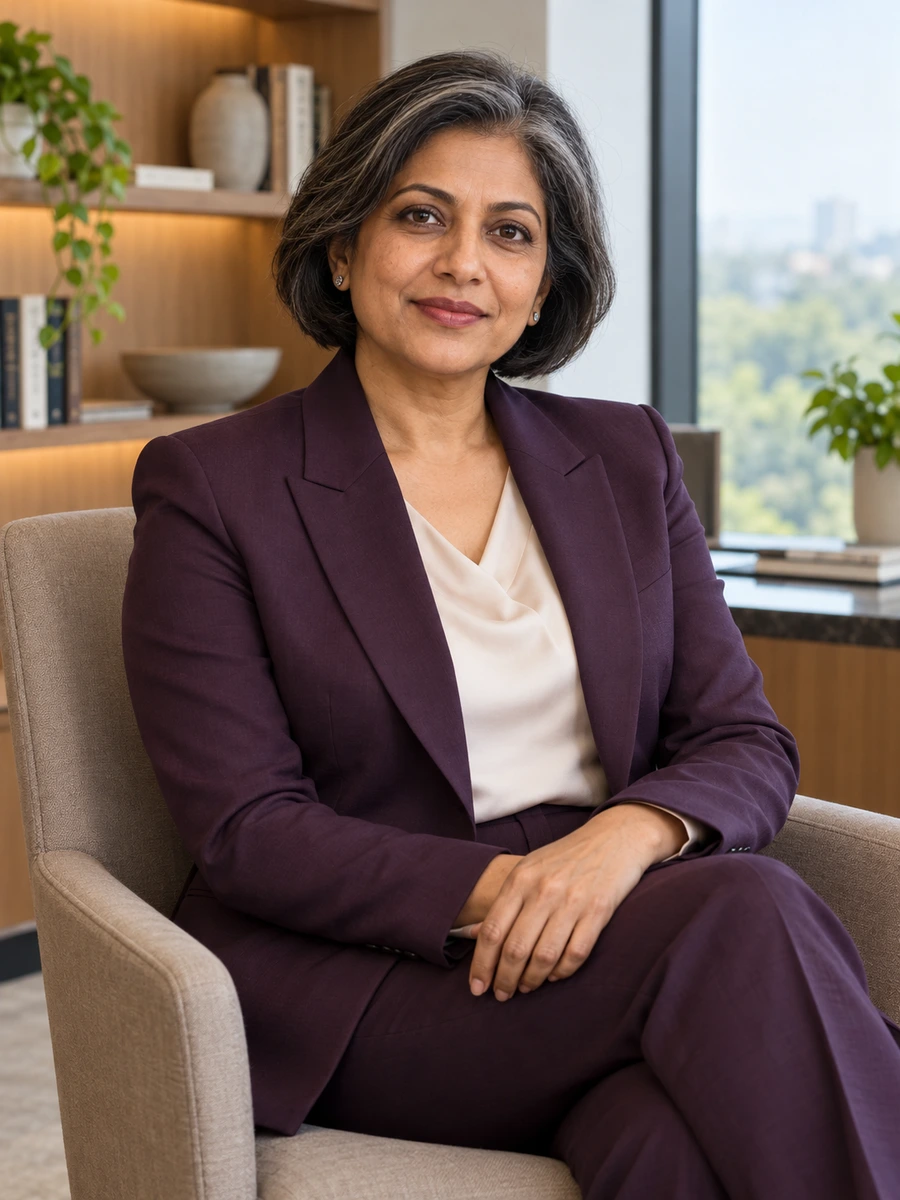
The first specialist who challenged our grade framework had no wish to manage a team. She wanted the organisation to recognise the difficulty of the work she already performed. Our framework required direct reports above a particular level, so her manager proposed giving her two colleagues. I had helped approve that framework. It was meant to make progression consistent, but it was now encouraging us to create a management arrangement for a pay decision. The colleague asked whether being excellent at insurance work had become insufficient unless she also became someone else's manager.
I grew up in Bhopal and completed a psychology degree at the fictional Morqavi Social Sciences College in May 1997. That July I joined Zavqeli Business Services as a personnel records coordinator. The company employed 85 people and earned ₹12 crore in service fees for the year ending March 1998. I worked in a six-person administration group with no direct reports or delegated spending. My early responsibility was accurate records, not deciding who should be hired or promoted. Even there, I saw how a missing item could acquire more meaning than the circumstances justified.
In June 2003 I became HR services lead. Zavqeli had grown to 150 employees and ₹26 crore in fee revenue for FY ending March 2004. I led eight colleagues within ₹39 lakh annual function expense, reporting to the head of administration. We handled employment records, routine queries and coordination with managers. A former employer's delayed reply could hold up a candidate while a perfectly completed reference told us very little about another person's suitability. I learned to ask what fact a process was intended to establish before treating completion as the result itself.
Lorqavi appointed me as a people partner in March 2010. The fictional insurer then employed 190 people and recorded ₹220 crore gross written premium for FY ending March 2011. I coordinated ten HR colleagues within ₹85 lakh annual expense. Insurance introduced specialist responsibilities that could not be understood through a generic hierarchy alone. A technical colleague could influence important decisions without supervising a large team. I completed a part-time postgraduate HR diploma at Durqavi Personnel Institute in November 2011, while continuing in the role. The study helped me examine the assumptions inside the systems I administered.
I became head of people in July 2016. The company had 330 employees and ₹610 crore gross written premium for FY ending March 2017. Nineteen HR colleagues worked through three leads within ₹2.7 crore annual function expense. I wanted consistent grades across branches, and the framework we introduced used people-management responsibility as a prominent sign of seniority. That made some comparisons easier. It also undervalued specialist depth and gave managers an incentive to alter reporting lines when they wanted to reward a strong contributor. My intention did not remove the effect of the design.
The CHRO appointment followed in January 2022. I now lead 28 colleagues through four heads within ₹4.9 crore FY2026–27 people-function expense. Lorqavi has 520 employees, eighteen branches and ₹1,120 crore gross written premium for FY ending March 2026. Group employee cost of ₹82 crore is a broader measure, not my departmental budget. I report to Sanjay Zorqethi, and Irene Zolmavi retains underwriting responsibility. The title gives me executive accountability for the people agenda, without a statutory directorship or a right to substitute my judgement for technical insurance authority.
The specialist-career review changed fourteen of 24 examined roles into specialist appointments; six followed management routes and four remained in development. The result required ₹68 lakh in annualised pay movement and ₹16 lakh in role-design work. It did not establish that every technical colleague should progress or that a specialist title granted new insurance authority. A later reference-check review resolved 28 of 42 affected cases using appropriate alternative evidence, with nine still unresolved and five withdrawals. Seven of the 28 were ultimately appointed. Verification and selection remained different decisions.
I also had to revise my own request for more detailed employee-feedback filters. Small groups became recognisable when the views were combined, even where a single report looked sufficiently broad. We suppressed eighteen small-team reports and examined the remaining 28 for further inference risks. Returning employees presented another practical test: nine colleagues needed assignments after approved extended leave, six reached comparable-grade assignments and three remained in temporary arrangements under review. We funded ₹36 lakh of overlap and manager capacity rather than describe unresolved placement as a completed inclusion achievement.
These experiences shape the board contribution I would like to make. I have no statutory seat, and an external appointment would require preparation, employer consent and a careful relationship review. My fictional IICA record shows registration in June 2026 and a passed proficiency assessment in September; I am not claiming an exemption. Twenty-five days is an initial annual allowance, subject to the actual demands of a mandate. I want to help directors ask whether an employment process recognises the work, establishes a relevant fact and respects the person affected. I would bring that question alongside a willingness to learn the business and accept the limits of my experience.
Open to Board appointments
Languages / English · Hindi · Urdu
A leadership conviction
An employment system should recognise the contribution it asks people to make, and collect only the evidence needed to decide fairly about that contribution.
- General-insurance employer
- 520 employees
- Eighteen branches; ₹1,120 crore FY26 gross written premium
- People function
- 28 HR colleagues
- Four heads; ₹4.9 crore FY2026–27 function expense
- Preparing for a first appointment
- 0 board seats
- Executive presentations are not statutory directorships
Education & credentials
- Bachelor of Arts in Psychology
- Morqavi Social Sciences College · 1997
- Postgraduate Diploma in Human Resources, part-time
- Durqavi Personnel Institute · 2011
Perspectives from colleagues
Farida kept the four development cases in the progression paper alongside the fourteen specialist appointments. We could see that the new route required evidence, rather than simply solving every pay request with a different title.
She asked us to define the specialist contribution while keeping technical insurance permissions separate. The resulting discussion recognised depth without treating an employment grade as authority to make every insurance decision.