Chief Data Officer Canada
Thirty years on every side of the trade in shopper data
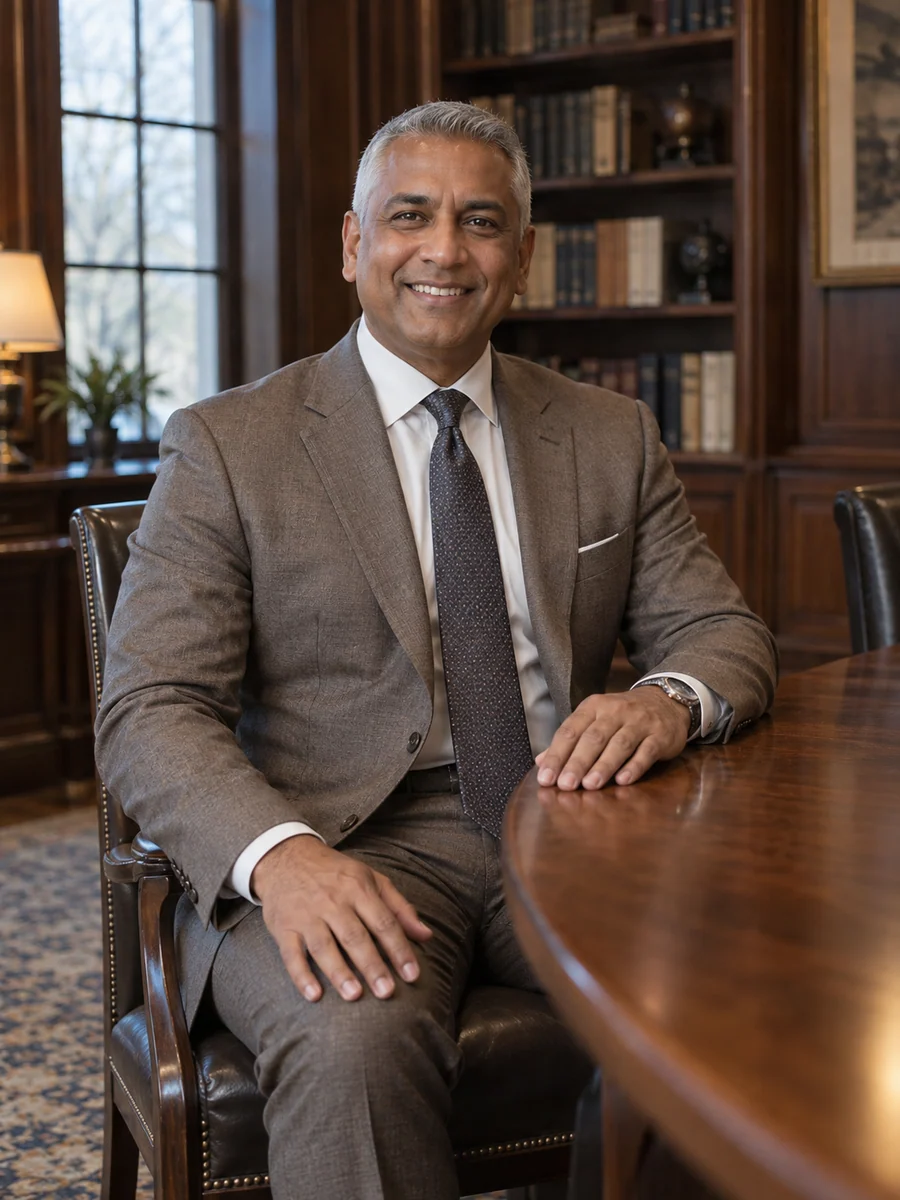
In 1998 a woman in Hamilton telephoned Brimscombe Research Group to leave our household purchase panel. I was twenty-four, a junior statistician, and I took the call because the panel manager was away. She had recorded her family's shopping in a paper diary for three years. That week she had received a mailing of coupons for incontinence products, and she was certain we had sold her diary. We had not. A direct-mail company had bought area-level shopping profiles from another source and mailed every household in her postal district that fitted. I explained this carefully and she left the panel anyway. She was right that the explanation did not matter. Somebody had drawn a conclusion about her household and acted on it, and she had never agreed to that.
I had joined Brimscombe in July 1996, two months after completing a Bachelor of Mathematics in statistics at Wexcombe University. The firm ran a panel of about 14,000 Canadian households who recorded what they bought, and sold the results to manufacturers and retailers. My first job was weighting: making a panel that over-represented retired couples and under-represented young renters behave like the country. That taught me the habit I value most in this role, which is asking who is missing from a data set before asking what it says. I finished a part-time Master of Science in statistics at Harrowfield University in 2001, studying in the evenings, and in 2003 I became director of panel methods. Over the next six years we moved panellists from paper diaries to home barcode scanners and began linking the panel with retailers' loyalty data, under contracts I helped draft and now think were too loose.
In November 2009 I crossed to the other side of the trade, as director of demand analytics and shopper insight at Hedgecombe Brands Canada, the Canadian subsidiary of a UK-listed household and personal care group. I arrived during the H1N1 pandemic, when orders for our hand sanitiser ran at many times their normal level and our forecasts were useless. I spent six years rebuilding demand planning for about 1,400 products, measuring trade promotions honestly and buying insight from retailers' loyalty programmes. Some retailers sent us member-level files with names removed but postal codes, ages and complete baskets intact. I used them, I learnt from them, and I was uneasy that a supplier could see so much about another company's customers.
That unease took me to Vellacott Rewards in Montréal in September 2015, as vice-president of analytics and member data. Vellacott ran a coalition programme in which 8.7 million collectors earned points with about 120 partner brands, from fuel and groceries to travel. Its revenue depended on sharing insight with partners, and much of that insight had left the building as member-level extracts. Over four years we replaced the extracts with aggregated reports and a controlled analysis environment, rewrote partner agreements and built a preference centre in French and English that let members refuse partner marketing without leaving the programme. Two partners left Vellacott partly because of those changes. I also learnt French properly, at forty-one, in a city where my colleagues were patient with my grammar and our clients were not.
The coalition model weakened as large partners built programmes of their own, and in 2019 Vellacott lost one of its two anchor partners. I helped restructure the analytics team and then accepted an offer from Mirebrook, starting in April 2020 as vice-president of enterprise data and analytics, reporting to the chief financial officer. I met most of my team on video calls during that first pandemic spring. In January 2022 the role became chief data officer, reporting to the chief executive, with responsibility for governance, the data side of Mirebrook Circle and the analytics behind our partner network.
My work at Mirebrook has been shaped by one fact about the company: we are a pharmacy as well as a shop. Our dispensaries hold prescription records under provincial health-information law and the professional obligations of the pharmacists who keep them, and those records stay outside the loyalty platform. The front of the store, however, reveals a good deal on its own, and much of my effort has gone into deciding what we will not infer from it. Since 2022 we have asked members to consent separately to personalised offers and to supplier advertising, rationed children's fever medicine by need during a national shortage, built a supplier clean room whose thresholds and exclusions cost us revenue, and reduced shrink without facial recognition.
I lead 186 people across data engineering, analytics and data science, data products and governance. Two practising pharmacists spend part of each week with my team, because they know how an inference sounds when it is said aloud across a counter. I ask for disagreements in writing and attach them to my proposals, and our audit and risk committee has read several memos arguing against me. Colleagues would say that I ask who is absent from a data set and what a model is being paid to do. I hope people outside the company would add that I say no early, when it is cheaper, and put the cost of that no in figures our finance team accepts.
Open to Board appointments · Advisory roles · Speaking invitations
Languages / English · French
A leadership conviction
I treat every conclusion our data draws about a customer as something we might have to repeat to that customer across the dispensary counter. If a pharmacist could not say it aloud without embarrassment, a model should not say it in an offer, an advertising audience or a loss report. Most of my work is drawing that line early, while it is still cheap, and showing the finance team exactly what it cost.
- Loyalty members active in the past year
- 10.6m
- Mirebrook Circle, June 2026
- Mirebrook revenue, fiscal 2025
- C$8.3bn
- C$3.6bn from dispensaries and C$4.7bn from the front store
- Front-store shrink, 2025
- 1.8%
- Down from 2.3% in 2023, without biometric identification
- Colleagues in the data function
- 186
- C$54m operating and C$19m capital budget, 2026
Board & advisory record
Current appointments
Larkhollow Food Rescue
Director; chair of the technology and data committee
Technology and data (chair from 2022); finance and audit
June 2021–present
Education & credentials
- Bachelor of Mathematics in statistics
- Wexcombe University · 1996
- Master of Science in statistics (part-time)
- Harrowfield University · 2001
- Director education programme
- Carroway Directors' Institute · 2024
Perspectives from colleagues
Samuel brought me a list of everything our data could infer about members' health before anyone had asked to sell it. Since then, most of our work together has been agreeing on wording, not arguing about whether to ask members at all.
When Samuel recommended against facial recognition, he gave the committee the asset protection team's memo in full and the figures that cut against him. We knew exactly which trade-off we were accepting, and he came back a year later to show us its results.
During the syrup shortage I wanted to keep our stock for the families I knew. Samuel's rule sent it by need instead. When we told him two bottles per purchase was too few for large families, he changed it within the month.