Chief Data Officer India
A familiar title did not settle the edition
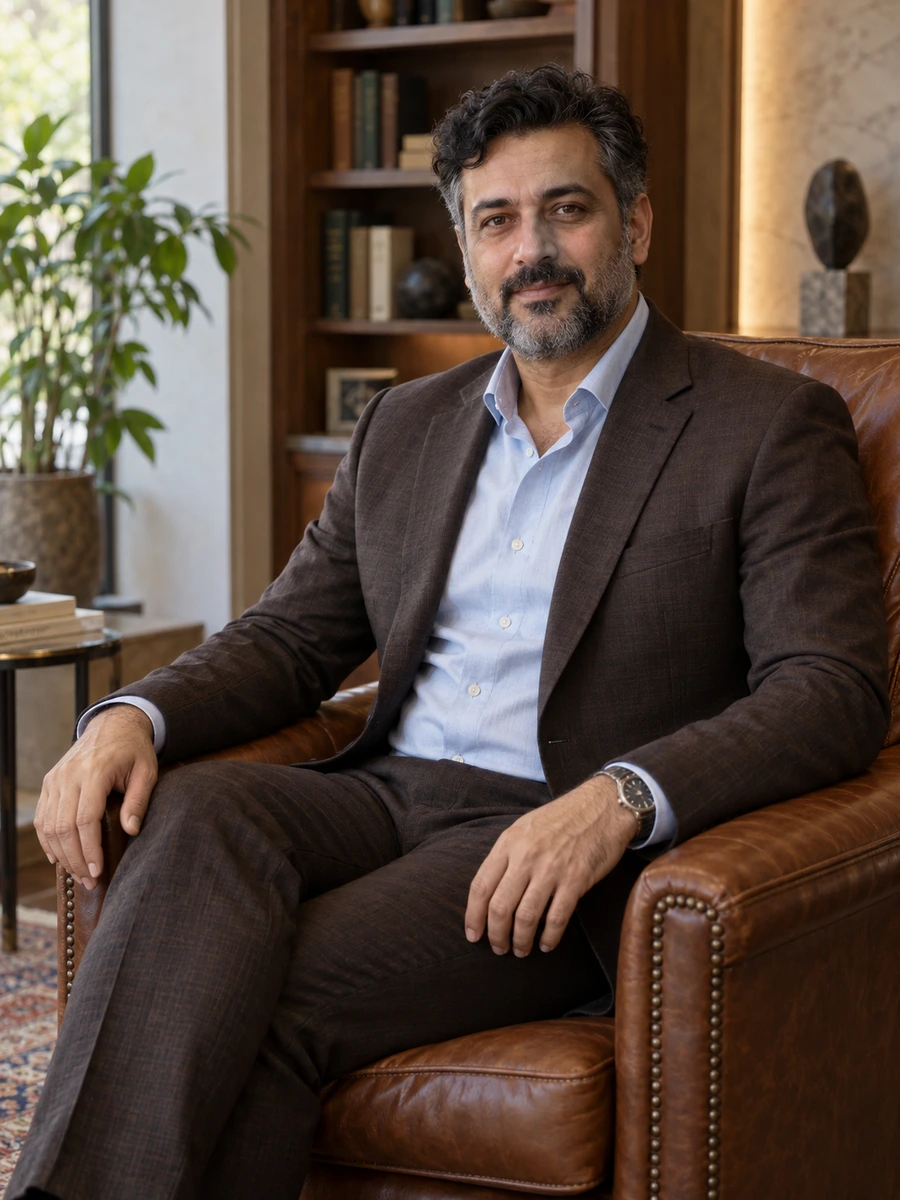
The proposed catalogue merge looked like a sensible clean-up. Several records shared a title and author, and colleagues wanted the reader to see one confident result instead of a page of apparent repetition. When we opened the books, some were revised editions, some were abridged and others were translations. The records were related, but the purchase choices were different. I had supported a similarity rule that was more confident than the evidence behind it. We needed to preserve the relationship without making one edition stand in for another.
I grew up in Srinagar and completed a statistics degree at the fictional Zorqavi Statistics College in June 2002. The following month I joined Daqruni Catalogue Services as a catalogue analyst. The company employed eighty people and recorded ₹12 crore revenue for the year ending March 2003. I worked in a five-person group under a catalogue supervisor, with neither direct reports nor spending authority. Much of the work involved checking what a supplied description actually referred to. A familiar name was useful evidence, but it was rarely the whole record.
In April 2008 I became data-quality lead. Eight colleagues reported through two supervisors, and I managed ₹48 lakh annual function expense. Daqruni then had 170 employees and ₹31 crore revenue for the year ending March 2009. I began seeing how errors travelled between contributors who each believed someone else had resolved the difficult distinction. A part-time postgraduate diploma in applied computing, completed in November 2011, helped me improve the practical handling of those records while continuing to work. I became interested in review processes that could explain why a decision had been made, rather than only mark a field complete.
Nerzavi recruited me as head of catalogue in May 2014. It was a twelve-shop bookseller with 230 employees and ₹61 crore revenue for the year ending March 2015. I led twelve catalogue colleagues through three supervisors within ₹1.1 crore annual expense. Moving inside a retailer changed the consequences of the work. A record was now part of a conversation with someone trying to choose a book, not just an item delivered to another organisation. Shop colleagues could explain why an apparently small difference mattered to a reader. I learned to bring those explanations into the data design earlier.
The February 2019 appointment as director of catalogue and research added reader studies and discovery evaluation to my remit. It was an executive function title, without a seat on the company's board. Twenty colleagues worked through four leads within ₹3.8 crore annual expense. The company had twenty-four shops, 430 employees and ₹124 crore revenue for the following March year-end. I became responsible for helping colleagues decide what evidence could support a change, including when the people who answered a question differed from the people the business wanted to understand.
I became chief data officer in January 2023. Nerzavi now has thirty-four shops and 620 employees. The data function's twenty-six colleagues and four leads work within ₹6.4 crore FY2026–27 expense and a separately approved ₹1.9 crore catalogue programme. CEO Nandita Vezrathi holds enterprise decisions, while Omar Qalzeri leads editorial interpretation. I do not direct the technology estate or choose the buying range merely because the underlying records pass through my team. My responsibility is to make their evidence understandable, including where our methods leave a question unresolved.
The edition review cost ₹32 lakh and changed the proposed merge treatment of 364 records. An ₹18 lakh search evaluation led us to keep an existing route while revising a candidate that performed poorly on transliterated queries. A ₹21 lakh survey programme produced useful respondent opinions but no reliable population forecast for a subscription proposal. A ₹26 lakh series project separated stated publication sequence from suggested reading order. None of those costs disappears because we changed a recommendation. The work made a decision more precise; it did not prove that every customer would now find the right book.
I am considering a first board role, with no statutory directorship held so far. My IICA databank registration is planned rather than completed, and I claim no assessment result or exemption. Twenty-one days a year is an initial allowance to discuss with my employer and a prospective chair. I would bring questions about the meaning and coverage of evidence, alongside directors whose experience in finance, operations and governance exceeds mine. I would also bring the memory of my own premature merge recommendation: a useful method can still make the wrong distinction seem settled.
Open to Board appointments
Languages / English · Hindi · Kashmiri
A leadership conviction
A useful relationship does not make two records equivalent. I want a reader to find the connection and still understand the choice being offered.
- Book retail estate
- 34 shops
- Online catalogue and 620 company employees
- Data and research function
- 26 colleagues
- Four leads;₹6.4 crore function expense and separate₹1.9 crore catalogue programme
- Catalogue and evidence work
- 24 years
- From July 2002 analysis to CDO in January 2023
Education & credentials
- Bachelor of Science in Statistics
- Zorqavi Statistics College · 2002
- Postgraduate Diploma in Applied Computing, part-time
- Vaqzeli Computing Institute · 2011
Perspectives from colleagues
Farhan kept the subscription paper useful without allowing its strongest percentage to speak for customers who had never answered. We could consider a next step with the missing evidence still visible.
He made space for an editorial distinction in the catalogue itself. Related editions could be found together without requiring the reader to accept that they were the same book to buy.