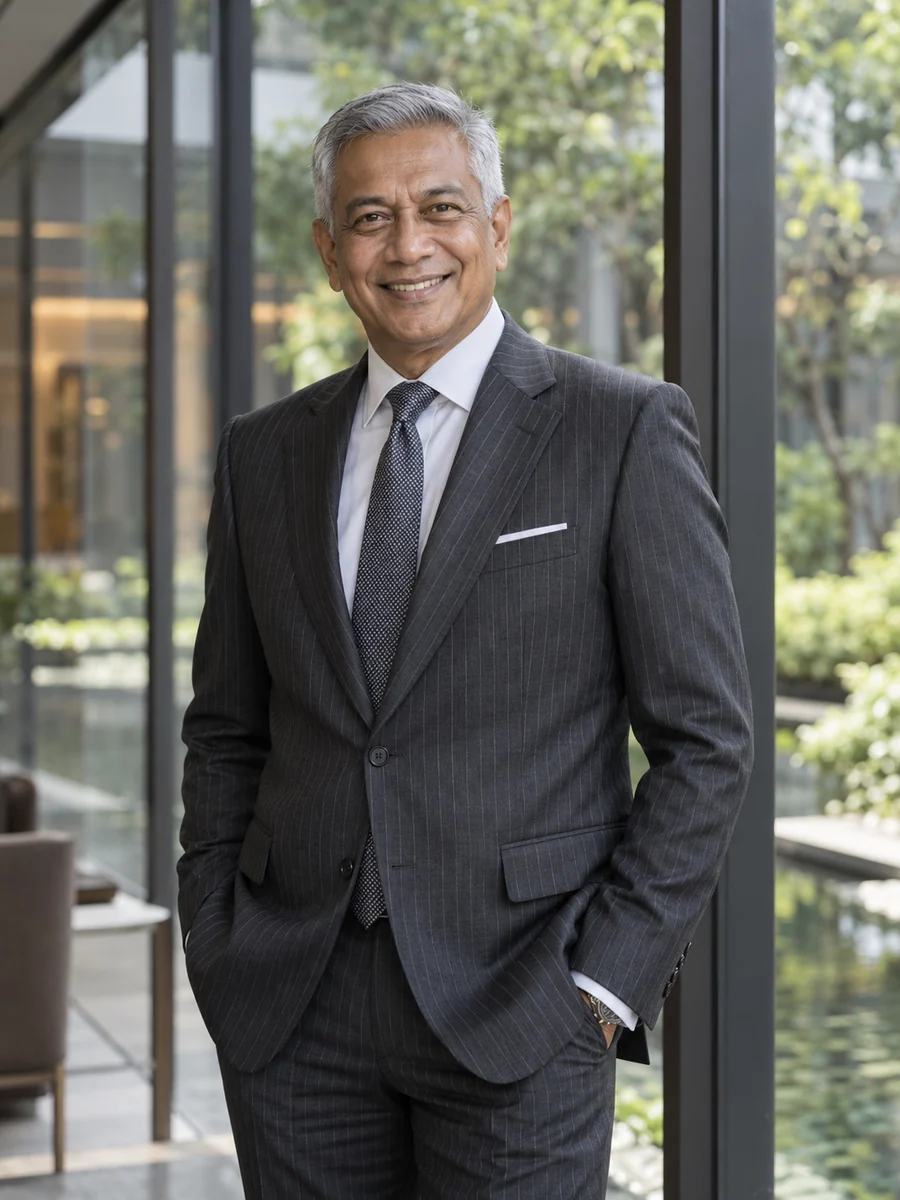
Surya HalimChief Information Officer · Essays & perspective
Total assets, Talampas Bank
₱820bn
June 2026; 438 branches and 7.6 million customers
Confirmed mule accounts per 1,000 digital openings
1.6
Second quarter of 2025, down from 8.3 in the first half of 2023
QR payment success on paydays
99.86%
2025, against 99.2% across the paydays of 2023
Deposit accounts moved off the mainframe
6.9m
Time deposits in 2024 and savings in 2025

I run a bank's technology by the moments its customers cannot afford it to fail, the payday afternoon and the minutes after a scam, and I report those moments to the board before I report uptime.

I am executive vice president and chief information officer of Talampas Bank, a listed Philippine universal bank with 438 branches, 7.6 million customers and ₱820 billion of assets. I lead 1,180 technology colleagues and about 860 contractors, with a 2026 budget of ₱7.9 billion, of which ₱3.3 billion is for change. I report to our president and chief executive, Benjamin Acuesta, and present each quarter to the board risk oversight committee and the board IT steering committee. Our customers now make about 31 million instant transfers and 18 million QR payments a month through us, against roughly five million instant transfers a month when I took this role in 2019.

I came to banking technology from the side that checks it. I grew up in Medan, studied computer engineering in Singapore and spent five years auditing bank systems in Singapore, Jakarta and Manila for Haldane Wren, then nearly five more in technology risk at Kellbrook Bank. Talampas hired me in 2008 to run its IT audit. In 2012 I left for Sagwan Payments, an e-money start-up, where I watched stolen money pass through wallets opened that same morning. I returned to Talampas in 2016 to run payments and digital channel technology, and the board made me CIO in June 2019.

Three problems take most of my attention. How should a bank that opens accounts in minutes stop those accounts from receiving stolen money? How should it measure availability, so that a quiet Tuesday cannot hide a failed payday? And how does it leave a 1997 mainframe and a single dominant integrator without staking the bank on one weekend? I made each of those decisions against someone's objection, and on these pages I describe what each one cost.

Fewer mule accounts from our own app

After we limited what new digital accounts could send in their first forty-eight hours and began scoring every inbound credit, confirmed mule accounts fell from 8.3 to 1.6 per thousand openings between the first half of 2023 and mid-2025. Completed openings fell 17% in the first quarter of the change.

Paydays measured as customers live them

Since a payment failure lasting 3 hours 40 minutes on 15 December 2023, we measure nine customer journeys on paydays instead of system uptime. In 2025 QR payments succeeded 99.86% of the time on paydays, and no payday incident lasted longer than thirty minutes.

6.9 million deposit accounts off the mainframe

We are leaving our mainframe one product family at a time: time deposits in 2024 and savings in 2025. The phased route costs about ₱1.3 billion more than a single cut-over, and it has shortened our overnight batch from six hours ten minutes to three hours twenty.

One integrator, from 64% of change spend to 37%

In 2021 we split a single integrator's contract into three lots and built an in-house engineering team, now 52 people, around our own design authority. Delivery slowed for two quarters. Today nine people can change the integration layer that three supplier architects once held alone.

Current focus

I am preparing the migration of current and payroll accounts off the mainframe, now planned for February 2027 after I moved it back once, and rebuilding our fraud analytics on a cloud platform within the central bank's technology-risk and outsourcing expectations. With our head of fraud operations I am also working on faster sharing of mule indicators with other banks, within what the Data Privacy Act allows.

Conversations I welcome

I am not looking for another executive role and do not take search approaches for one. I would consider one independent directorship at a Philippine company outside banking, payments and e-money whose customer-facing systems run around the clock, subject to my chief executive's consent and our conflict review. I accept a small number of advisory conversations and speaking invitations each year.

Beyond the page

The record behind the perspective.

In the boardroom

  • Kalinaw Schools FoundationTrustee; chair of the finance and audit committee · March 2021–present

Formation

  • Bachelor of Engineering in computer engineeringBencoolen Technical University · 1998
  • Master of Business Administration (part-time)Escolta Graduate School of Business · 2015
Surya told our committee that the uptime report he had presented for four years did not measure what our customers lived through. The replacement made our pack harder to read and our discussions much better. I now ask every management team for its worst day, not its average.
Leticia DumaganIndependent director and chair, board risk oversight committee, Talampas Bank
The full record ↗

Contact

I am not looking for another executive role and do not take search approaches for one. I would consider one independent directorship at a Philippine company outside banking, payments and e-money whose customer-facing systems run around the clock, subject to my chief executive's consent and our conflict review. I accept a small number of advisory conversations and speaking invitations each year.

  • Board appointments
  • Advisory roles
  • Speaking invitations