Chief Financial Officer India
Learning what a financial total leaves out
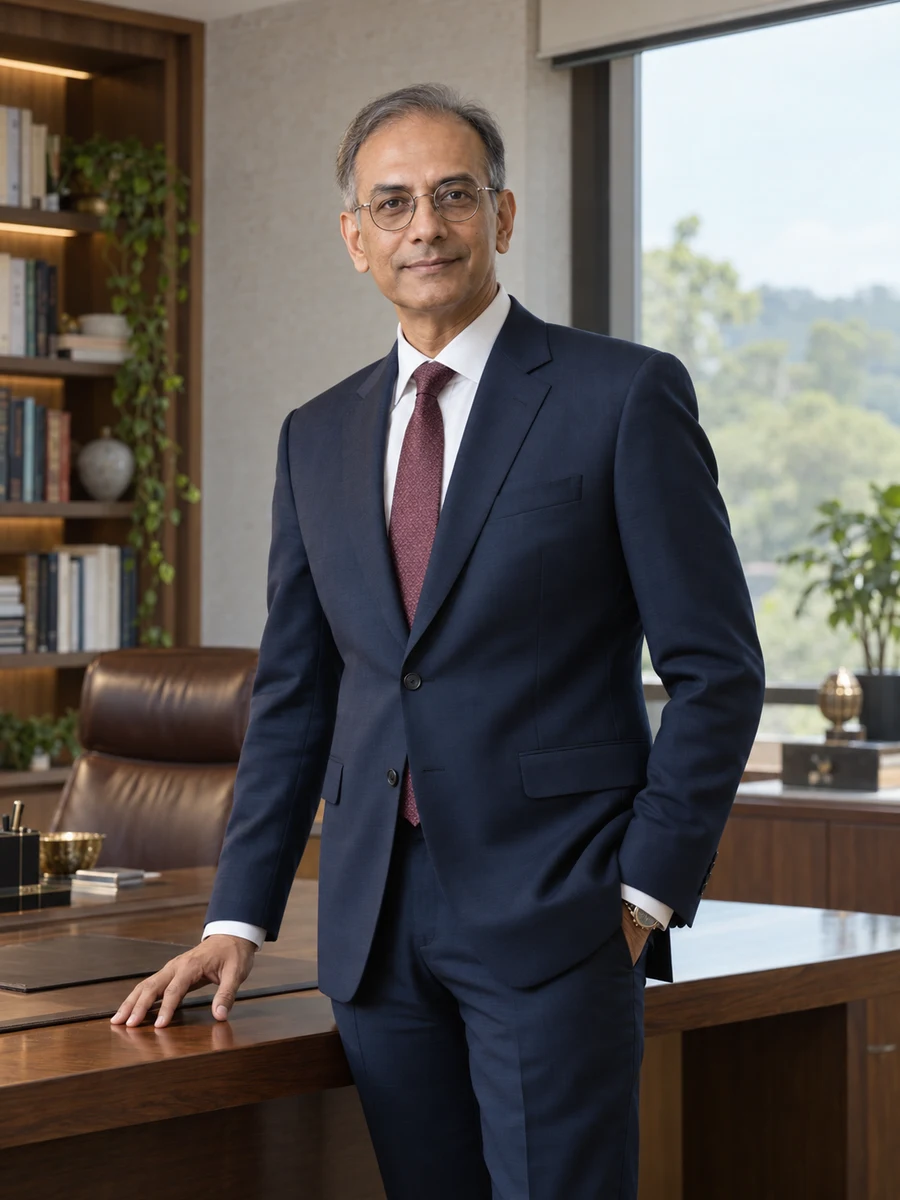
I completed my commerce degree in 1994 and joined Nivralti Credit Cooperative in Karimganj that June. The organisation served its members and was not a bank. My first responsibilities were bookkeeping, supporting schedules and explanations for differences between records. A senior colleague taught me to distinguish an account entry from a cash movement. The distinction sounded elementary until a receipt recorded late changed the explanation of a weekly position. I learnt to retain the original date and supporting document rather than make the latest report appear tidier than the underlying sequence.
In April 2000 I became the cooperative's accounts supervisor. I managed four colleagues and prepared reports for its general manager. I was still close enough to individual records to understand why a total had changed, but I now had to explain it to people who had not handled the entries. I introduced a short note separating recurring member transactions from unusual movements. It did not predict behaviour, and I was careful not to make it sound as though it did. It made conversations about available funds less dependent on somebody remembering what had happened several weeks earlier.
I joined Tevrunsha Cooperative Bank in April 2006 as a branch finance review officer. Moving from a credit cooperative into a bank required me to learn a different control environment and the limits of my own knowledge. I did not arrive with authority over lending or investments. I reviewed branch schedules, cost records and reconciliations under the finance manager. Visiting several locations showed me that the same expense could mean different things: a higher premises cost might support access in one catchment, while an apparently inexpensive branch depended on staff covering two jobs. I began to ask what a financial comparison had left out.
My appointment as head of planning and management accounts in April 2012 gave me responsibility for consolidating the annual budget. I worked with branch heads who were proud of their relationships and sometimes sceptical of a central model. They were right to challenge a forecast that treated every renewal as an independent event. Several depositors might share a payment calendar, a trade connection or a reason to need cash at the same time. I built a review process that preserved those observations without turning informal familiarity into a promise that funds would stay. The resulting forecast was less smooth and more useful for discussion.
I became CFO in April 2019. My remit includes financial reporting, the finance function budget and the analysis presented to management and board committees. I report to the chief executive, not directly to depositors or an external investor, and I am not a statutory director. I work closely with treasury and risk colleagues while retaining the distinction between their actions and my recommendations. Our asset-liability committee makes decisions within the bank's governance arrangements; I provide schedules, scenarios and the explanation of assumptions. External auditors independently examine the financial statements. I do not describe their conclusions as outcomes delivered by my team.
One of my more difficult lessons concerned a branch proposal whose headline economics looked acceptable. The forecast relied on deposits shifting from existing locations and on a staffing model that omitted relief cover. I asked for a revised account of incremental benefit and the recurring cost of operating the location. That delayed a proposal some colleagues had supported publicly. I learnt to bring finance into the discussion earlier, before a site or opening date becomes a commitment people feel obliged to defend. A sound challenge delivered late can still be an expensive way to make a decision.
At March 2026, the bank had six branches, 86 staff, deposits of ₹310 crore and gross advances of ₹230 crore. I lead nine finance colleagues, with a ₹1.15 crore annual function budget, and coordinate the analysis of the bank's ₹10.4 crore approved operating plan for FY2026–27. These figures describe different responsibilities and should not be added together as a single budget. I am known for asking which part of an improvement is repeatable and which part depends on an event that has already passed. In a future role, I would bring that habit alongside a willingness to learn a new institution's funding model, ownership expectations and operating constraints.
Open to Board appointments · Executive opportunities
Languages / English · Bengali · Hindi
A leadership conviction
I want a funding proposal to explain who can withdraw, when a balance may reprice and what assumption the bank is making about renewal. An attractive quarter-end total can conceal an expensive dependency. My finance team should make that dependency visible while there is still time for the authorised committee to choose another course.
- Deposits at March 2026
- ₹310 crore
- Institutional funding balance
- Bank branches
- 6
- 86 employees across the institution
- Finance colleagues
- Nine
- CFO team responsibility
Education & credentials
- Bachelor of Commerce with accounting studies
- Qazlenti Accounting College · 1994
Perspectives from colleagues
Sachin did not stop at telling us the recovery was unusual. He helped distinguish the workload we had to fund from the permanent cost we could responsibly accept.
He asked when we had last checked the renewal assumptions, without asking us to promise what a customer would do. That made the committee discussion more precise and less defensive.