Chief Information Officer Singapore / Southeast Asia
Where the network meets the account
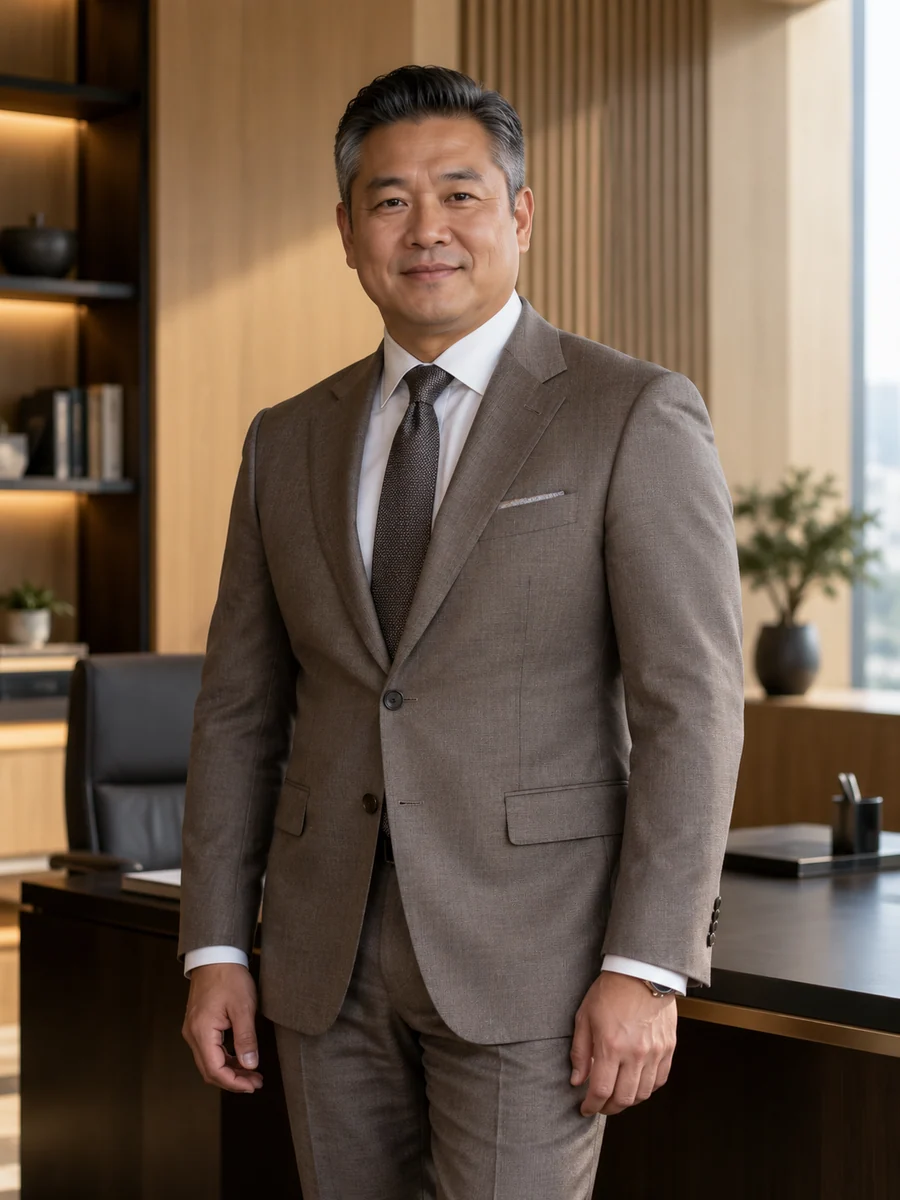
In 2006 an enterprise customer of Halvecrest Networks in Singapore asked why it had never been invoiced for a leased line to Kuala Lumpur. The circuit had carried its traffic for fourteen months. Engineering had completed the order, but the activation message never reached billing, and no report showed the gap. I was a billing systems analyst, and I spent three weeks matching every live circuit in our inventory against an invoice. We found forty-one more. That exercise told me where I wanted to work: in the systems that connect what a network does with what a customer is told and charged.
I grew up in Ipoh and studied computer science at Perindawan University, finishing in May 1998. My first employer, Desaramu Systems in Kuala Lumpur, wrote billing and account software for water utilities, paging companies and dial-up internet providers. As a programmer and then a systems analyst, I learnt that a tariff rule written for one client would be stretched by the next. I also learnt to treat a customer's complaint letter as a test case rather than an annoyance.
I moved to Halvecrest Networks in February 2004. It sold leased lines, business internet and international data circuits from Singapore to companies across the region. After the unbilled-circuit review I was made billing operations manager in 2008, with twelve people. We reconciled network inventory with billing every month, and I insisted that a circuit order could not close until its first charge existed. Engineering found that irritating, and they were right that it slowed some handovers. It also stopped the leak.
In 2012 I returned to Malaysia to join Solvantri Mobile Platforms, which hosted rating, charging, SIM provisioning and customer-care systems for six mobile virtual operators. I ran platform delivery. The work showed me supplier concentration from the supplier's side. When our charging cluster failed for ninety minutes in 2014, six brands stopped selling reload credit at once, and each had told its own customers that the systems were its own. From 2015 I reported platform incidents to the company's board risk committee and saw how differently directors read a failure once they can see who depends on it.
Kemaruna Fibre recruited me in July 2017 as head of BSS and IT operations. The company had grown from a cabling and shared-antenna contractor for Penang apartment blocks into a fibre provider with about 150,000 subscribers. Its billing system had been written in-house in 2008, and only one of its two original developers remained. Installation orders moved between sales, planners and fourteen contractor firms on spreadsheets. I spent my first two years on activation. A subscriber's fibre terminal is now provisioned automatically when the installer scans it, and order-to-activation time fell from 6.2 days to 2.9. When the movement control order began in March 2020, new orders nearly doubled within six weeks, and that work carried the load.
Corvanthe Equity bought 65 per cent of the company in 2021, and I became its first chief information officer that March. The new owner wanted growth, a leaner cost base and, eventually, an exit. Those aims are reasonable, and they placed three questions on my desk: how to replace billing without harming the way customers pay, where our systems should run, and how much personal information we should hold at all. The cases on this site describe my answers, including what each cost and who disagreed.
I now lead 126 colleagues through five managers covering billing and payments, network and operations support systems, infrastructure, security and data protection, and service delivery. I ask each of them to describe a change by the household moment it could affect. I would rather approve a slower change whose effect is known than a faster one whose effect is a forecast. My managers expect me to ask who has tested the way back.
I present to our audit and risk committee every quarter and stay for the full meeting, not only my item. That has made me interested in board work as a discipline of its own. Directors of a broadband company do not need to redesign its platforms; they need to see where a platform decision moves risk, and onto whom. I would like to bring that question to another board while continuing my executive role at Kemaruna Fibre.
Open to Board appointments
Languages / English · Malay · Mandarin · Hokkien
A leadership conviction
A household meets our systems at three moments: when its router reconnects after a power cut, when a monthly charge is collected, and when someone asks what we hold about them. I judge any platform proposal by which of those moments it could disturb. Where the answer is uncertain, I am prepared to spend more or wait longer.
- Home broadband subscribers
- 268,000
- December 2025, northern Peninsular Malaysia
- Company revenue
- RM 512m
- Calendar year 2025
- Technology colleagues led
- 126
- Plus about 60 contractor staff
Education & credentials
- Bachelor of computer science
- Perindawan University · 1998
Perspectives from colleagues
Darren brought me the card-transfer decision with the delay already costed and the commercial team's objection set out in his own paper. I never had to discover the price of his recommendation later.
On the night the cloud links failed, my contact centre lost its screens, but our lines did not fill with households unable to reconnect. Months earlier he had told my team leaders exactly which calls to expect if that ever happened.
He was the one who wrote down, for each of our six clients, what it shared with the others. Some clients disliked reading it. He thought they were entitled to know, and he was right.