Chief Marketing Officer India
I learned to follow the message after the presentation
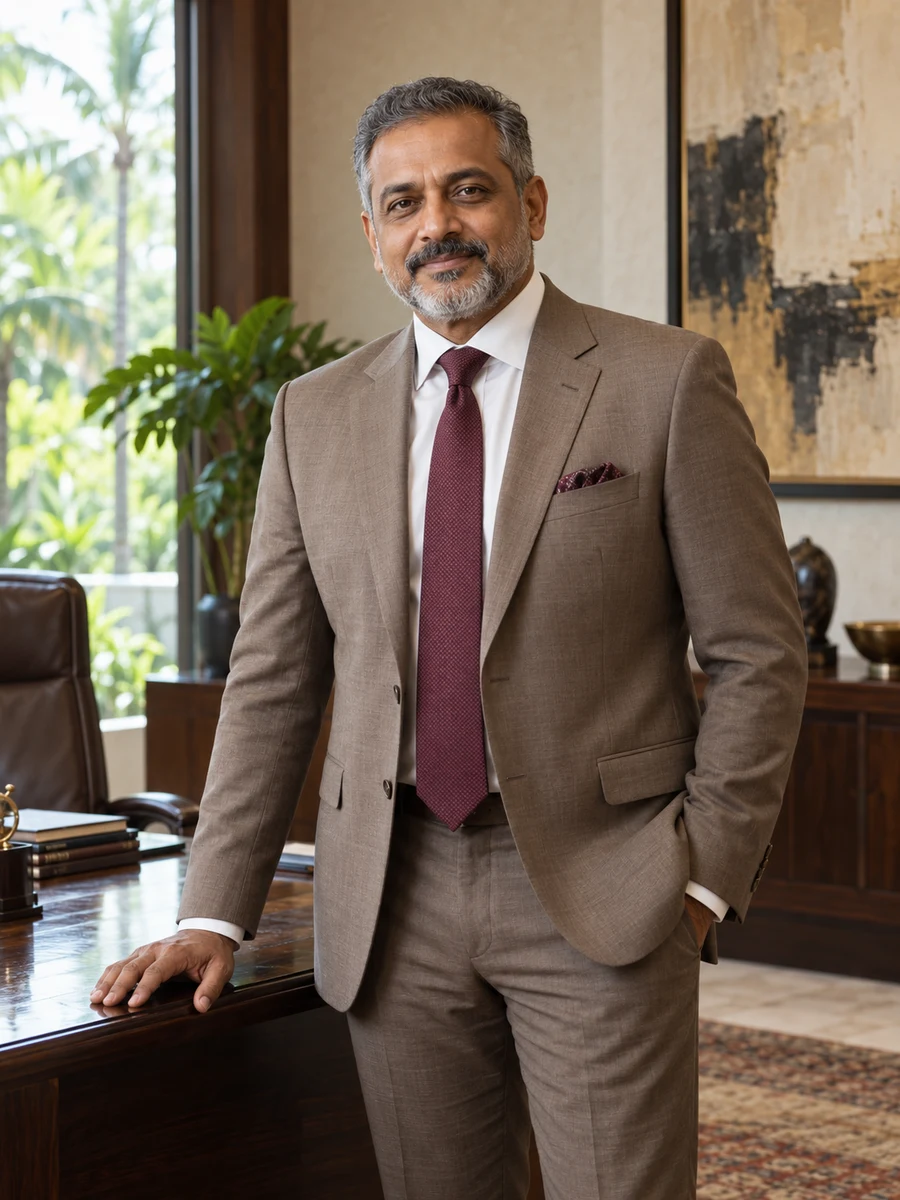
My early agency work taught me to admire a concise line. A client could understand it quickly, a designer could give it prominence and a campaign could move forward. Over time I became more interested in what a reader understood after the presentation. The difference was not always visible in the artwork. It appeared in the question someone asked, the expectation they carried into a service conversation or an older version of the message they encountered elsewhere. That became the central responsibility of my marketing career.
I completed commerce studies at Navqerthi Commerce College in May 1993 and joined Delqazhi Brand Services in Kozhikode the following month. I worked in a six-person account group, coordinating briefs and production details under supervision. I had no authority to approve a client’s product claims or spending. The role showed me how many small decisions sit between an approved brief and a public message. A shortened phrase or a late production change could alter emphasis even when everyone believed the underlying proposition had stayed the same.
In April 2000 I became an account manager, eventually leading twelve colleagues within ₹1.1 crore annual delivery expense. Clients retained their campaign budgets and professional approvals. My responsibility was to make the agency’s work and handover dependable. I learned to ask which version had been approved, which audience it was intended for and what evidence supported the claim. I also learned that an attractive response number could dominate a meeting before anyone asked what it counted. Those questions later became more consequential when I moved inside an insurer.
Vezrqathi Health Assurance appointed me marketing manager in April 2008. Eleven colleagues worked within ₹4.8 crore annual marketing expense. I had to learn from service, underwriting and other professional owners without treating their decisions as raw material for a stronger slogan. A customer’s understanding of a health-insurance message could affect the questions they asked before purchase or treatment. Marketing could make an explanation easier to use, but it could not turn a payment arrangement into unrestricted cover or decide how an individual claim would be assessed.
The brand-head appointment in April 2015 expanded my remit to eighteen employees and ₹10.3 crore annual function expense. In 2019 I approved wording that made cashless service sound broader than it was. The comprehension review challenged my own judgement, not merely the translator’s execution. We withdrew the concept before wider distribution, accepted the cost of unused production and funded a revised explanation. Some readers still misunderstood it afterwards. Keeping that limitation in the account mattered more than presenting the revision as a complete success.
Since April 2021 I have been CMO, reporting to CEO Lata Qervzami. Three heads lead twenty-four marketing employees, with eleven agency colleagues outside that employee count. My annual authority is ₹17.2 crore, excluding distribution commissions and professional insurance decisions. Service head Jeevan Delzqavi helps examine the expectations our messages create. In 2023 we used a comparison group to question a proposed campaign expansion. In 2025 we followed superseded material into partner placements instead of assuming that replacing the central artwork had corrected every public version.
The company now has 610 employees and nineteen branches. Its FY 2025–26 gross written premium was ₹1,230 crore, which is neither my marketing budget nor a claim about revenue or profit. A founder family, domestic financial investor and employee vehicle hold 42,43 and 15 percent respectively. I have no beneficial holding and no statutory directorship. Presenting a marketing account to directors is management exposure; I do not describe it as having served on their board or as proof that I meet another company’s appointment requirements.
I would consider a mandate where communication is judged by the expectation it creates and the evidence it can sustain after launch. An outside contribution would require further preparation, a realistic calendar and review of my employment and commercial relationships. I would want to help directors examine the customer promise without becoming their informal campaign approver. The work I value most is often the correction before a confident message becomes a larger misunderstanding: making the meaning narrower, the evidence clearer or the outdated version unavailable for the next encounter.
Open to Board appointments · Executive opportunities
Languages / Malayalam · Hindi · English
A leadership conviction
A message is not finished when we approve the words. It must still be understood as intended, supported by the evidence and current where a customer encounters it.
- Marketing employees
- 24
- Three heads; eleven agency colleagues separate
- Annual marketing operating authority
- ₹17.2 crore
- Excludes commissions, underwriting and claims
- Agency and insurer communication
- 33 years
- Account work, marketing management, brand leadership and CMO responsibility
Education & credentials
- Bachelor of Commerce
- Navqerthi Commerce College · 1993
Perspectives from colleagues
Faisal showed us both groups in the invitation comparison. He did not turn every response into an argument for a larger budget.
He withdrew the wording he had approved when readers understood a broader promise. Our professional explanation was allowed to change the campaign.