Chief Strategy Officer India
The business behind the planning model
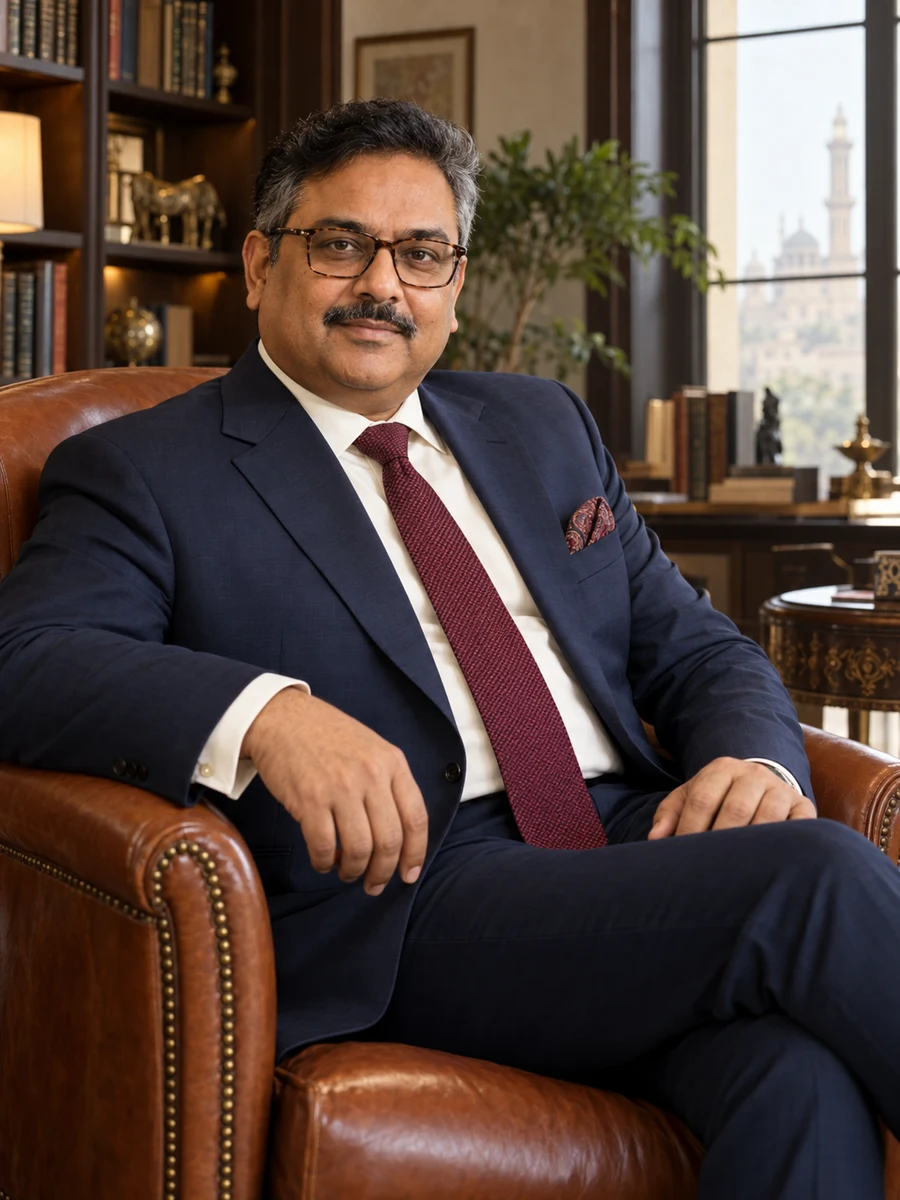
I joined Pelquni Business Analytics in Lucknow in June 1996 after completing my commerce degree. We helped regional service businesses understand costs and capacity. My early assignments involved collecting operating records and checking the assumptions in planning models. I could make a spreadsheet reconcile while still misunderstanding the work it described. A supervisor sent me back to a delivery team after I treated two differently skilled hours as interchangeable. The arithmetic had been correct; the business comparison had not. That experience stayed with me because it showed how an apparently precise plan can conceal an important operating distinction.
In April 2002 I joined Dhurveni Investment Services as a planning analyst. The company administered investment records for a small group of advisory businesses. I worked with finance and delivery colleagues on revenue schedules, staffing plans and the time required for new clients. I did not make investment decisions or certify client portfolios. The challenge was to understand how contractual work became an actual demand on the organisation. A new report format could look minor in a commercial proposal but require a particular reviewer every month. I began asking which person or skill stood behind each assumption in the plan.
I became commercial-planning manager in April 2009. Five colleagues worked with me on contract economics and annual planning. Our reports initially compared clients mainly through revenue and overall delivery cost. We added a closer examination of specialised review and recurring exceptions. That did not mean that every unusual client was unprofitable or should leave. It helped us distinguish work that could become part of a reusable service from work that remained a separate commitment. I learnt to discuss those findings with commercial colleagues without treating their client relationships as mistakes made by people who did not understand a spreadsheet.
In April 2015 I moved into corporate development. The remit included potential acquisitions and partnerships, with a seven-person team by the end of the appointment. I worked alongside legal, finance, technology and people specialists, whose judgements could not be replaced by my strategic preference. A purchase could have attractive accounts and still fail to deliver the capability behind its rationale. I became particularly interested in what depended on individual specialists, client permissions or working arrangements that would not automatically continue under new ownership. The role taught me to regard an acquisition as an operating transition as well as a financial transaction.
My appointment as chief strategy officer began in April 2021, bringing the planning and corporate-development functions together. I now report to chief executive Kamini Tervulani and work closely with chief financial officer Simon Pelravi. Our eight-person strategy team prepares planning comparisons, commercial recommendations and corporate-development reviews. My ₹3.8 crore function budget supports that work; it is not an acquisition fund or authority over the investments described in client records. I present material recommendations to the board, but I have no director appointment and do not belong to its committees. The distinction matters because preparing a decision and collectively governing it are different responsibilities.
The three cases described here reflect that broader remit. The renewal review required us to admit that an attractive annual plan depended on decisions clients had not made. The acquisition review required us to separate the number of people on an organisation chart from the specialists whose transfer had actually been agreed. The reporting review required a commercial choice about work we had accumulated gradually, one client request at a time. In each case I helped frame the recommendation, while the qualified owners established the financial, contractual and operating facts. The result was not always the largest available revenue figure.
I have become more comfortable presenting a conditional recommendation. Earlier in my career, I thought a strong strategy paper should resolve every uncertainty before it reached the executive team. That encouraged assumptions to look firmer than they were. I now prefer to explain which uncertainty matters to the decision, who can resolve it and what the company can sensibly commit in the meantime. This is not an excuse for indefinitely postponing difficult choices. It is a way to make the choice more precise. I want the next stage of my leadership to develop that discipline in others, so that commercial ambition remains connected to the capabilities and obligations that make it real.
Open to Board appointments · Executive opportunities
Languages / English · Hindi
A leadership conviction
Revenue is the beginning of a strategy discussion. I also need to know which skills will produce it, which obligations will persist and what assumptions make the timing plausible. A plan that names those conditions can be challenged and improved. A plan that hides them behind a growth percentage is difficult to govern even when the percentage is achieved.
- Client businesses
- 76
- Wealth-advisory organisations served at March 2026
- Service revenue
- ₹148 crore
- Company FY2025–26 revenue; not assets under management
- Strategy colleagues
- 8
- Three leads within a 460-person company
Career chapters
2021–present 01
Chief Strategy Officer
Dhurveni Investment Services
Connect business planning, corporate development and service economics.
2015–2021 02
Head of corporate development
Dhurveni Investment Services
Evaluate acquisitions and partnerships through the capability they would add.
2009–2015 03
Commercial-planning manager
Dhurveni Investment Services
Make contract economics and service complexity visible in operating plans.
2002–2009 04
Planning analyst
Dhurveni Investment Services
Translate client commitments into staffing and revenue schedules.
1996–2002 05
Business analyst
Pelquni Business Analytics
Investigate costs and capacity for regional service organisations.
Education & credentials
- Bachelor of Commerce
- Orvelani Institute of Commerce · 1996
Perspectives from colleagues
Rakesh changed his acquisition recommendation when the specialist-transfer evidence changed. He kept the purpose of the purchase ahead of the effort already invested in pursuing it.
The renewal review separated assumptions from commitments without calling possible revenue a loss. That gave us a clearer basis for the recruitment decision.