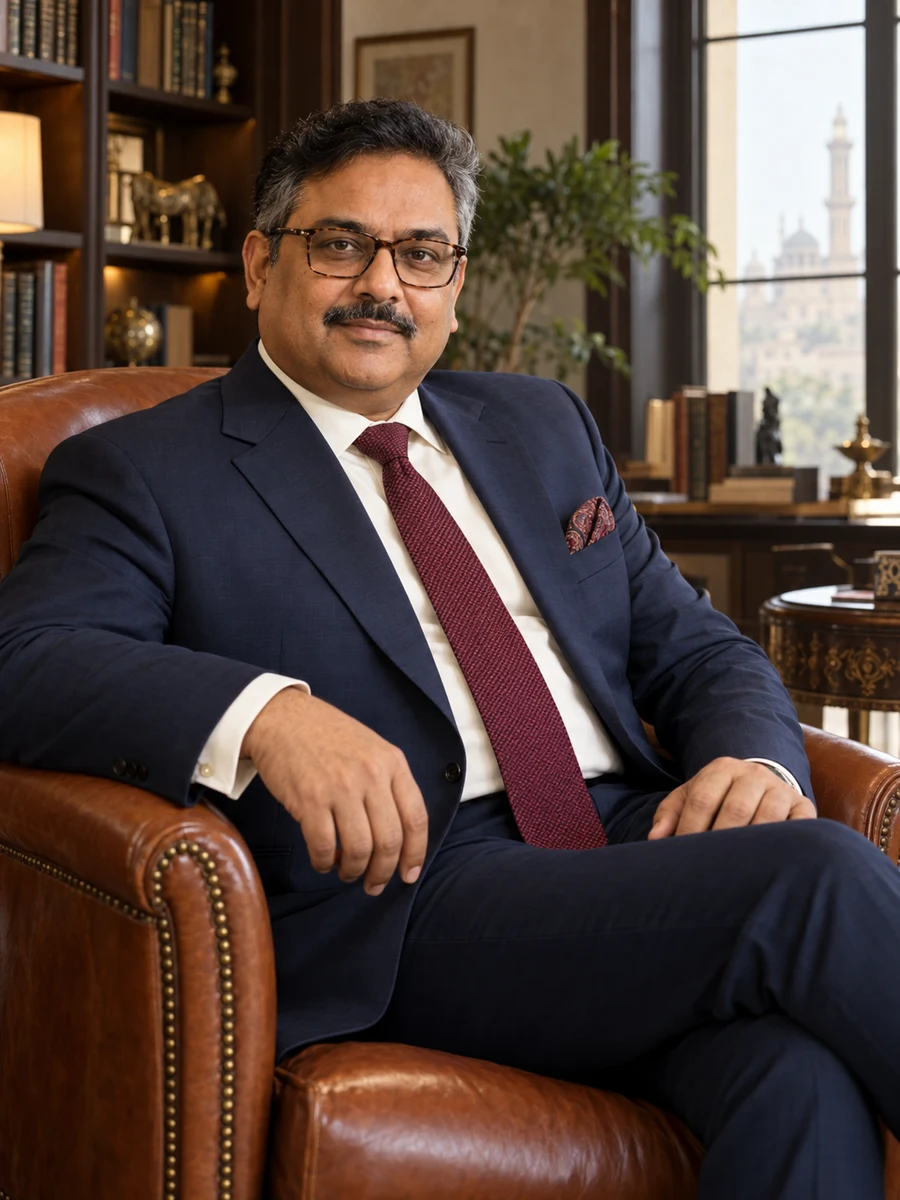
I make the operating consequences of growth visible before the organisation commits to them.
I am chief strategy officer at Dhurveni Investment Services in Lucknow. We administer investment records for 76 wealth-advisory businesses and earned ₹148 crore in service revenue in FY2025–26. Our 460 colleagues work across three delivery centres. I lead eight strategy colleagues through three leads, with ₹3.8 crore approved annual function expenditure. The role covers planning, commercial choices and corporate development. It does not include control of client investments, service certification or authority to complete an acquisition without the appropriate executive and board decisions.
My career began in business analysis in 1996. Working with service organisations taught me that two contracts with similar revenue can create very different demands on people. One fits established work; another depends on a few specialists and an expanding set of exceptions. I moved into planning and later corporate development because I wanted those differences to influence the choice of business we pursued. Today I work with finance and operating leaders to make the assumptions behind a recommendation explicit enough that somebody else can disagree with them intelligently.
The recent decisions on this site concern revenue renewals, acquisition capability and bespoke reporting. We reduced a planning case when signed revenue and likely renewal had been treated alike. We declined a purchase after examining which specialist capability would actually transfer. We also changed the commercial treatment of costly reporting variants, accepting that some clients would choose to leave. None was a simple argument against growth. Each was a decision about what kind of growth our organisation could deliver, what it would cost and which evidence the board needed before committing.
Renewal assumptions changed the plan
A ₹171 crore planning case included unconfirmed renewals as if they were already secured. The reviewed central case was ₹157 crore, with contingent recruitment separated from committed service capacity.
The people behind an acquisition mattered
An acquisition proposal valued a service operation at ₹26 crore. Review found that only 24 of 42 relevant specialists had agreed transfer terms. We declined, recognising ₹38 lakh of due-diligence expense.
Bespoke reporting received a commercial choice
Ninety-four report variants for nineteen clients used 38% of sampled review hours while producing 17% of the relevant service fees. A revised offer separated common reporting from individually priced work.
Current focus
I am improving how the annual plan records renewal uncertainty and the capability needed before new revenue can be responsibly accepted.
Conversations I welcome
I welcome strategy mandates in service companies where management wants operating economics, people and growth choices considered together.
The leadership record
Trusted with consequential decisions.
Formation
Bachelor of CommerceOrvelani Institute of Commerce · 1996
Rakesh changed his acquisition recommendation when the specialist-transfer evidence changed. He kept the purpose of the purchase ahead of the effort already invested in pursuing it.
Kamini TervulaniChief Executive Officer, Dhurveni Investment ServicesThe full record ↗
Contact
I welcome strategy mandates in service companies where management wants operating economics, people and growth choices considered together.