Chief Financial Officer Singapore / Southeast Asia
Three questions I learnt in a Surabaya warehouse
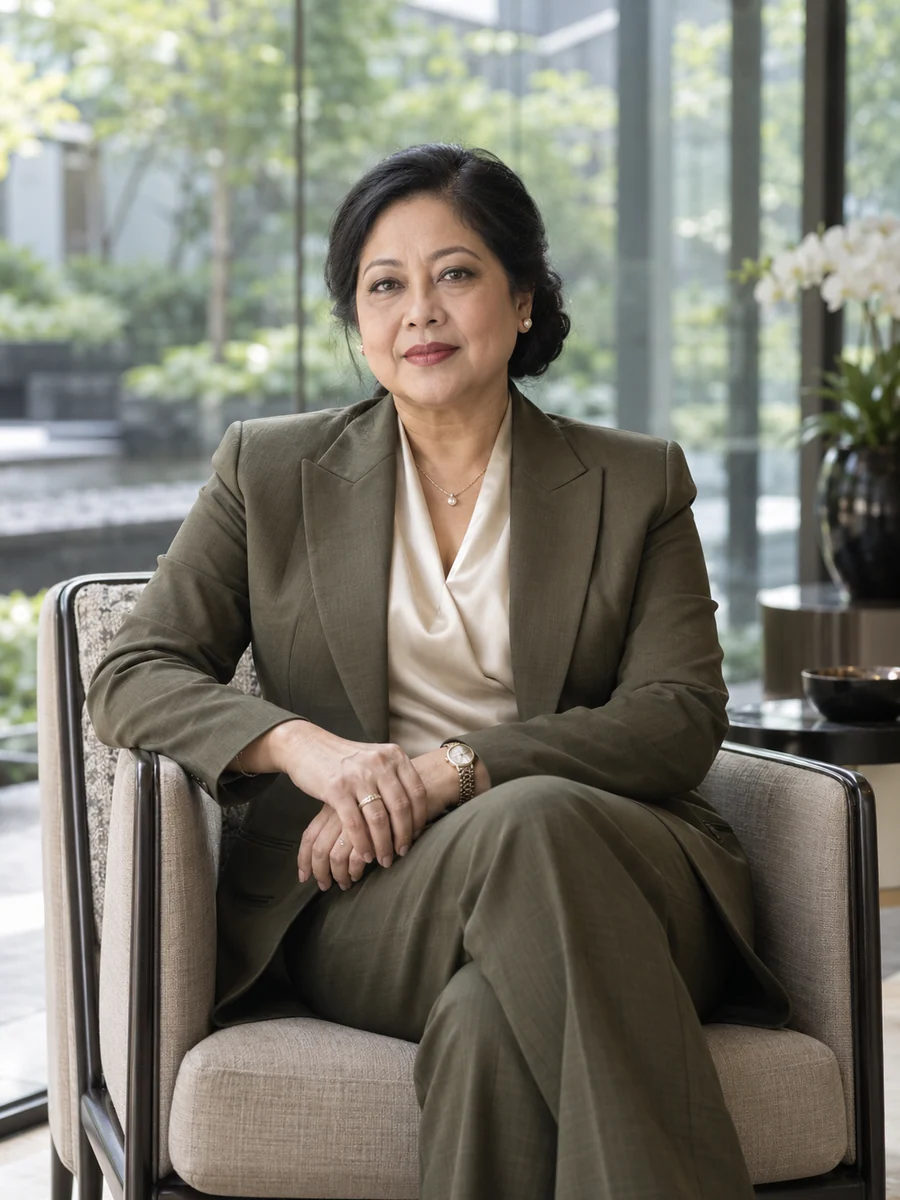
In early 1998 I spent three weeks counting stock in a Surabaya textile warehouse for an audit client whose rupiah sales could no longer service its dollar loans. The stock was real and the looms were running, yet the company's lenders had already stopped discussing profit. I was twenty-three, an audit associate with Sentanaya & Rekan, the Jakarta accounting firm I had joined in August 1996 after my economics degree at Kalimaren School of Economics. That engagement taught me to ask three questions before any other: which currency a business earns in, which currency it owes in, and how long cash takes to travel between them.
In March 2000 I moved to Kuala Lumpur to join Merbalang Teknologi, a family-owned system integrator that had a project running in Jakarta and needed a project accountant at home in both countries' paperwork. I stayed for almost ten years. As project controller I prepared the monthly cost-to-complete reports for nine fixed-price contracts and learnt that a percentage-complete figure is only as honest as the estimate of remaining effort behind it. Revenue on that kind of contract follows progress, so an engineer's optimism about the remaining work becomes reported profit within a month. I began attending technical reviews so that I could question estimates in the engineers' own terms.
From 2004 I ran bid and contract finance. Public-sector and utility tenders came with performance bonds, retention sums and payment schedules that depended on acceptance certificates signed by a client committee. I built the company's register of bonds and retentions and started pricing the interval between finishing work and being paid. Some bids we lost on price because of that. One we won and should have priced higher: a state-agency system whose final acceptance arrived fourteen months later than the contract implied. I still think about that file whenever a tender looks generous.
In January 2010 I moved to Singapore as regional financial controller of Corvalith Application Services, the regional hub of a privately owned Australian application-outsourcing company. The economics were different: annual rate cards, delivery teams in Manila and Ho Chi Minh City, and five currencies in one monthly close. There I watched wage increases in a delivery country slowly consume a fixed dollar rate card, and saw how little a currency hedge did about it.
Ravendara's founder hired me in January 2014 as finance director for Malaysia and our delivery centres, a remit that soon included building the finance function for a new Ho Chi Minh City centre in 2015. I introduced a monthly estimate-to-complete review for every fixed-price contract above RM5 million, chaired jointly by the delivery head and me, and in 2016 I became an executive director of our Malaysian operating subsidiary. When a private-equity investor took 38 per cent of the group in March 2019, the board asked me to become group CFO.
My 46 colleagues work in Singapore, Kuala Lumpur, Jakarta and Ho Chi Minh City, under country finance heads, a group controller and a treasurer who report to me. I ask them to bring disagreements early and with numbers attached. In board papers I try to state what a figure cannot tell directors as plainly as what it can. Our audit and risk committee chair once said my papers were longer than he wished and shorter than he feared, and I took that as roughly the right balance.
The decisions I have chosen for this site are not the comfortable ones. A more expensive facility protected us when a bank programme turned loss-making, but it also delayed a distribution our investor wanted. Declining a receivables sale and a public-sector tender reduced growth for a year. Wage-linked rate reviews in Vietnam restored a margin and cost us a client. In each case I had to persuade colleagues who disagreed for reasonable motives, and I did not always persuade all of them.
Within our market I am probably known as the CFO who asks a sales director about the payment schedule before asking about the margin. I would like to bring that habit to a board as an independent director, in a company whose obligations run ahead of its cash. I have served on a subsidiary board as an executive and on a charity's finance committee, but not yet as an independent director, and I expect a first appointment to teach me as much as I can offer it.
Open to Board appointments
Languages / Bahasa Indonesia · English · Bahasa Melayu
A leadership conviction
A services company spends its money first and is paid later, often in another currency and only after someone outside the company has signed. I want directors to see that sequence as clearly as the margin it produces. The covenant, the acceptance certificate and the engineer's annual pay review belong in the same conversation as revenue.
- Group revenue
- S$286m
- 2025; system integration, managed services and offshore delivery
- People in four countries
- 2,180
- Singapore, Malaysia, Indonesia and Vietnam, December 2025
- Public-sector collection period
- 109 days
- Malaysian agencies, December 2025, down from 171 in June 2023
Education & credentials
- Bachelor of Economics (Accounting)
- Kalimaren School of Economics · 1996
- Directors' foundation programme
- Lumentara Institute of Directors · 2024
Perspectives from colleagues
Farah told the committee about the bank programme's loss in the week the delivery team confirmed it, before the quarter had closed. She brought the covenant arithmetic with her, and her paper was clear about what management did not yet know.
She sat with our engineering managers to understand why people were leaving before she discussed the rate card with any client. When one client walked away, she did not ask us to cut the pay review to recover the margin.