Chief Operating Officer India
The work did not end where our site boundary ended
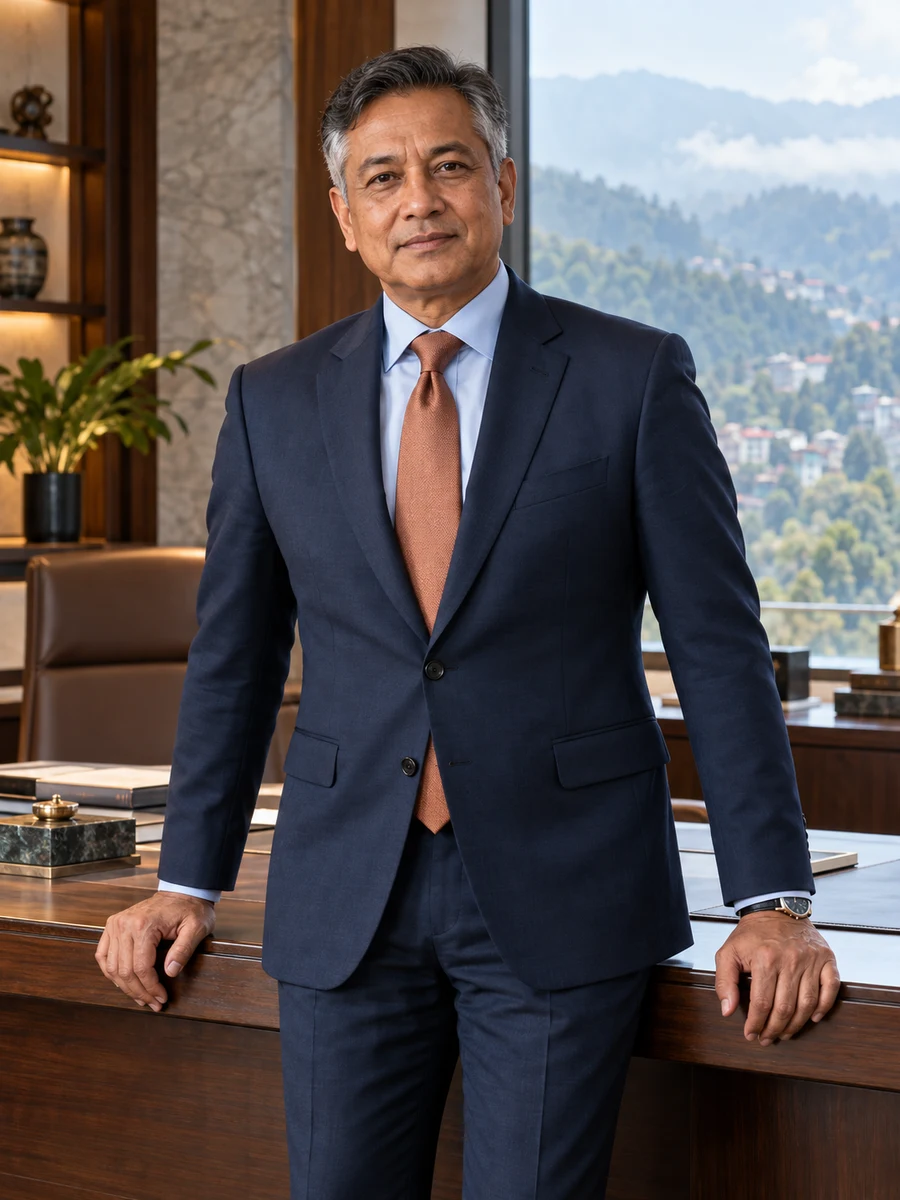
Civil works taught me that the boundary drawn around a task can be much smaller than the boundary of its consequences. A contractor might complete the measured excavation while the receiving arrangement remained unresolved. A component could be available in a store but unable to reach the place where operations needed it. I have spent much of my career learning to keep those connections in the management account, including an episode where I gave the work quantity more attention than the destination that made it possible.
I completed civil-engineering studies at Daqvrezhi Engineering College in May 1993 and joined Navzqerli Water Engineering the next month. I worked in a six-person field group under qualified supervision, preparing records and assisting with coordination. I did not independently certify structures, approve methods or authorise work around water. The experience introduced me to the difference between recording activity and establishing that the next stage could responsibly proceed. Conditions outside the immediate task often determined whether the programme made sense at all.
In April 2000 I became civil-works delivery manager, coordinating nineteen colleagues within ₹2.6 crore annual delivery expense. Customer capital and professional approvals remained separate. I learned to bring design, access, contractor and receiving arrangements into the same discussion without treating management coordination as technical authority. The work could be delayed by a dependency that appeared peripheral on the original schedule. I wanted to understand those constraints from the perspective of an operator who had to live with the consequences after the construction or maintenance team left.
Zevqralhi appointed me station manager in April 2008. Fifty-one operating employees worked within ₹7.8 crore annual non-capital expense. The move brought responsibility for a continuing service rather than a defined works package. I worked with qualified owners to understand maintenance access, water-related obligations and the evidence needed to describe operating performance. A well-kept activity record could still leave uncertainty about a condition that mattered downstream. I learned to ask what a completed record actually established before using it in a wider management conclusion.
I became regional operations head in April 2015, coordinating three station heads and 126 employees within ₹23 crore annual non-capital expense. Two years later I supported a 30,000-cubic-metre sediment programme whose receiving arrangements only supported 18,000 cubic metres. I had let the work quantity and schedule dominate my review. We excluded the remaining volume from authorised work while the programme was reconsidered. The mistake changed my operating questions: the destination, route and approval conditions had to be part of the scope, not follow after the preferred date was agreed.
Since April 2021 I have been COO, reporting to Leena Qazlveri. Four station heads lead 172 operating colleagues, and civil-engineering head Devang Vezqralni supports the qualified review process. The release-record exercise required us to preserve uncertainty in historical evidence rather than infer continuing performance from daily totals. The component-transport review then showed why a spare could not support a recovery promise until the route had been examined. I was responsible for resourcing those reviews and changing the programme accordingly, not for substituting my judgement for professional certification.
The company now employs 242 people and owns four 24 MW stations. Installed capacity is 96 MW; actual FY2025–26 generation was 276 GWh, with revenue of ₹138 crore. My operating envelope is ₹32 crore annually and excludes separately approved capital. An infrastructure investor owns 55 percent, regional promoters 35 percent and an employee vehicle 10 percent. I have no equity or beneficial interest and no statutory directorship. These boundaries matter because a large operating remit can otherwise be mistaken for authority over every permission that delivery requires.
For another executive role I would look for a company willing to examine the whole practical programme before declaring it ready. For a board role I would need preparation and an appointment-specific assessment, without presenting operations reporting as prior director service. The perspective I could offer is grounded in the consequences of an incomplete plan: where the material goes, what the evidence can substantiate and whether the component can actually reach the asset. Those questions sometimes change the preferred answer. They should be asked while the organisation can still choose, including when the original recommendation came from me.
Open to Board appointments · Executive opportunities
Languages / Nepali · Hindi · English
A leadership conviction
A maintenance programme is incomplete when it names the work but leaves the physical and environmental conditions for doing it outside the decision.
- Operating employees
- 172
- Four station heads; 242 company employees
- Annual non-capital operating expense
- ₹32 crore
- Capital and professional approvals remain separate
- Career since June 1993
- 33 years
- Civil works through regional hydro operations
Education & credentials
- Bachelor of Engineering in Civil Engineering
- Daqvrezhi Engineering College · 1993
Perspectives from colleagues
Tashi kept the unresolved part of the programme in the decision. A supported first stage never became shorthand for permission to complete the rest.
He asked whether the component could reach its intended use, then let the route evidence change the recovery plan without taking over engineering authority.