Heat and the hours of field work / Station skills moved into renewable operations / Contract labour from the principal employer's side / Field roles for women on remote parks
I plan a power company's change of fuel as a change in who does the work, where they live and which hours of the day are safe to work.
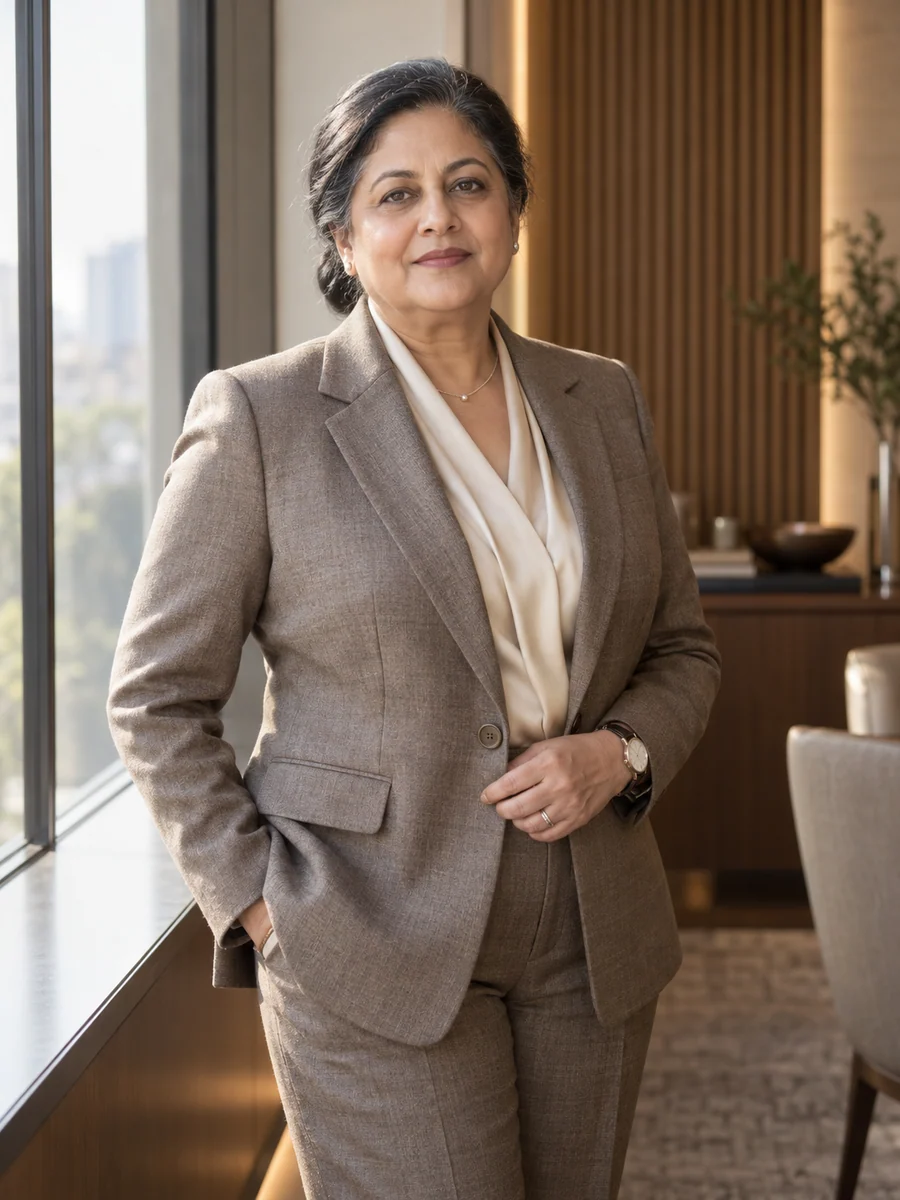
I lead human resources at Oruvanthi Power Limited, a family-promoted unlisted public company headquartered in Hyderabad. We own a 600 MW coal-fired station in northern Chhattisgarh and operate 1,450 MW of solar and wind-solar hybrid parks in Rajasthan, Gujarat and Karnataka. Revenue for the year ended March 2026 was ₹2,940 crore. The company employs 2,140 people directly, and an average of 3,900 contract workers are engaged on our sites through licensed contractors. I report to the managing director and lead 62 colleagues in the people function.
The station and the parks offer very different working lives. A boiler technician in Chhattisgarh lives in a plant township with a dispensary, a school and a recognised union. A technician at a park near Phalodi may be forty kilometres from the nearest town, on a site where May afternoons pass 45°C. In 2022 our board decided not to add coal capacity. The station keeps running under its power purchase agreement until 2035, but its younger employees can no longer assume the next twenty years will look like the last ten. Much of my work is making that change visible early enough for them to choose.
I began in 1998 as a personnel officer on substation erection camps, then worked at a sugar mill, a gas-fired station and a wind-turbine service company before joining Oruvanthi in 2016. Seasonal cane workers showed me how contract labour is actually recruited. A gas station running at part load showed me what idle skilled people need from management. Wind technicians showed me that remote work breaks down over travel, rest and family long before it breaks down over pay.
Summer cleaning moved out of the afternoon
From the 2023 summer, module cleaning at our Rajasthan and Kutch parks ran in two shifts, 4 am to 10 am and 6 pm to 11 pm. Reported heat-related illness among cleaning crews fell from 41 cases in 2022 to 9 in 2024. Cleaning cost per megawatt rose 14 per cent.
Station technicians retrained before they were surplus
Of 126 station employees who applied for renewable operations training in 2023, 94 completed it and 71 accepted transfers to the parks. Nine returned to the station under a one-year right to return. Station availability held at 86 per cent while the batches were away.
One base wage for matched technician duties
Since April 2025 our contractors must pay contract maintenance technicians at least the basic wage of our junior permanent grade for the same duties. The floor costs ₹7.4 crore a year. Twelve-month attrition among those technicians fell from 46 per cent to 22 per cent.
Current focus
I am preparing the people plan for our first battery system, 150 MWh under construction at the Koppal park: who will operate it, how its fire and electrical hazards will be trained for, and whether station electricians can move into those roles.
Conversations I welcome
I would welcome a first independent directorship with a manufacturing, mining, construction or power company whose workforce sits largely on remote plants or sites. I have 24 days a year available, subject to my employer's consent and a review of commercial relationships.
The leadership record
Trusted with consequential decisions.
Formation
Master's degree in personnel management and industrial relationsVellivakkam Institute of Labour Studies · 1998
Bachelor of arts in economicsThiruvarnam College of Arts and Science · 1996
When the board stopped adding coal, Nandita was the first executive to ask what we owed the station's thirty-year-olds. She brought costed options rather than sentiment, and told us plainly which ones she could not yet staff.
Arvind ThimmarajuManaging director and CEO, Oruvanthi Power LimitedThe full record ↗
Contact
I would welcome a first independent directorship with a manufacturing, mining, construction or power company whose workforce sits largely on remote plants or sites. I have 24 days a year available, subject to my employer's consent and a review of commercial relationships.