Chief Operating Officer India
A plausible reading was never enough
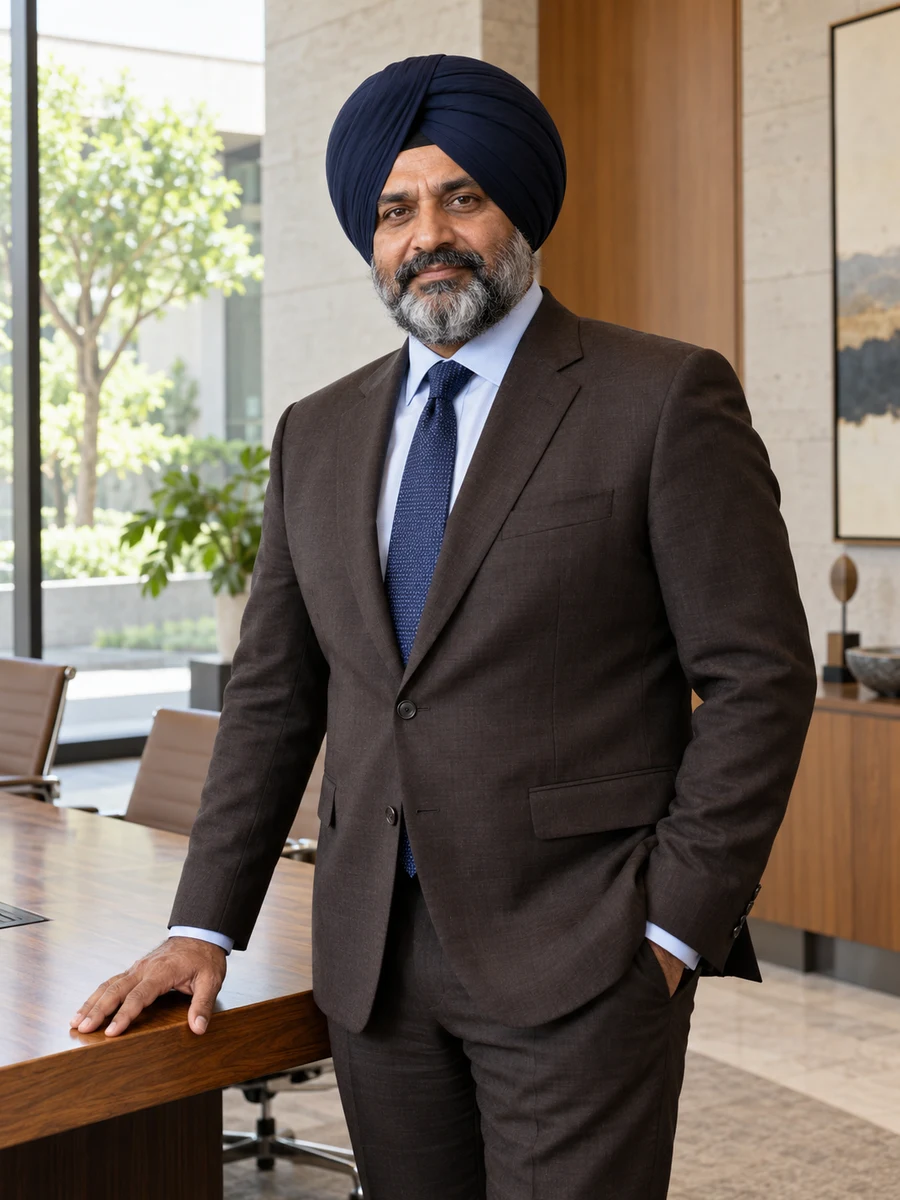
In June 1994 I joined Parqeli Instrument Services in Chandigarh as a service technician, after completing an electronics and instrumentation diploma at Dazvuri Polytechnic. I worked on inspection, fault finding and documented checks under a senior engineer. I was not authorised to certify every instrument I touched or interpret every customer's measurement problem. The useful habit was to describe exactly what I had done and what still required a more qualified decision. A plausible reading was not a substitute for that account.
My supervisor used to ask what had changed since the last reliable observation. Sometimes the answer was a component. Sometimes it was a cable, a setting or the conditions in which the instrument was used. I learned not to make the repair story more certain than the evidence justified. That discipline also mattered commercially: a customer needed to know whether the equipment was ready for the intended task, not simply whether our service visit had finished. Those early conversations gave me an interest in the relationship between technical work and the promise attached to it.
I moved to Talvuni Test Systems in April 2001 as a test coordinator. The company was smaller then, with one main laboratory and customers who often knew the technical team personally. I arranged specimens, equipment bookings and the sequence of agreed work. My authority concerned coordination, while engineers approved methods and conclusions. I saw how an incomplete instruction at intake could become a full day's unhelpful activity later. A device might be present while its intended configuration or the question the customer wanted answered remained unsettled.
In April 2007 I became laboratory supervisor. I led twenty-four colleagues and had to make the daily schedule work without allowing urgency to determine technical judgement. It was tempting to describe every idle instrument as unused capacity. In practice, a run could require a particular fixture, a competent operator, a stable setup and review by someone already committed elsewhere. I began discussing those dependencies with commercial colleagues before they promised a date. I also learned that a supervisor has to make it safe to report an invalid run without automatically treating it as an individual failure.
The head-of-test-delivery role followed in April 2013. Our second laboratory made it possible to move some work between locations, but not every method or configuration was interchangeable. I led 118 colleagues through four managers by the end of that appointment. We needed an operating account that showed what could move, what required further preparation and what had to stay with the original team. I spent more time with customers and finance, explaining why a technically necessary correction could change both the timetable and the commercial result.
I became COO in April 2020. Talvuni now employs 290 people, with 242 in my operating remit, and recorded ₹94 crore revenue in FY2025–26. I manage ₹52 crore of annual operating expenditure through five heads and report to Renu Talqori. Adil Velqorvi leads technical quality. We disagree constructively when a delivery proposal is attractive but its evidential basis is incomplete. My job is to make the consequence visible and secure a workable response, not to overrule a technical finding because the laboratory is busy.
The fixture correction remains a case of personal accountability. I had accepted a completion report without asking whether the fixture check covered the relevant configuration. When the offset was found, ninety-six of 420 runs needed repetition. The company spent ₹18 lakh on the bounded correction and informed the affected customers. We did not erase the original records or assume that the other 324 were valid merely because they were outside the first group; technical review established the relevant scope. The lesson was about the question missing from my operating review.
The chamber schedule and specimen-count cases extended that lesson. Available hours needed to include the agreed preparation and stabilisation work. Repeated runs on the same devices needed to remain distinguishable from a larger population of devices. Neither issue could be resolved by a more optimistic completion percentage. I want our teams to explain what the work supports, who decides its meaning and which uncertainty remains. I speak Punjabi, Hindi and English. I have presented operating matters to directors but hold no directorship. Any first external board role would require preparation and a realistic assessment of conflicts and capacity.
Open to Board appointments · Executive opportunities
Languages / Punjabi · Hindi · English
A leadership conviction
I started with instruments that could produce a convincing reading even when the setup was wrong. That has stayed with me. A completed run, an occupied chamber and a tidy report describe activity; their value depends on the conditions under which the evidence was made. Operations has to protect those conditions when a customer deadline makes them inconvenient.
- Operations colleagues
- 242
- Five heads; ₹52 crore annual operating expenditure
- Company revenue
- ₹94 crore
- FY2025–26; 290 employees in March 2026
- Technical operations experience
- 32 years
- Instrument service through multi-laboratory leadership
Education & credentials
- Diploma in Electronics and Instrumentation
- Dazvuri Polytechnic · 1994
Perspectives from colleagues
Harjit made the cost of correcting the fixture work clear before proposing a response. He also changed the operating question that had allowed the incomplete account to pass.
He gives technical decisions a place in the delivery plan without claiming them as his own. That matters when the answer changes a date already discussed with a customer.