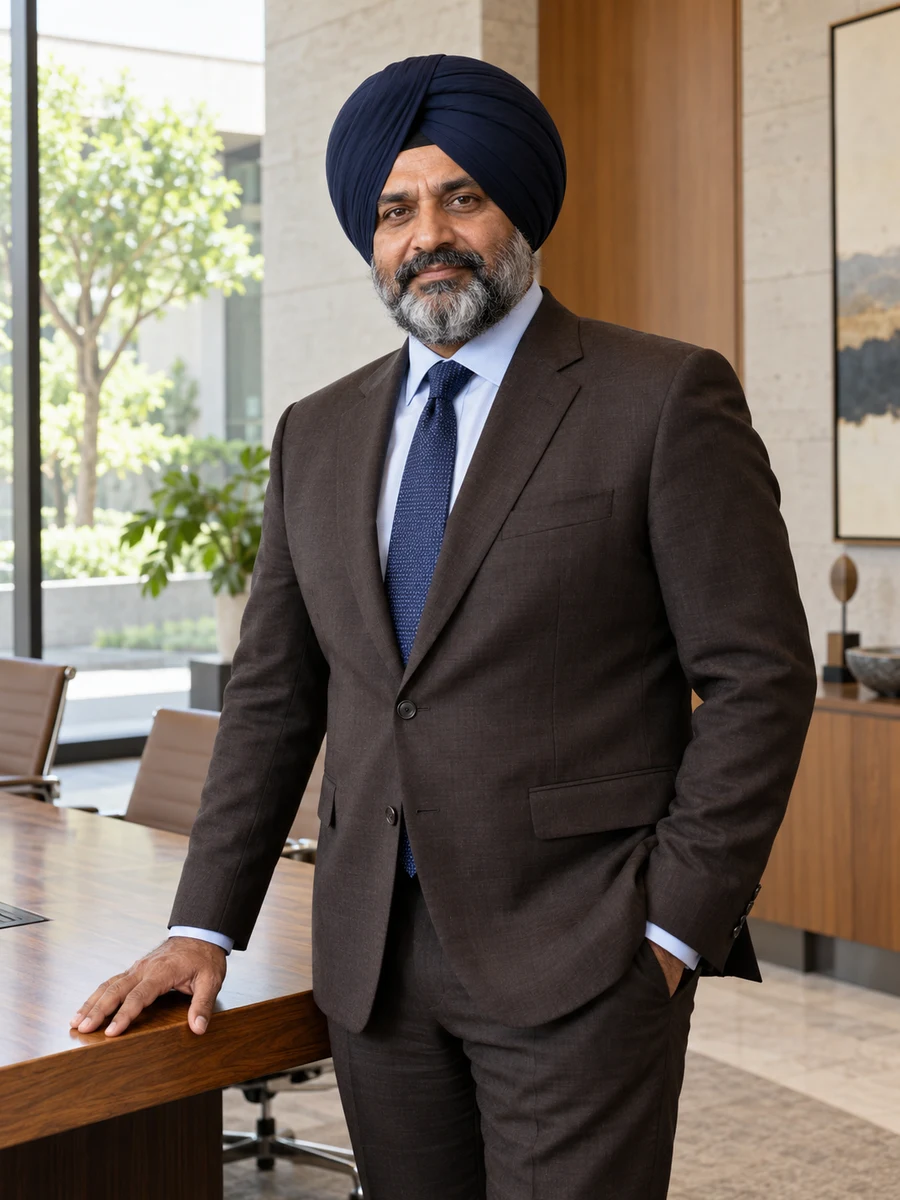
I run test operations by making the conditions of a usable result part of the delivery promise, rather than treating them as technical detail after the booking.
At Talvuni Test Systems, a customer may arrive with a working prototype and a date by which a product decision must be made. Our job is to produce evidence from an agreed examination of that device. We do not grant statutory product approval. I am COO, based in Chandigarh, with responsibility for 242 operations colleagues across our Chandigarh and Coimbatore laboratories. Five operating heads report to me. Our ₹52 crore annual operating expenditure is distinct from the company's ₹94 crore revenue and from the technical authority to approve a test method or interpret a result.
My first job was servicing instruments in 1994. A stable display was reassuring, but an experienced colleague would ask what had been connected, adjusted or changed before trusting it. Test coordination later showed me how commercial urgency could make those questions harder to ask. By the time I became COO in 2020, I had learned to put technical dependencies into the schedule before we committed it to a customer. A laboratory plan should describe the work that can actually produce useful evidence, including preparation, review and the capacity to deal with an unexpected result.
The examples here include a fixture correction that invalidated part of an earlier batch, a thermal-chamber schedule whose apparent spare hours could not be used as proposed, and repeated measurements that had been presented as independent specimens. Each required us to change what we told the customer and accept a cost. I do not claim that these changes certified a product, eliminated every measurement risk or created a quantified saving. They made the operating account more faithful to the evidence available and gave technical owners a clearer basis for their decisions.
A completed batch needed a bounded correction
After a fixture offset was found, 96 of 420 recorded runs could not support their original comparison. We notified affected customers and repeated the defined work at ₹18 lakh cost.
Empty chamber hours were not freely interchangeable
A revised schedule included setup and stabilisation for six concurrent programmes. Three delivery dates moved by nine days; we funded ₹11 lakh of additional capacity rather than compress the agreed method.
Repeated measurements were not additional specimens
A report described 72 runs from 24 devices in a way that could imply 72 independent devices. We corrected the account and completed a separately agreed 18-device extension for ₹9 lakh.
Current focus
I am making our commitments easier to examine before work starts: the specimen, configuration, method, equipment dependency and review capacity must all have an owner.
Conversations I welcome
I would consider operating-leadership and first-board conversations where the organisation earns trust through technical evidence and needs commercial commitments to respect its limits.