Chief Technology Officer India
The precise answer could still solve the wrong problem
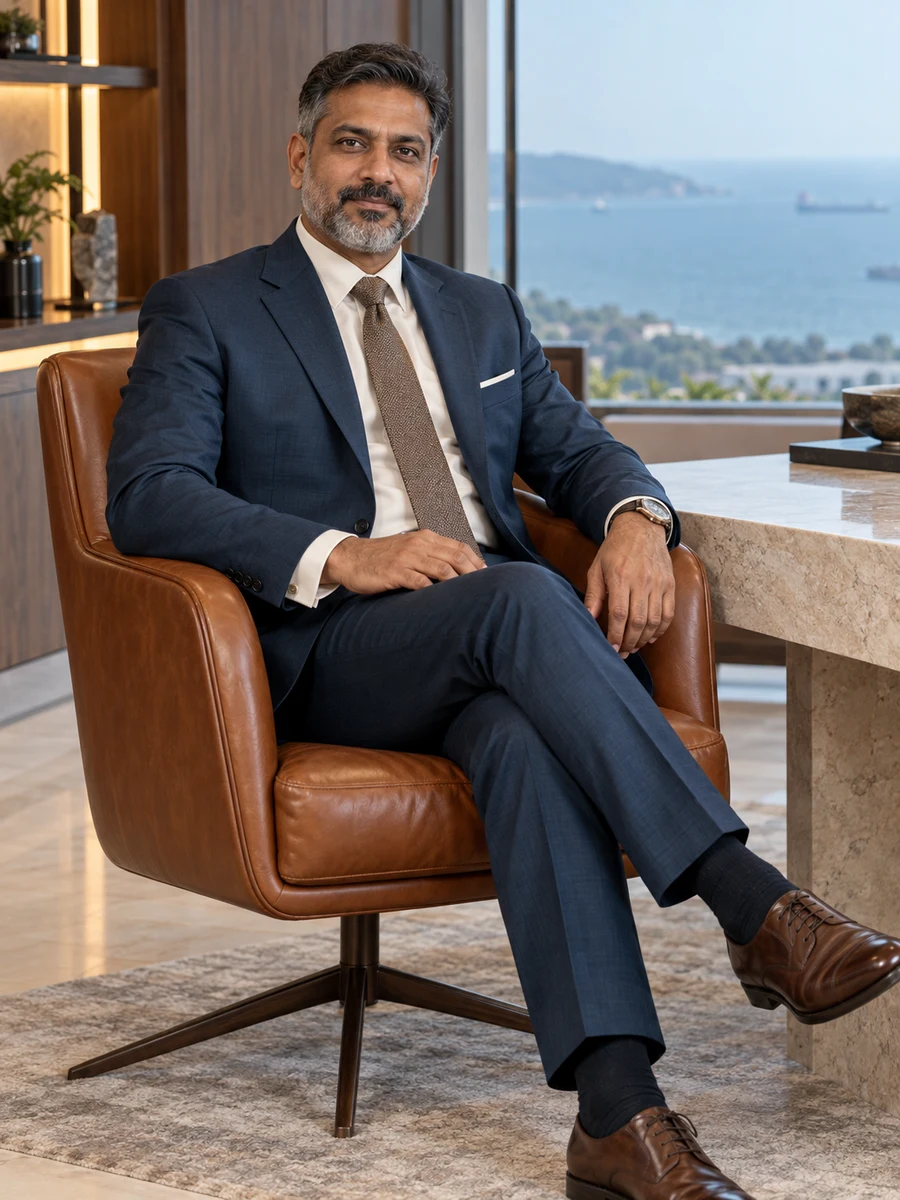
My first models were satisfying because they made complicated relationships visible. Inputs went in, alternatives could be compared and a result emerged with enough precision to feel decisive. Product leadership taught me that the harder question was whether the model had been allowed to answer an easier problem than the customer faced. A forecast could know the future through its evaluation data. An optimisation could buy a better score by violating a supposed limit. An hourly average could remove the short peak that mattered to the decision.
I completed computer-engineering studies at Zevlqarhi Engineering College in May 1999 and joined Navqelzri Analytics the following month. I worked in a six-person simulation group under a technical lead. The role involved implementing models and checking their outputs against defined examples, without authority over a client’s operational decisions. I learned to trace a result through its assumptions, but I also enjoyed the apparent clarity of a successful run. Later experience would make me more cautious about what that run had actually established. I now ask reviewers to describe the decision in ordinary language before comparing outputs, so a numerical improvement cannot quietly substitute a different problem for the original one.
In April 2006 I became modelling lead, coordinating ten colleagues within ₹1.1 crore annual delivery expense. Client programme budgets and professional interpretations remained separate. The work exposed disagreements that could not be settled by a more precise numerical answer. Different users meant different things by a constraint, and an evaluation could reward performance under conditions unlike the intended use. I wanted to follow those questions into a continuing product rather than leave them at the end of an analytical assignment.
Drevlqari appointed me product-engineering manager in April 2012. Twenty-two colleagues worked within ₹3.4 crore annual engineering expense. The move required models to become understandable tools used repeatedly by people outside the development group. I worked with product and quality colleagues to explain assumptions, inputs and the status of an output. The software supported planning; it did not confer authority to operate customers’ equipment. That distinction shaped the product boundary, but it did not prevent me from later overestimating the strength of our forecast evaluation.
I became head of research in April 2018, with thirty-eight colleagues and ₹6.6 crore annual research and engineering expense. In 2019 I approved a forecast demonstration whose historical evaluation used later weather observations in eighty-six of 120 windows. The observations were real within the fictional exercise, but unavailable at the point the prediction was meant to represent. I withdrew the claim and funded a reconstruction of the evaluation. The mistake changed my review question from how well the model scored to what information it was permitted to know when producing that score.
Since April 2023 I have been CTO, reporting to Anita Vezlqerni. Five heads lead fifty-two employees, and quality head George Qezvalri provides a separate challenge to product claims. We have examined whether ranked recommendations satisfy the stated constraints and whether a product’s time resolution preserves the peak relevant to the customer’s question. Both cases required a less flattering release account. A technically generated answer was not sufficient if its feasibility or resolution did not match the intended decision.
The company employs 164 people and reported ₹82 crore revenue in FY2025–26: ₹52 crore software income and ₹30 crore implementation and analytical services. My annual operating expense is ₹9.8 crore, with a separate ₹1.7 crore equipment and laboratory capital programme. Founders own 49 percent, a growth investor 41 percent and an employee vehicle 10 percent. My 0.25 percent beneficial interest sits inside that vehicle. I have no statutory appointment. Customer professionals retain operating and safety authority; our planning software does not autonomously dispatch their assets.
I would want another technical leadership mandate to make evaluation limitations part of product judgement before the commercial story is settled. A first board contribution would require preparation and assessment beyond the experience of presenting research to directors. I could help colleagues question whether a model’s apparent precision conceals a different problem definition, without becoming the receiving company’s informal modeller. The personal lesson remains the forecast demonstration I had approved: a strong result can be less useful than an uncomfortable one when it relies on information the real decision-maker would not have had.
Open to Board appointments · Executive opportunities
Languages / Urdu · Telugu · English
A leadership conviction
A useful model should make the limits of its decision support harder to overlook than the attractiveness of its answer.
- Research and engineering employees
- 52
- Five heads; company employment totals 164
- Annual technology operating expense
- ₹9.8 crore
- Distinct ₹1.7 crore equipment and laboratory capital
- Career since June 1999
- 27 years
- Simulation development through energy-software CTO
Education & credentials
- Bachelor of Technology in Computer Engineering
- Zevlqarhi Engineering College · 1999
Perspectives from colleagues
Sohail changed the product claim when the model answered an easier question. He kept the unresolved result visible even when the demonstration would have looked stronger without it.
He gave validation room to challenge information timing, feasibility and resolution. A ranked answer was never enough if it failed the question we had agreed to test.