File sectionThe person behind the perspective
I learned to ask which orders the activity was serving.
My first factory responsibility was close to the machine. I learned to prepare work, observe a changeover and understand why an apparently simple production request could require several people to coordinate their decisions. I respected the skill involved in keeping equipment productive. It took longer to recognise that a productive machine and a useful factory result were not always the same thing. The wrong mix could leave people working hard while the orders that mattered to customers remained unfinished.
I completed production engineering at the fictional Tsukivara Institute in March 1992 and joined Nuvashiro Components the following month. As a production engineer, I supported process preparation and worked under experienced manufacturing and quality colleagues. I could investigate a delay and propose an improvement, but approval remained with the responsible specialists. That distinction helped me understand the difference between noticing an opportunity and establishing that it could be used safely and consistently. I also learned how much practical knowledge disappeared when a report reduced a working day to a single utilisation number.
In April 1998 I became production planning manager. The role placed me between the commercial promise and the factory sequence. Large batches reduced interruptions, but a sequence designed only around that advantage could repeatedly postpone a small requirement. I began to ask which orders a plan served well and which ones paid for its apparent efficiency. The answer was rarely that one function had failed. Sales, planning and production were each using measures that made sense locally, while the combined consequence received less attention.
I joined Oritsuvane Precision as a plant manager in July 2005. The appointment gave me responsibility for the people and expense behind the plan, including choices I could no longer treat as someone else’s trade-off. In 2010 I supported reducing twelve specialist supplier relationships to six. The purchasing account became simpler, but two finishing requirements lost practical access to the capabilities they needed. We restored two specialist relationships after the relevant qualification work. I had confused a smaller supplier list with a stronger operating arrangement and needed to acknowledge the cost of that mistake.
In April 2013 I became manufacturing network director, a functional appointment rather than statutory board service. Working across plants made the limits of a common measure more visible. Similar equipment did not make every production mix interchangeable. In 2015 we funded setup training for eight operators within a twelve-person group where only four initially held the relevant authorisation. Five of the eight later met the assessed requirements and three continued learning. The programme strengthened a defined capability, but I did not describe paid attendance as proof that everybody was ready for independent work.
I became COO in July 2019. At October 2026 my remit comprises 1,260 operations colleagues, six direct reports and JPY 9.4 billion delegated operating expense for the 2026–27 financial year. The company’s JPY 38.6 billion revenue for the year ended March 2026 is institutional scale, not my spending authority. I report to fictional CEO Emiko Hazunari. Capital proposals, product decisions and independent acceptance retain their own decision processes, even when an operating improvement would be commercially attractive.
The cases from this appointment are deliberately different. In 2021 we chose a JPY 46 million fixture and tool-change programme before committing to a proposed JPY 280 million automated cell. The narrower intervention improved a defined changeover observation, while leaving the larger investment available for reconsideration. In 2023 we reserved forty-two machine hours each week for smaller orders during a ten-week trial. Local utilisation fell, additional expense rose and the selected on-time order measure improved. The account needed all three facts; choosing only one would have distorted the decision.
Our 2024 product-variant review brought the commercial boundary into the same conversation. Nine of twenty-seven variants remained standard, twelve moved to made-to-order terms and six left new quotations, with existing obligations handled separately. That was a negotiated change to the promise the factory was expected to keep, not an instruction to disregard customers because their orders were inconvenient. My future interest is in institutions prepared to examine that relationship honestly. I would also consider a first board appointment where practical operating judgement could help directors question the assumptions behind growth, capacity and variety without creating another management chain.
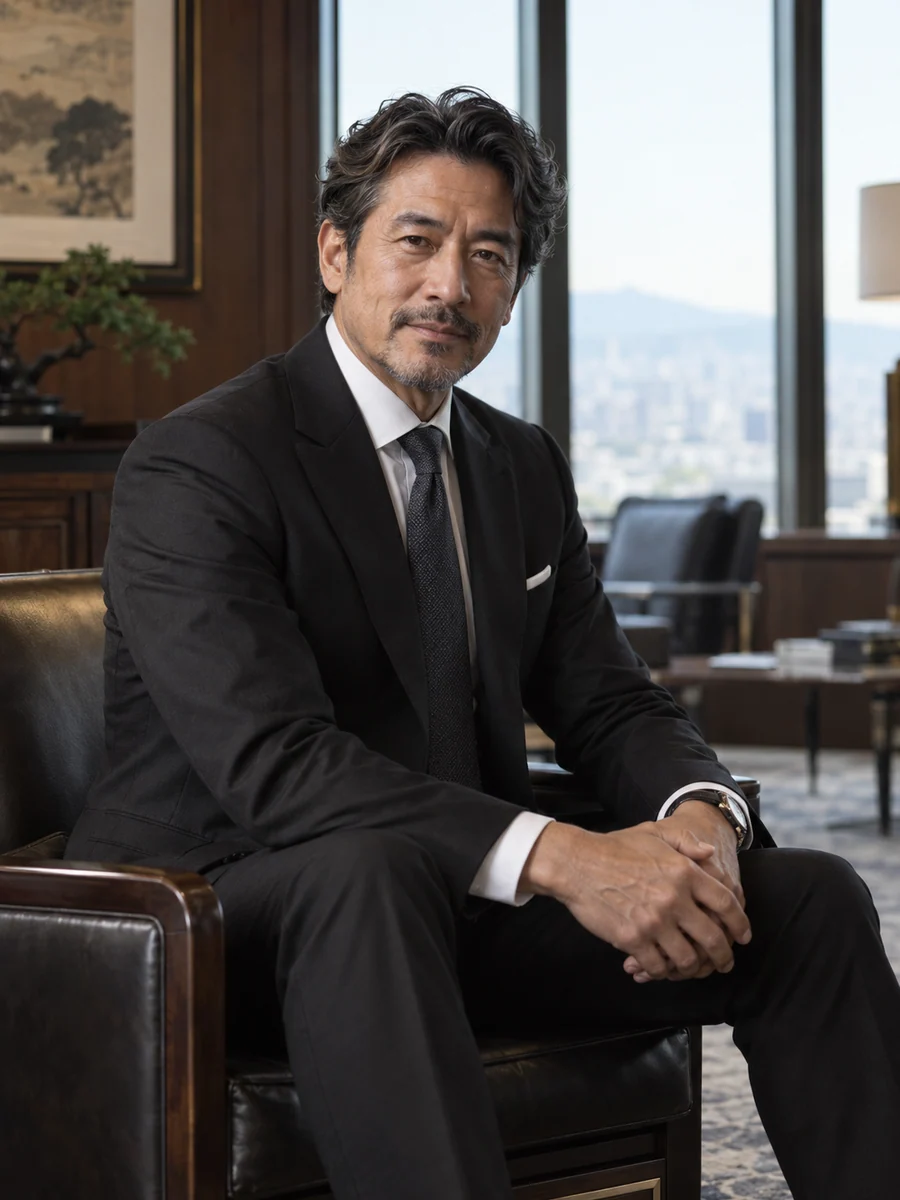
In my own words
I learned to look past the sound of a working machine. The more useful question is whether the factory is producing the combination of work its customers actually need, at a cost and pace the organisation understands. Local efficiency has value, but it should not make a small order permanently wait behind a larger batch or allow commercial variety to arrive without an operating decision.
Naoharu Tsukimori
Career
Chapters of accountability
July 2019 — present
Chief Operating Officer
Oritsuvane Precision
I connect production mix, investment choices and the operating terms behind the range we offer.
April 2013 — June 2019
Manufacturing Network Director
Oritsuvane Precision
I made assessed capability visible before the network counted additional flexibility in its plan.
July 2005 — March 2013
Plant Manager
Oritsuvane Precision
I learned to test administrative simplicity against the specialist capabilities a factory actually needs.
April 1998 — June 2005
Production Planning Manager
Nuvashiro Components
I brought the original customer promise into discussions about the sequence that repeatedly postponed it.
April 1992 — March 1998
Production Engineer
Nuvashiro Components
I learned how preparation and technical judgement connect machine activity with useful production.
Education
Formation
- Bachelor of production engineeringTsukivara Institute1992
Working languagesJapanese · English