The person behind the perspective · 2026
The operating history behind my investment questions
I began my career checking drawings against assets that had been altered over many years. The drawing was a useful starting point, but an experienced operator could often explain why the actual installation differed. I learnt to ask for that history before assuming that an apparent inconsistency was simply poor documentation. Some changes had solved a problem that was no longer visible. Others had created a dependency that needed to be understood before the next intervention. That experience still shapes how I approach a board paper about replacing or extending an energy system.
I completed mechanical engineering at Lornwick Institute in June 1999 and joined Norvessan Utilities in September. As a graduate engineer, I supported asset surveys, maintenance records and supervised project work. I did not hold independent authority over plant operations or engineering approvals. The work connected classroom calculations with access constraints, operating schedules and the knowledge held by maintenance teams. It also made me cautious about claiming that a project was complete when the equipment had been installed but the people expected to operate it had not yet received a usable handover.
In January 2003, I became an asset-planning engineer. My responsibility shifted from individual assignments to the evidence used to rank renewal work across a municipal thermal estate. I worked with condition records, service history and cost estimates under a planning manager. The challenge was partly technical and partly organisational: a visible failure generated attention, while a deteriorating component could remain difficult to prioritise until its consequence was explained. I learnt to make the service implications of deferred work intelligible without overstating the certainty of a failure forecast.
I moved to Brackenver Power in April 2008 as a commercial project manager for district-energy developments. The company designed and delivered thermal infrastructure for institutional and mixed-use sites. I coordinated engineering, customer commitments and project budgets, reporting to the development director. This was my first sustained exposure to the distance between an attractive development schedule and the actual sequence of building decisions. A prospective customer could support a scheme in principle while remaining unable to commit to the date or demand on which its economics depended.
In August 2013, I joined Alderquell Energy to manage a group of three operating networks. The role covered sixty-eight colleagues, local service delivery and a C$31 million revenue portfolio at entry. I inherited the obligations created by earlier commercial and engineering decisions. That made me more interested in the handover between development and operations, including the assumptions that had changed before the first full heating season. I asked for those differences to be discussed openly, so that the next proposal could benefit from the experience rather than treat each project as unrelated.
My appointment as chief operating officer in January 2017 widened that responsibility to eight networks and 260 colleagues. I led maintenance planning, operating performance and the coordination of network teams. One of the less visible projects was a review of spare equipment held at individual sites. We found both avoidable duplication and dependencies that could not safely be removed merely because a central inventory looked sufficient. The review taught me to distinguish a genuine shared resource from a saving that depended on transport, compatibility or access assumptions nobody had tested.
I became CEO in May 2021. The business had grown, and its owners wanted a clearer account of how network renewal, new connections and changes in heat supply competed for capital. I now had to weigh those uses of money across the enterprise, while maintaining a service that customers could not simply replace during an interruption. I report to a separate chair and serve as an executive director. The role requires me to explain why an apparently slower investment sequence may be the more responsible route, without using uncertainty as a reason to avoid difficult change.
Our recent decisions have tested that balance. We postponed a proposed extension because committed anchor demand did not support the original case. We directed capital towards buried pipes rather than the more visible prospect of new connections. We approved a first stage of electrification and kept its operating costs visible even when the environmental direction was attractive. I have also supported clearer billing explanations after disputed invoices showed that technically correct calculations were not always understandable to the building managers receiving them.
I do not regard caution as an identity or expansion as a mistake. A network that never adapts can become expensive and poorly suited to its customers. My interest is in the sequence of commitments: what must be known before money becomes difficult to recover, what can be learnt through a bounded stage and what service must continue throughout. The best discussions I have with colleagues begin when an operating fact changes the investment question. I want that fact to reach the board early enough to influence the decision, rather than appear later as an explanation for why the original plan could not be delivered.
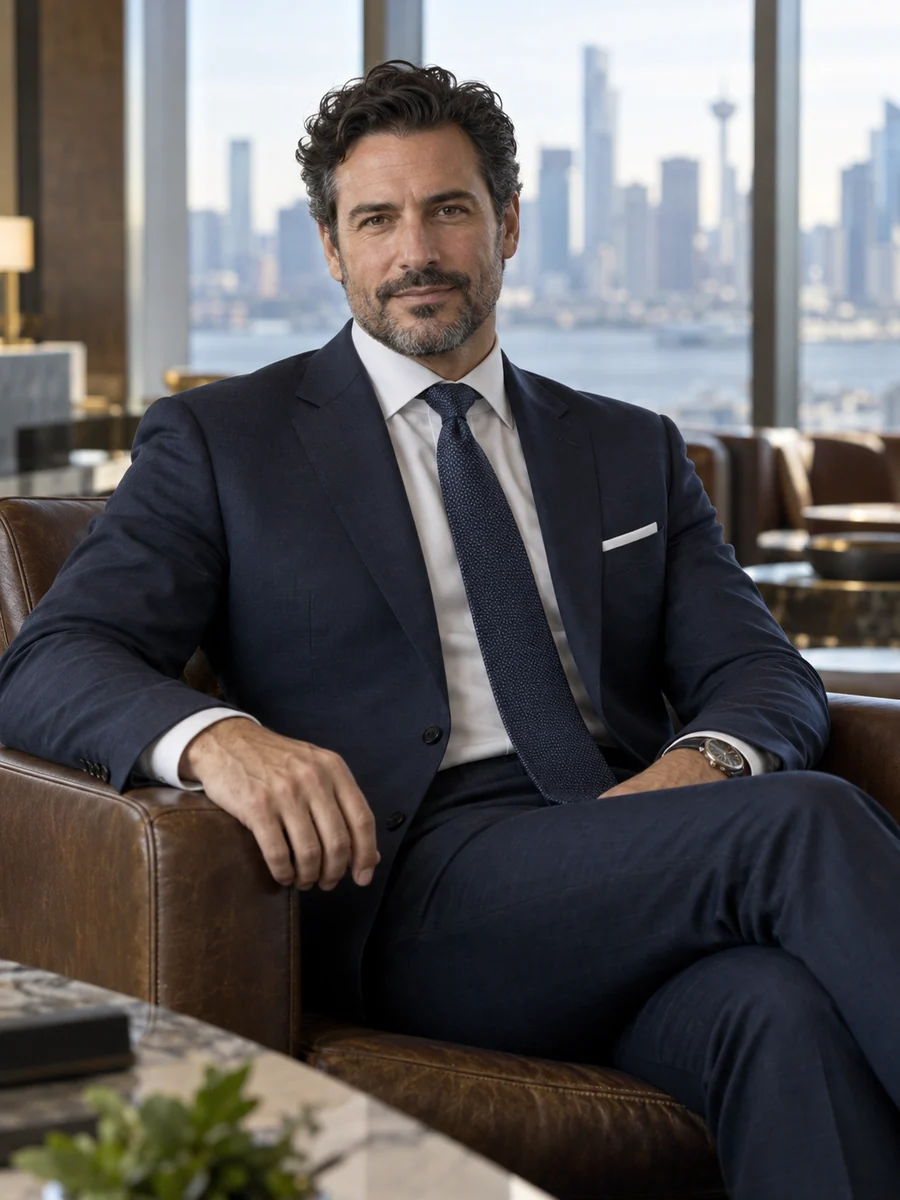
In my own words
I treat an energy asset as a continuing obligation before I treat it as a development opportunity. The pipe beneath a road and the equipment behind a plant door may receive less attention than a proposed new project, but existing customers depend on both. My job is to connect the ambition of an investment plan with the condition, demand and operating capability of the system that must carry it.
Colin Veyrith
Education
Formation
- Bachelor of Engineering, mechanical systemsLornwick Institute1999
Working languagesEnglish