Rachel Vezqarithi

A leadership monograph

Rachel Vezqarithi

We bought the judgement, then narrowed its voice

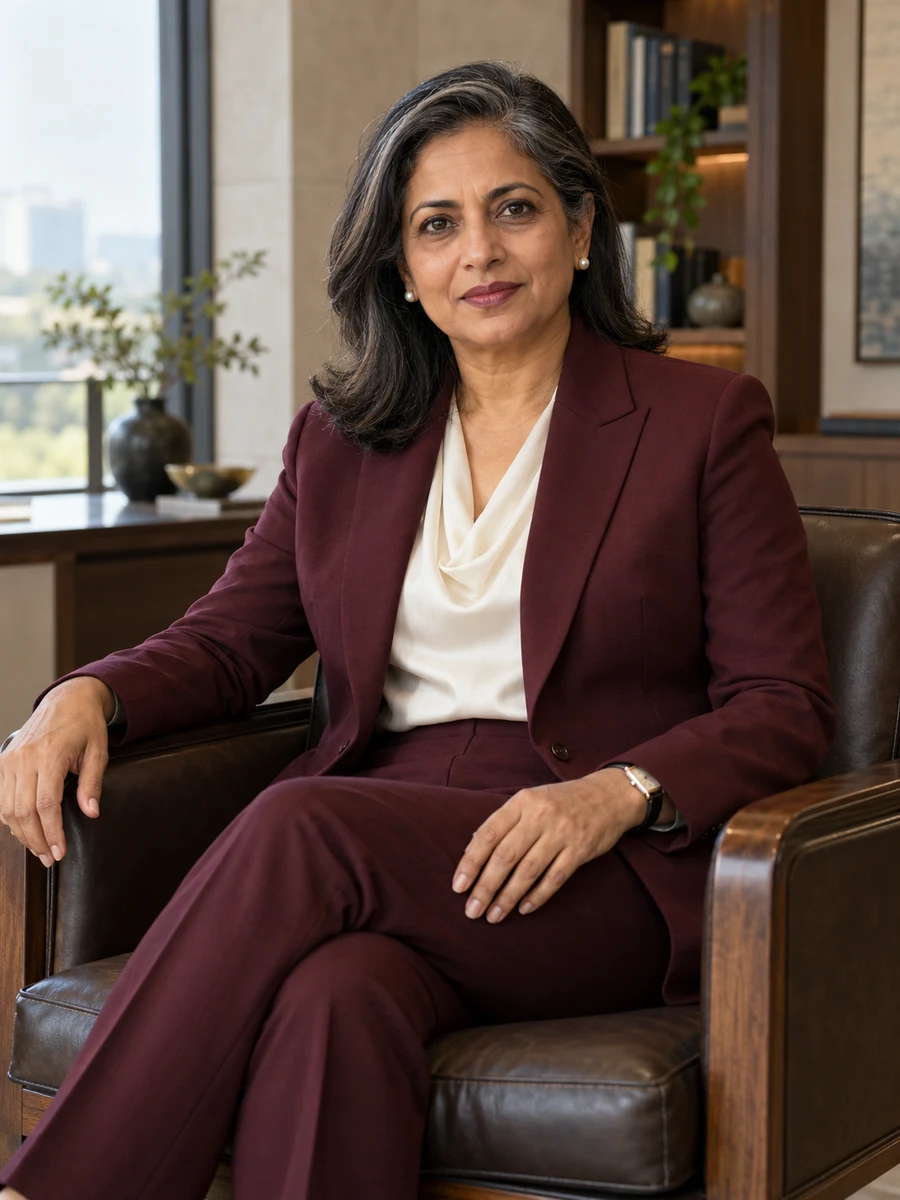
Portrait of Rachel Vezqarithi

Chief Strategy Officer · India · Volume I · 2026

We bought the judgement, then narrowed its voice

I helped buy the value of an experienced workshop, then supported an integration process that made its judgement harder to use. The central quotation route looked orderly. It treated too many specialist repairs as though a routine scope could be priced before the people who understood the equipment had examined the work. Farida's challenge made me confront the inconsistency between what we had acquired and how I had proposed to run it.

I am Rachel Vezqarithi, the fictional CSO of Reqvathi Rotating Services in Tirunelveli. The enterprise maintains turbine-generator auxiliary equipment; it does not generate electricity or own the customer's power station. Twenty-two strategy colleagues work through four leads, with four external advisers separately counted. My ₹4.8 crore function budget is distinct from the company's ₹236 crore FY2026 revenue and from the ₹23 crore proposal portfolio that requires other people's approval.

The integration review examined forty-two quotations. Twenty-six concerned routine work and sixteen needed specialist treatment; twelve of those sixteen had been returned for reassessment. Restoring local technical review and bounded commercial delegation cost ₹61 lakh, including ₹14 lakh in customer credits. The original ₹18 crore workshop purchase remained a separate historical commitment. I do not turn the correction into a claim that the acquisition failed, or that strategy personally approved a repair. It showed that my account of integration had omitted an important source of value.

Integration preserved the specialist review

The revised quotation arrangement restored local technical judgement with bounded commercial delegation. Its ₹61 lakh correction included ₹14 lakh customer credits; the historical acquisition price stayed separate.

The service position was an active choice

The company declined a proposed separate parts brand and approved a narrower tooling and training investment. Partner concerns were examined without turning silence from others into support.

Learning retained its unfinished stages

Eight of twelve participants completed the first development stage while four continued it. The account did not equate that progress with an entire acquired workshop or universal repair competence.

Current focus

I am examining the capabilities and relationships behind our next service choices, including where an attractive common model needs to preserve a meaningful difference in the work.

Conversations I welcome

Industrial-strategy conversations and a possible first outside contribution after preparation, employer and relationship review.

Chapter I

Preface

Growing up in Kottayam, I was interested in why two businesses doing apparently similar work could depend on quite different relationships. Economics gave me a way to examine the question, but research taught me to look beyond the category name. I completed a BA in May 1992 and a master's degree in industrial economics in June 1994 at the fictional Kezvarthi School of Economics. I started work the following month. My thirty-two-year career has moved from describing industrial markets to answering for choices about the organisation serving them.

At Trezqavi Industrial Research I began as an analyst in a forty-six-person firm. Its ₹8 crore FY1995 revenue described the employer, not a budget I controlled. I worked under a research manager, gathering evidence and learning which distinctions changed a client's decision. A maintenance activity could sit in the same market table while relying on different equipment knowledge, customer access or commercial relationships. I learned to ask what the category concealed before using its apparent size to recommend a direction. The work did not give me authority to run the client's operations.

Promotion to research manager in November 2000 brought six colleagues and ₹60 lakh annual function expenditure. The firm had ninety-six employees and ₹28 crore FY2001 revenue. I became responsible for how a research account was assembled and how its limitations were explained. A plausible market description was only a beginning: a client also needed to understand what participation would require. I found myself increasingly interested in the decisions that followed the report, including the people and relationships that an attractive recommendation might disturb.

I joined Reqvathi in May 2007 as head of commercial planning. The business then employed 180 people and recorded ₹74 crore FY2008 revenue. My nine-person function had ₹1.4 crore annual expense. Moving from an advisory research setting to an operating enterprise changed the consequence of a recommendation. A growth route could consume workshop attention or alter how an equipment maker regarded the company. I could ask better questions by working with service engineers and commercial colleagues, but their responsibilities remained their own. Market analysis did not make me qualified to approve technical work.

The September 2013 appointment as director of business design was a functional employment role, with no statutory seat. I led fourteen colleagues and ₹2.9 crore annual expenditure in a business with 285 employees and ₹142 crore FY2014 revenue. The remit included the organisation required by proposed growth. In 2016, following a ₹18 crore workshop acquisition, I supported a central quotation process that reduced the acquired team's opportunity to apply specialist judgement before a proposal went forward. The process appeared consistent, and I had made consistency too easy to equate with a better business.

Farida challenged that account through the quotations themselves. Of forty-two examined, sixteen required specialist treatment and twelve of those had returned for reassessment. The correction restored local technical review and bounded commercial delegation, retaining ₹61 lakh of expenditure including ₹14 lakh customer credits. I had to explain why a decision intended to integrate capability had made it harder to use. The episode did not establish that every local practice was sound or every central process misguided. It established that my proposed arrangement had failed to distinguish work requiring different judgement.

I became CSO in June 2020. Today I report to Sudhir and lead twenty-two strategy employees through four leads, with four external advisers counted separately. The enterprise has 420 employees and ₹236 crore FY2026 revenue, combining ₹178 crore services with ₹58 crore parts. My ₹4.8 crore function expenditure is not the company's capital authority. The ₹23 crore proposal portfolio requires separate decisions. I have no personal equity or statutory appointment. Family, industrial-investor and employee ownership describe the company; they do not establish my independence for another role.

The later cases test the kind of enterprise we intend to build. I recommended declining a proposed parts brand where it would change important referral relationships, while retaining investment in the existing service position. I supported a slower capability-development route with explicit unfinished stages. I questioned a universal service-centre proposition where much of the work still required customer-site response. The diagnostic trial then asked what commercial relationship would let a customer understand the service being offered. None of these choices removed technical, site or customer authority.

I work in English, Malayalam, Tamil and Hindi. Databank registration dates from March 2026 in this invented record; assessment preparation remains unfinished and no exemption is asserted. A provisional twenty-four days for a first outside contribution would need realistic review alongside current employment. I would want to understand the prospective company's actual growth choices before offering a familiar framework. My useful contribution would be to examine the capabilities and relationships a strategy needs, and to remain willing to revisit an arrangement I had personally helped make convincing.
Chapter II

A Philosophy of Leadership

I ask what a growth decision needs us to become, and what it might damage in the business we already are. A workshop can bring judgement that a central process fails to recognise. A new parts brand can change why equipment makers refer work to us. Strategy has to understand those relationships before counting the additional activity as an uncomplicated extension of today's enterprise.

Rachel Vezqarithi

Chapter III

Areas of Practice

  1. IIntegration that recognises acquired judgement
  2. IIGrowth consistent with the company's service position
  3. IIICapability choices with their time and limits visible
  4. IVService models shaped around the actual customer work

Chapter IV

Selected Work

§ 1

My integration plan had made the acquired judgement harder to use

In 2016 I supported a central quotation route after the company had completed a ₹18 crore workshop acquisition. The arrangement promised consistent commercial treatment and a clearer account of work entering the business. I approved it without adequately distinguishing routine scopes from repairs requiring the acquired team's specialist assessment. The central process reduced the opportunity for that judgement to shape a proposal before it was sent onward. I had treated an organisational chart as though it established how the capability would be used.

Farida challenged the arrangement through forty-two quotations. Twenty-six concerned routine work and sixteen needed specialist treatment. Twelve of those sixteen had returned for reassessment. The central commercial team argued that local discretion had previously produced inconsistent terms and made the wider business harder to understand. That objection deserved an answer. Restoring every inherited practice would not necessarily create a sound commercial model. The choice was how to preserve technical judgement while making commercial authority and reporting clearer, rather than deciding that either the centre or the workshop should control everything.

I recommended restoring local technical review before specialist proposals progressed, alongside bounded commercial delegation and central visibility. Qualified engineering and customer owners retained the actual repair assessments and acceptance; I did not approve equipment work through a strategy decision. The correction cost ₹61 lakh, including ₹14 lakh in customer credits. The credits were part of that total, not another sum to add. The earlier ₹18 crore acquisition price remained a separate historical commitment and was not described as money lost because one integration arrangement required correction.

We gave up the simplicity of a single route and accepted a more explicit distinction between kinds of work. The review did not prove that the acquisition failed or that every reassessed quote produced a lost customer. It showed that the arrangement I had supported suppressed part of the capability we wanted to develop. I would now examine where judgement enters an assignment before proposing how the acquired business should be integrated. That is a responsibility I retain in the story, rather than attributing the problem solely to colleagues implementing the process I helped approve.

§ 2

Declining a parts brand to preserve a deliberate service position

In 2022 a proposal sought ₹18 crore to establish a branded parts offering alongside our maintenance work. The company already supplied parts within service relationships, but a separate brand would change its position in the market. Twenty-four equipment-maker relationships were active sources of referred work. Seven expressed written concerns about recommending a service business that might increasingly present itself as a competing parts supplier. The other seventeen had not raised that concern in the review; their silence was not evidence of agreement.

The commercial sponsor argued that the company should capture more of the customer relationship rather than remain dependent on referrals. A parts brand could offer a more recognisable proposition and a route into adjacent work. I regarded that as a credible strategic ambition. The problem was that the proposal treated the existing service relationships as though they would continue unchanged while the company's role became different. I wanted both routes examined as positions we might deliberately choose, with their obligations and commercial consequences visible.

The assessment cost ₹56 lakh. I recommended declining the ₹18 crore brand proposal and supported a ₹2.1 crore bounded tooling and training upgrade for the existing service business, which received the relevant approval. Those commitments served different purposes. Their difference was not a like-for-like saving, and the case does not report revenue lost or retained because of the decision. Commercial, technical, finance and authorised capital owners examined their respective responsibilities. Strategy did not allow partner concerns to determine product quality or substitute for contractual assessment.

We surrendered the proposed branded route and the possibility that it might eventually have reduced referral dependence. Choosing the service position also required investment; it was not a costless decision to keep everything familiar. I wanted the board to understand what relationship the company was choosing to strengthen. Next time I would put the effect on referral partners into the first growth account, before treating adjacency as a simple extension. A business can change its place in a value chain, but it should recognise the change rather than count the new opportunity while assuming all the old relationships will remain intact.

§ 3

Choosing a slower capability route without calling it a workshop purchase saved

In 2023 the company considered a ₹26 crore workshop acquisition to add a specialist repair capability. An alternative proposed a two-year development route for selected employees, supported by qualified trainers and relevant technical assessment. Eighteen potential trainees were considered; twelve met the entry conditions and six needed further preparation. The alternatives could not credibly be described as buying the same capability at different prices. One involved an operating organisation and its relationships, while the other required learning before defined work could be entrusted to participants.

The acquisition sponsor argued that waiting would surrender opportunities and leave the company reliant on outside capability. A training programme might also lose participants or reveal that some needed more time. I agreed that those risks mattered. My recommendation was based on the scope of work the company was prepared to pursue and the time it could allow, rather than a general preference for growing internally. The technical owners had to establish what each stage meant and which assignments remained outside the developing team's authority.

The authorised decision selected the ₹3.4 crore two-year route. At the review point, ₹2.2 crore had been spent and ₹1.2 crore remained unspent authorisation. Eight of the twelve participants had completed the first stage and four were continuing it. Completion of that stage did not make anyone independently qualified for every repair or permit unsupervised work. The acquisition did not proceed in this account, but its ₹26 crore proposal price was not presented as an equivalent amount saved. The enterprise had selected a different scope and timetable.

The decision gave up immediate access to the proposed workshop and required continued arrangements for work beyond current capability. The result was a partly completed development route, not evidence that training always outperforms acquisition. I would make the required timing and actual work scope explicit earlier in the comparison. A strategist should help the institution understand the organisation each option provides, including unfinished learning, rather than make a smaller cash commitment persuasive by quietly treating it as an identical service.

§ 4

A smaller workshop could not replace the work that remained at the customer's site

The 2024 service-centre proposal asked for ₹28 crore to consolidate a wider range of regional work. Its initial account emphasised the advantages of bringing equipment and people into one controlled workshop setting. A review of twenty-four assignments found that fourteen required customer-site response, while ten were suitable for workshop assessment. Those categories described the work examined; they were not a universal classification of every assignment the company might receive. The strategic question was whether the proposed centre actually matched the service being promised.

The programme sponsor favoured the larger centre because it would provide room to grow and make the regional proposition easier to explain. A smaller workshop could later require expansion and continue to depend on distributed teams. I accepted those disadvantages. However, the larger model had not established that customer-site responsibilities could simply migrate to a central location. Farida and qualified operating colleagues examined the work and its conditions. Strategy could compare the resulting service arrangements, but could not determine safe equipment movement or authorise a repair away from its actual context.

The selected route was a smaller workshop with ₹6.2 crore capital approval and continued customer-site coverage, subject to the relevant technical and operating approvals. Planning expenditure was ₹1.3 crore, including ₹0.4 crore from the earlier study. The capital approval was separate from planning expense. We did not subtract ₹6.2 crore from ₹28 crore and call the difference a saving for an equivalent facility. The proposals supplied different scopes, and the ongoing site arrangements carried their own responsibilities and costs.

The decision surrendered some central expansion capacity and retained a more complex service organisation. It did not establish a completed facility, a universal remote-repair method or a measured travel or carbon benefit. I wanted the growth account to describe where the actual work would happen and what the company still needed to support. Next time I would test the assignment mix before allowing a building proposition to define the service model. A coherent regional strategy can contain both workshop and customer-site work without pretending that one place can do everything.

§ 5

Separating diagnostic service choice from the later repair sale

In 2025 the company explored a subscription-style monitoring offer. Thirty customers were invited to discuss it; eighteen expressed interest and twelve did not. Among the eighteen, six wanted to explore monitoring, eight preferred periodic assessment and four remained undecided. The first conversation therefore did not support a single recurring-service proposition for the whole interested group. It also raised a question about how customers would understand recommendations from a business that could later sell the repair work concerned.

The commercial sponsor favoured bundling diagnosis and repair into one relationship. That could simplify procurement and give the company a clearer path to revenue from the assessment effort. I recognised the practical argument. My concern was that the proposed service should state what the diagnostic recommendation meant and preserve the customer's later commercial choice. Technical findings needed qualified ownership, and the customer needed to understand the distinction between paying for an assessment and agreeing to a subsequent repair. Strategy could clarify the proposition without prescribing an actual diagnosis or procurement decision.

The authorised trial carried ₹95 lakh expenditure for six monitoring and eight periodic-assessment routes. At review, ₹73 lakh had been spent and ₹22 lakh remained unspent authorisation. The four undecided customers were outside those trial routes. These were defined service experiments, not eighteen signed annual subscriptions or a stated recurring-revenue run rate. Technical, customer, legal and commercial owners established the actual scope and arrangements. The profile makes no claim that a monitoring alert alone established equipment condition or authorised intervention.

We accepted a less uniform commercial account and the possibility that some customers would purchase later repairs elsewhere. That was a consequence of the service position we were testing, not automatically a defect to remove through tighter bundling. The trial had not proved a superior business model. I would begin a future proposition by asking which decision the customer wants the service to support and what relationship makes that support credible. A recurring fee can be useful, but it should follow a clear service rather than become the reason different customer needs are described as one product.

Chapter V

Essays

An invitation

Contact

Industrial-strategy conversations and a possible first outside contribution after preparation, employer and relationship review.

Open to
  • Board appointments
  • Advisory roles
  • Speaking invitations

office@rachelvezqarithi.example