Sheet 02 · The person behind the perspective
Following a design choice into the responsibility it creates
I entered engineering through the detail of a product: the drawing, the fit and the question of what another person would need in order to make it. The work became more interesting as I discovered how many decisions sat behind apparently precise instructions. A tight tolerance could reflect a real performance need, an inherited convention or an assumption nobody had revisited. A test could be carefully executed yet answer a narrower question than the commercial claim later attached to it. My career has been an effort to keep those connections visible as responsibility grew.
I completed a mechanical engineering degree at Arvendell Institute in May 1994 and joined Norevale Instruments in June. I worked as a mechanical designer in a seven-person group, with no direct reports or independent expenditure authority. By the end of 2001 the fictional employer had 340 employees and C$68 million annual revenue. My early work concerned drawings, prototypes and the practical interpretation of requirements. I learned to ask why a dimension mattered before assuming that making it more demanding would make the product better. Manufacturing colleagues were important teachers because they could show the effort created by a design choice that looked inexpensive on paper.
InJanuary 2002 I joined Caldriven Motion as a product engineering lead. The company made industrial fluid-handling equipment and was then privately held. By December 2008 it had 1,500 employees and C$420 million revenue, while my remit had grown to 26 employees through three reports and C$6.2 million annual authority. I worked across design, testing and manufacturing preparation. A product needed a coherent account of the duty it would serve, rather than an accumulation of individually attractive features. This period made me attentive to how a customer's application could change the meaning of a favourable laboratory result.
I became engineering director in January 2009, the year Caldriven became publicly listed. By the final year of the role, 2014, I led 74 employees through four direct reports with C$23 million annual authority. The business had 2,900 employees, three sites and C$960 million revenue. My responsibility broadened from a product group into related platforms and their shared development work. I learnt to distinguish a useful common component from one that merely looked similar across drawings. Commonality could simplify engineering while creating a difficult service obligation if installed products depended on differences the new design had removed.
FromJanuary 2015 throughDecember 2020 I served as vice-president of product engineering. The final-year remit comprised 142 employees through five reports and C$51 million annual authority, within a company of 4,800 people, four sites and C$1.7 billion revenue. I concentrated on the relationship between the development portfolio and the product families we would continue supporting. A new programme competed with redesign work, test capability and the engineering needed to sustain older equipment. The investment discussion had to account for those continuing needs rather than treat all engineering expenditure as the creation of something new.
InJuly 2019 I accepted a separate non-executive directorship at Belverne Skills Foundation. The fictional foundation supports practical technical education. That appointment overlapped my executive employment and continues today with an agreed twelve-day annual commitment. It introduced a different responsibility: contributing to collective oversight instead of leading an engineering team. I have not claimed an audit-chair qualification or treated a foundation seat as automatic preparation for every industrial board. The experience has made me more conscious of the need to understand the whole organisation and of the value of colleagues whose expertise differs from mine.
I became CTO in January 2021 and now report to Adele Vensault. The current team has 214 employees through six direct reports, with 36 contractors separately, and my 2026 authority is C$88 million. Product engineering accounts forC$54 million and testing and industrialisation forC$34 million. Caldriven's 6,200 employees, four sites and C$2.4 billion revenue refer to 2025. AtDecember 2025 the founding family held 27% of shares and other shareholders 73%; those proportions are not asserted for the company's entire listed history. Quality colleagues, including Martin Orswick, retain their own decision responsibilities, as do authorised product-safety and operating owners.
My present questions concern the credibility of the product account. Does the performance comparison represent the duty we are discussing? Can the measurement support the decision being made near a specification boundary? What service obligation remains when a family of components is simplified? Can a repairable assembly be described accurately without an unsupported claim about its whole-life environmental effect? These questions connect engineering detail with the commercial and investment choices the company must own. They do not require a leader to be the most specialised person in every discussion, but they do require knowing when another specialist's judgement is essential.
I would consider another external role where that perspective can help collective oversight. My current foundation appointment remains part of the time and relationship account. I would examine a proposed eighteen additional annual days alongside its twelve days, making thirty in total, before accepting any commitment. The actual calendar, employer consent and relevant relationships would determine whether the arrangement is responsible. Thirty-two years in engineering have left me with a practical ambition: to make the product's promise easier to examine at every stage, from its first requirement to the person who must maintain it years after the original project team has moved on.
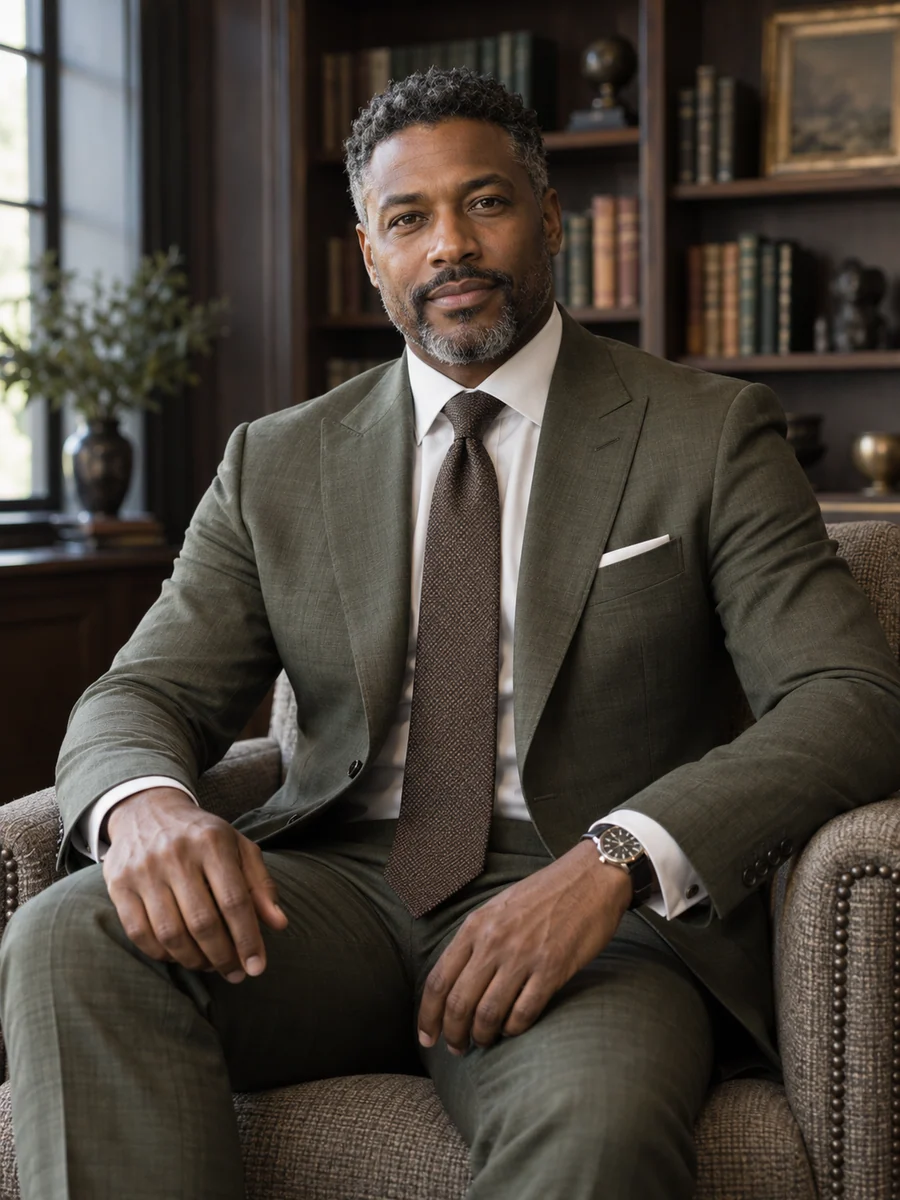
In my own words
A product's strongest performance claim is one that remains intelligible when the duty changes, the measurement is questioned and the service team has to live with the design.
Ethan Mercier
Education
Formation
- Bachelor's degree in mechanical engineeringArvendell Institute1994
Working languagesEnglish · French