The person behind the perspective
I learnt to follow the building beyond completion
My first project manager taught me to walk a proposed sequence of work before defending it in a meeting. On paper, a delivery route was clear. On site, it crossed the entrance being used by another team and depended on space that would not be available until a later phase. I was a junior coordinator, not the person authorised to redesign the project, but I learnt to recognise the difference between a programme that balanced on a chart and one that could be carried out by the people involved. That distinction has stayed with me as my responsibilities have widened.
I graduated in civil engineering from Bellorven Institute in June 1992 and joined Vensarco Construction in September. I supported site coordination, progress records and the preparation of information for experienced project leads. My early assignments taught me to ask how a handover would work between trades and what a late decision would require from someone else. I also learnt to respect the boundary of my role. An observation could be valuable without giving me the authority to improvise a technical change or make a commercial commitment.
In January 1997, I became a project manager within the same contractor. I coordinated commercial-building projects with budgets between €8 million and €25 million, reporting to a contracts director. The work involved subcontractor interfaces, programme changes and client discussions. I began to see how the form of a decision could matter as much as its content. An unresolved instruction passed informally through several people could become expensive work before the person holding authority understood the consequence. I worked to make those changes visible earlier and keep the relevant approvals traceable.
I moved to Rovellune Properties in March 2003 as an asset manager. Becoming part of an ownership team altered my time horizon. The construction contract ended, but the owner's relationship with the building continued through occupation, maintenance, lease changes and future investment. I managed a defined group of properties rather than the company's whole portfolio. I spent more time with tenant representatives and facilities colleagues, learning how an apparently successful refurbishment could create recurring inconvenience or an operating cost that had been treated as somebody else's problem during design.
My promotion to portfolio director in July 2008 brought responsibility for sixteen buildings and approximately 260,000 square metres. The timing made capital discipline particularly tangible. We needed to distinguish work necessary to maintain a useful building from work justified mainly by an optimistic leasing assumption. I learnt to examine the relationship between lease events, tenant fit-out requirements and investment timing. It was not enough to have a plausible end state. The business needed a credible path through vacancy, disruption and cash expenditure before that end state could be reached.
I joined Calverrano Estates as chief operating officer in February 2013. The company was family-controlled, with a substantial history in its local markets and properties whose significance went beyond their financial contribution. My task was to strengthen operating management without treating that history as an obstacle to be dismissed. I worked with asset, facilities and project teams to prepare a consistent account of condition, occupation and proposed capital. The owners could then compare buildings that had previously been discussed through different mixtures of memory, local knowledge and commercial evidence.
In June 2018, I became the first non-family CEO. I report to a separate chair and serve as an executive director, while the family retains control of ownership. The appointment required a clear understanding of the decisions delegated to management and those reserved for the board and shareholders. I could bring an independent professional perspective to a proposal without describing my executive seat as independent. Trust developed through the quality of the account I provided, particularly when the recommendation concerned an asset with personal importance to the owners.
The portfolio decisions since then have reinforced the value of looking beyond completion. We chose a longer refurbishment sequence for occupied buildings and accepted the additional coordination cost. We retained much of an existing structure in an office conversion, while reporting the overrun and delay instead of allowing the reuse story to obscure them. We spread a concentrated debt maturity at a higher coupon. We also sold a property associated with the family's earlier headquarters because retaining it would have required another substantial commitment without a convincing operating purpose.
I am interested in buildings that can earn another useful chapter, but I do not assume that every asset should be retained or converted. Some proposals depend on too much vacancy, too much tenant disruption or a use that the location cannot support. The professional obligation is to examine those conditions before the project acquires its own momentum. After thirty-four years across construction and ownership, I still return to the habit of walking the sequence. The question has become wider: who occupies the building during the change, who funds the interval and what business will the owner actually hold when the work is finished?
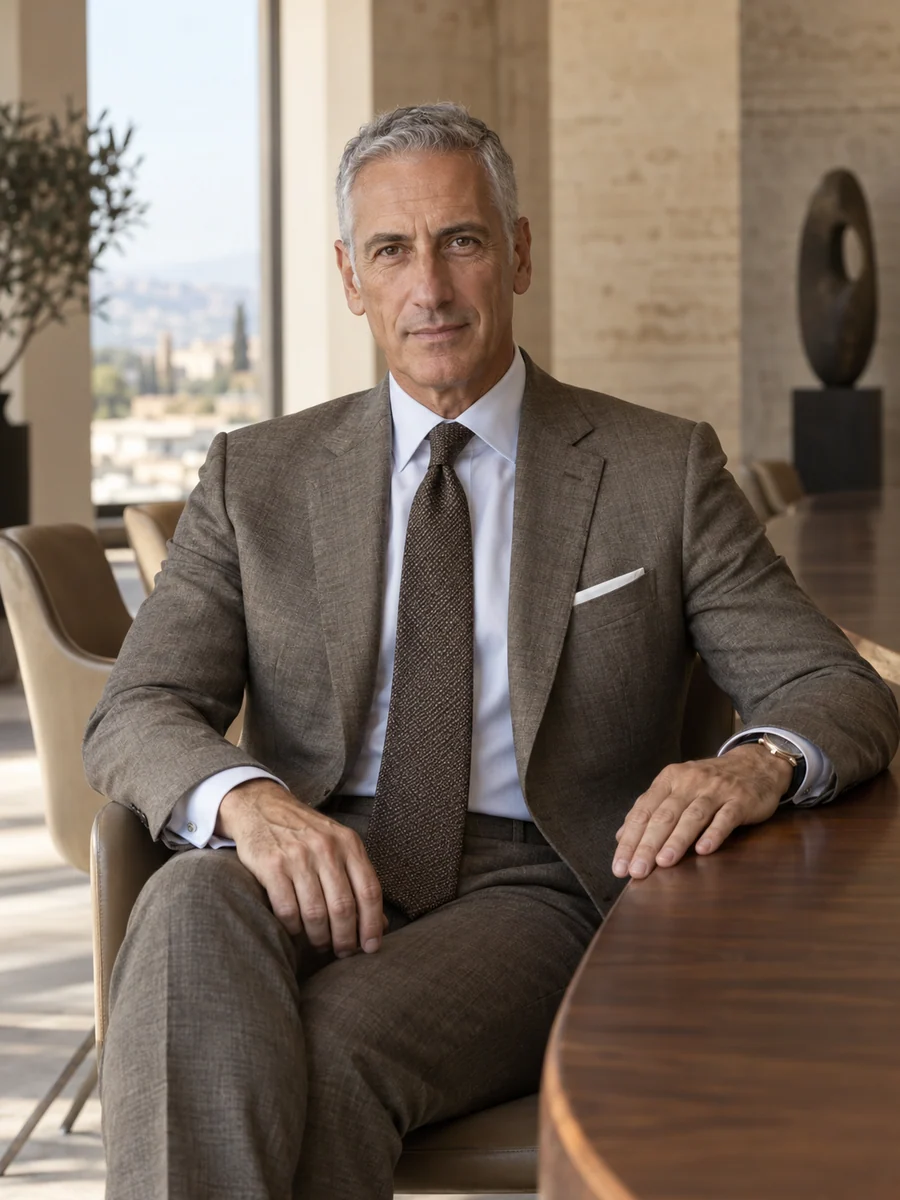
In my own words
I began on construction sites, where a programme is made real by the sequence of work and the people who have to live with it. As a property owner, I have had to extend that view beyond completion. A tenant's business does not pause because our refurbishment plan is elegant, and a building's book value does not establish its usefulness. I try to connect the investment decision with occupation, maintenance and the next purpose the asset can credibly serve.
Matteo Valdresci
Education
Formation
- Degree in civil engineeringBellorven Institute1992
Working languagesItalian · English · Spanish