The person behind the perspective
Learning which business decision the application has made
My upbringing was in Imphal, and I now work in Gangtok. I completed a computer-science degree at the fictional Qevramti Institute of Computing in May 1998 and began employment that July. The first problems I encountered were not grand technology strategies. They were requests from people trying to complete a job while an application described the work differently from the world in front of them. I learned to listen for that difference before assuming the user needed another instruction. The degree prepared me for computing work; it did not make me the engineer qualified to judge every piece of equipment our later systems would describe.
I joined Tevqolmi Digital Operations as an applications-support practitioner. It employed thirty-one people and recorded ₹9 crore FY1999 revenue. I reported to the applications supervisor, with no direct reports or delegated budget. My work included understanding faults, preserving the steps needed to reproduce them and helping colleagues distinguish an application problem from an unresolved business instruction. The position was supervised and bounded. I did not approve client policy or own enterprise architecture. What it developed was a respect for the person who had to use the system after the support conversation ended, when a convenient explanation might no longer fit the task.
In June 2004 I became a service-applications analyst. Tevqolmi had seventy-three employees and ₹23 crore FY2005 revenue. I led four colleagues within ₹57 lakh annual expense under the applications manager. Field-service work introduced the effects of intermittent connections and the need to preserve a business action through repeated technical attempts. A message arriving twice did not necessarily mean that a technician had visited twice. I learned to ask what the record represented before choosing how it should be counted. That period supplied the practical background for a later retry case, without claiming that the early application work had already solved every version of the problem.
I moved to Leqzatri in September 2010 as systems manager. The company had ninety-six employees and ₹31 crore FY2011 revenue. Eight technology colleagues and ₹1.4 crore annual operating expense sat within my remit, reporting to the enterprise IT head. Cinema technical services required a closer relationship between digital records and physical equipment. A manufacturer, model, component and service history could each matter to a decision. I began to understand why a familiar identifier was not necessarily unique in the population our system covered. Engineering colleagues retained judgement about suitability; my role was to make the relevant evidence accessible without letting the interface imply more than it knew.
From January 2016 I served as enterprise IT director. At FY2019 scale Leqzatri had 151 employees and ₹56 crore revenue, while my team numbered thirteen and annual operating expense was ₹2.9 crore. I reported to the COO. In 2018 I approved the serial-number matching rule that required correction. The review of 640 records identified 52 ambiguous identities; 44 were resolved and eight stayed held after documentary and physical checks. I authorised ₹38 lakh for that work. The correction showed why a rule that appears sensible in one manufacturer's catalogue may not be valid across a mixed equipment estate. I retained responsibility for approving the broader assumption.
The CIO appointment followed in April 2021. I now report to Navjeet Qermavli and lead eighteen colleagues through four leads. Leqzatri's ₹72 crore FY2026 revenue comprises ₹47 crore maintenance and ₹25 crore installations, with 184 employees at March year-end. My ₹4.2 crore operating remit and separate ₹2.7 crore change programme support enterprise technology rather than the whole cost of engineering delivery. Rohan Melqazti leads that engineering work. Our relationship is important to the cases: technology can represent calibration scope or a proposed substitution, but cannot acquire professional authority by making the field compulsory.
I would next explore a governance role where this experience can become informed collective challenge. I have presented to directors but have never held a statutory seat. I registered in the IICA databank in June 2026; proficiency-assessment preparation remains unfinished and no exemption is claimed. Twenty days is a provisional annual capacity estimate that needs testing against an actual mandate. The contribution I would offer is attention to the business meaning carried by enterprise systems, including what they leave unresolved. I would expect a reviewer to examine the owned identity-rule error as closely as the later interventions, and to assess the limits of my experience alongside its potential usefulness.
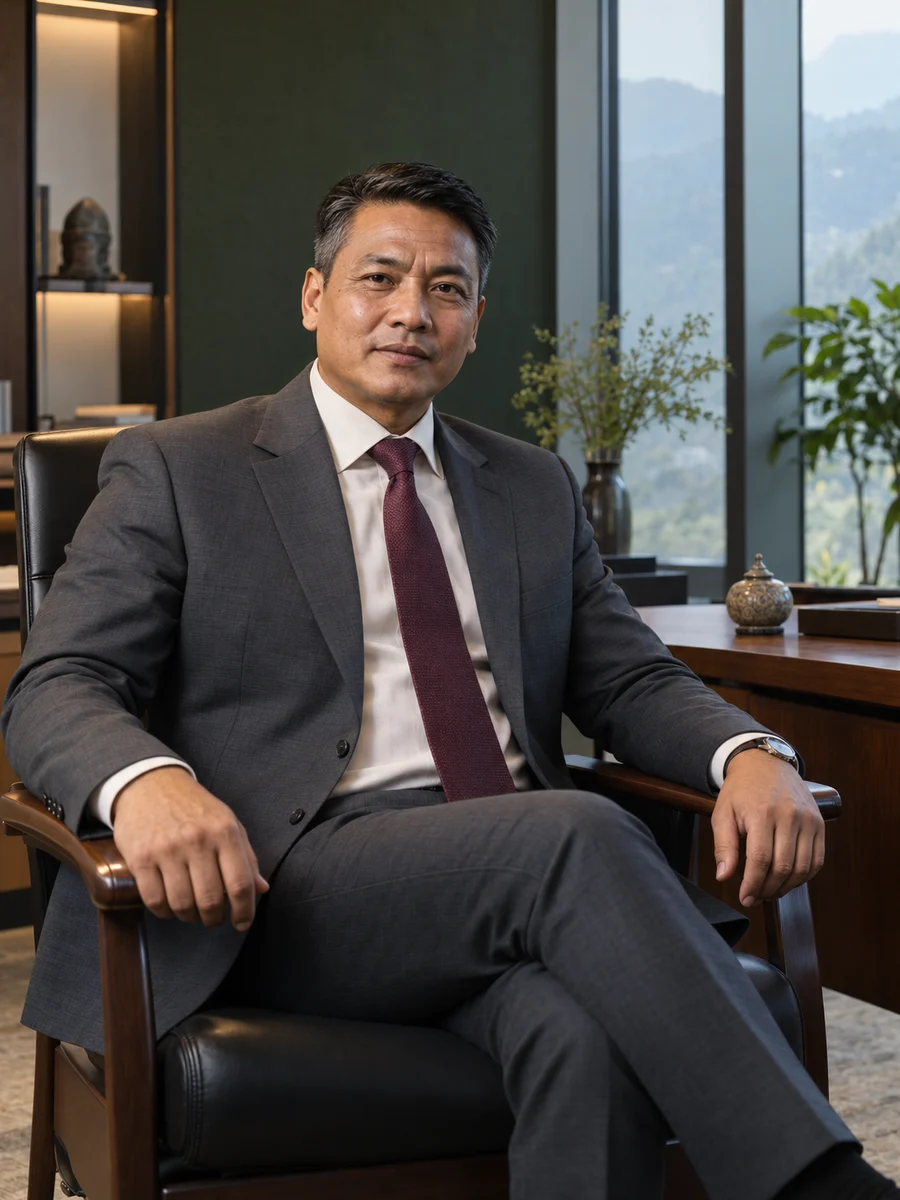
In my own words
The engineer standing beside a piece of equipment needs a record that refers to that equipment and the task in front of them. A system can be internally consistent and still mislead that decision. I want technology to preserve the distinctions the service requires, including when doing so exposes a flaw in a rule I approved or leaves a question for an engineer rather than an automated answer.
Paul Qevmolri
Education
Formation
- Bachelor of Science in Computer ScienceQevramti Institute of Computing1998
Working languagesEnglish · Hindi · Meiteilon