File sectionThe person behind the perspective
The workshop's ninety jobs changed my account of the decision
The remote workshop was supposed to handle 250 jobs a month. Over its first six months, the average was ninety. I had supported the expansion proposal in 2018, and the travel pattern and mix of work were less favourable than the model had allowed. We closed the workshop after eighteen months, with ₹62 lakh of startup expenditure unrecovered, and arranged customer-agreed transfers of service responsibilities. There is no invented clinical outcome in this case. There is a strategic error I helped make, and an obligation to explain why the eventual orderly transition did not turn the original investment into a success.
I was born in 1967 and grew up in Thrissur. I speak Malayalam and English, with working Tamil and Hindi. After completing a Bachelor of Engineering in Electronics at Qazvethi Technical College in June 1989, I joined Qerthavi Service Systems in July as a service planning analyst. The business employed 55 people and recorded ₹6.4 crore revenue for FY ending March 1990. I worked in a six-person planning group under the service planning manager, without direct reports or spending authority. My work concerned the organisation of service activity, not independent authority to repair every device or release equipment for clinical use.
In May 1997 I became network planning manager. Qerthavi had 170 employees and ₹28 crore revenue for FY 1998. I led nine colleagues through two leads with ₹1.8 crore annual expense, reporting to the operations director. I learned how travel, work mix and the availability of the right people could change the meaning of a network plan. A location on a map did not describe the whole service capability. The role expanded my responsibility for colleagues and resources, while technical judgement and customer operating processes remained with their proper owners.
I joined Tevqoshi Biomedical Service Workshops in July 2005 as business planning head. The company employed 180 people and recorded ₹31 crore revenue for FY 2006. I led eight colleagues through two leads, with ₹2.3 crore annual expense under the CEO. Moving into a specialist workshop enterprise required me to understand the difference between demand for service and the scope a business could support. Permissions, competence, parts and customer arrangements could each constrain a proposal. My role was to make those conditions visible in planning rather than assume that the commercial opportunity settled them.
In April 2013 I became head of corporate development. Tevqoshi had 310 employees and ₹63 crore revenue for FY 2014. I led eleven colleagues through two leads with ₹3.6 crore annual expense, reporting to the CEO. The remote-workshop investment occurred during this period. I had allowed a promising demand estimate to carry more weight than the detailed pattern of work and travel. When the operating experience diverged, I needed to help examine the options and acknowledge the original assumption, not merely ask the workshop team to make the forecast true. The closure after eighteen months required an orderly transition with customers and retained an unrecovered cost.
I became CSO in February 2021. Today I lead fourteen strategy colleagues through three leads with ₹4.9 crore annual expense, reporting to Meera Vezqathi. Nikhil Zeqvuni is CFO. Tevqoshi employs 440 people and serves 64 hospital customers; its ₹92 crore revenue and ₹8.1 crore operating profit for FY 2026 describe enterprise scale, not results attributed solely to strategy. I develop proposals with colleagues and present them through the CEO. Investment and ownership decisions remain with the appropriate approving bodies, while technical and clinical responsibilities are not transferred to me by the strategy title.
Recent decisions have made the business after the agreement more explicit. We declined a ₹32 crore workshop acquisition when eighteen of 26 reviewed service permissions required fresh consent under the specific agreements. We chose a limited customer-owned spare-stock arrangement with twelve signed hospitals from 24 approached, without presenting it as equivalent to a larger company-owned inventory proposal. A proposed six-thousand-device service agreement was narrowed to 2,200 devices with verified support scope, leaving 3,800 outside. Each choice reduced an appealing headline while clarifying what the enterprise was actually committing to operate.
In 2025 the board selected ₹12 crore of primary equity for 40%, leaving the founder family with 60%, rather than proceeding with a separate ₹27 crore full-acquisition proposal. I helped compare the operating and ownership consequences; I did not approve the transaction alone. The intended use of proceeds was ₹3.6 crore for parts, ₹3.4 crore for tools and ₹5 crore for working capital. Those are allocations, not a claim that every rupee had already been spent or generated earnings. I hold no direct shares and no statutory appointment.
My fictional preparation record includes IICA registration in March 2026 and a proficiency-assessment pass in September, with no exemption. I would consider a first outside contribution with twenty-four provisional days, employer consent and a proper review of commercial relationships. I would bring practical questions about the operating business a strategy creates, while learning the receiving enterprise's whole responsibilities. A board role would require collective judgement beyond the proposals I have led as an executive, and I would seek an experienced chair and complementary expertise to support that transition.
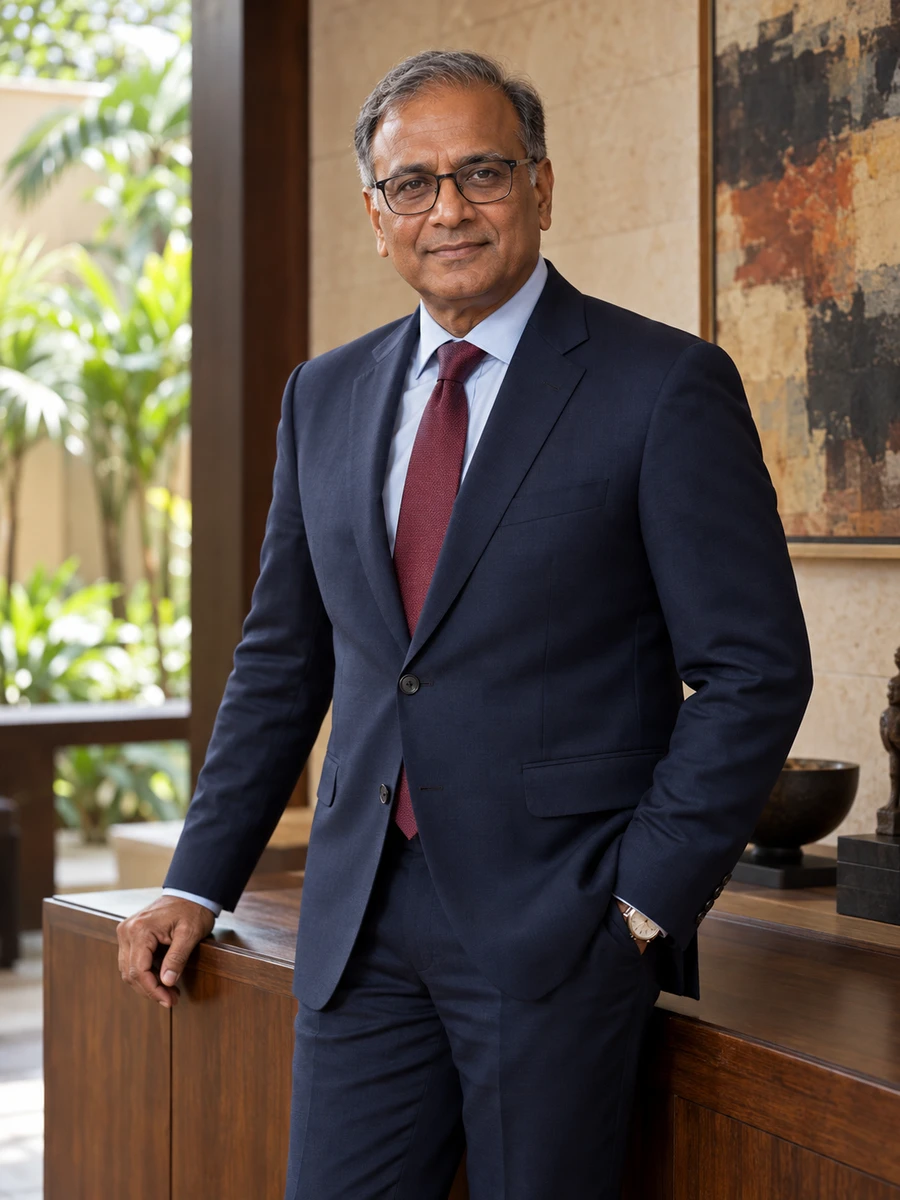
In my own words
I want a strategy to describe the business we can responsibly operate after the decision, not merely the asset, map or contract we hope to acquire. A workshop needs a viable work pattern. A purchase may leave permissions behind. A funding round changes who owns the enterprise as well as how much cash it receives. Those details determine whether the strategic choice is real.
Benedict Qevthuri
Education
Formation
- Bachelor of Engineering in ElectronicsQazvethi Technical College1989
Working languagesMalayalam · English · Tamil — working proficiency · Hindi — working proficiency