Prepared for boards, nomination committees & search advisers

File No. CSO-006

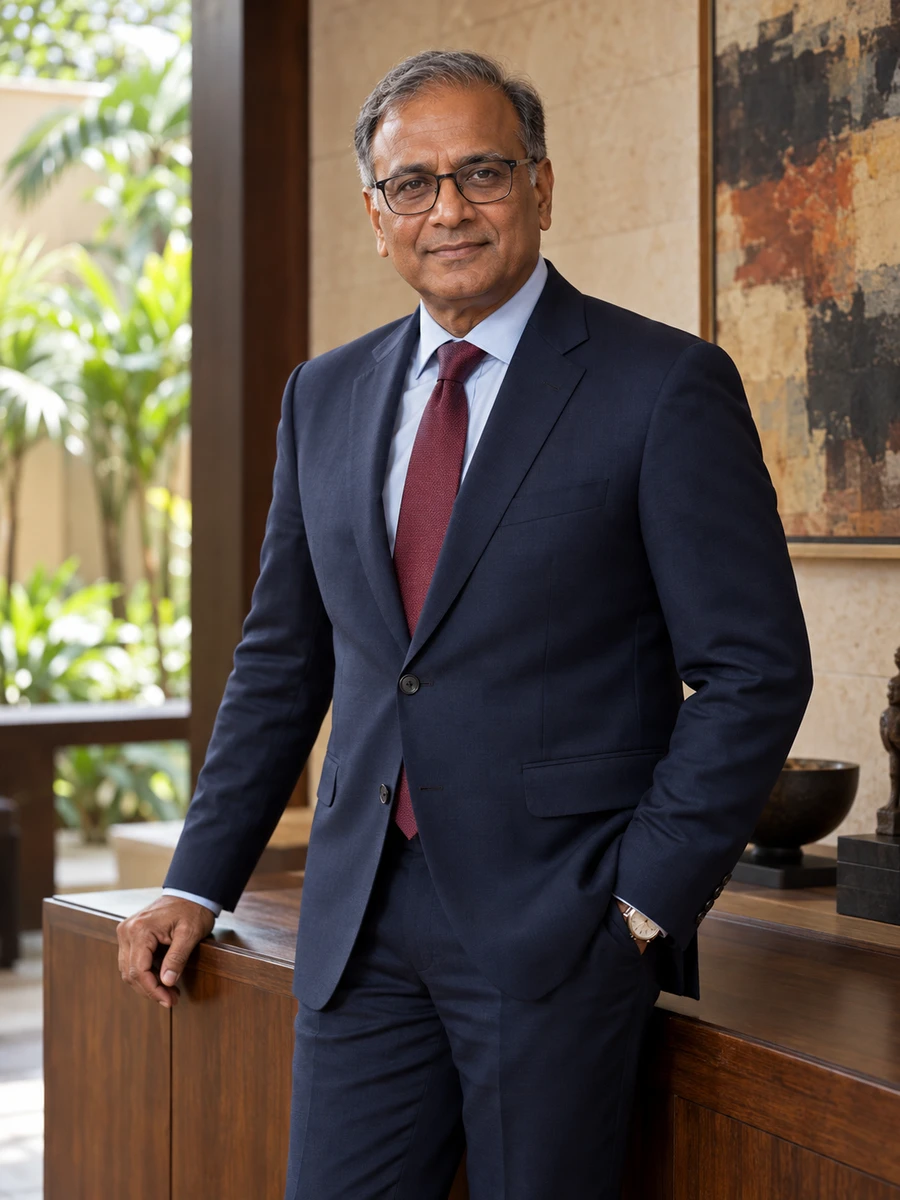
Portrait of Benedict Qevthuri
Benedict Qevthuri

Benedict Qevthuri

Make the proposed business operable beyond the agreement

SubjectBenedict Qevthuri
PositionChief Strategy Officer
BaseIndia
LanguagesMalayalam, English, Tamil — working proficiency, Hindi — working proficiency
StatusI would consider one first outside board contribution in specialist services or equipment businesses, subject to employer consent and a qualified review of relationships and eligibility.

Summary

The remote workshop was supposed to handle 250 jobs a month. Over its first six months, the average was ninety. I had supported the expansion proposal in 2018, and the travel pattern and mix of work were less favourable than the model had allowed. We closed the workshop after eighteen months, with ₹62 lakh of startup expenditure unrecovered, and arranged customer-agreed transfers of service responsibilities. There is no invented clinical outcome in this case. There is a strategic error I helped make, and an obligation to explain why the eventual orderly transition did not turn the original investment into a success.

Choose the service business that can exist after the agreement

I lead strategy at Tevqoshi Biomedical Service Workshops in Thrissur. We employ 440 people and serve 64 hospital customers, with ₹92 crore revenue and ₹8.1 crore operating profit for FY ending March 2026. My function comprises fourteen colleagues through three leads and ₹4.9 crore annual expense. I develop proposals with operating, technical and finance colleagues for the CEO and board; I do not approve clinical use, authorise every repair or treat a commercial agreement as evidence of technical competence.

My career began in service planning in 1989. I learned to examine the work beneath a network map, but I did not always apply that lesson well. In 2018 I supported a remote-workshop proposal built around 250 monthly jobs. The first six months averaged ninety. We eventually closed the workshop after eighteen months, retaining ₹62 lakh of unrecovered startup cost and arranging customer-agreed transfers of responsibility. That failure remains part of my account of strategic judgement.

The later decisions concern a proposed acquisition whose permissions were not all transferable, a customer-owned spare-stock model, a service agreement narrowed to supported equipment and a primary-equity round compared with a full-company sale. These are different choices with different cash flows, obligations and limits. I want a reader to see which business each proposal would create, who retained approval and what we gave up when we chose a more bounded path.

The network proposal met a different pattern of work

I supported a workshop expecting 250 monthly jobs; its first six months averaged ninety. We closed after eighteen months, with ₹62 lakh of startup cost unrecovered. Customer-agreed transfers preserved an orderly transition, but did not make the original investment successful.

Buying the workshop would not automatically carry every permission

Of 26 reviewed service permissions in a proposed ₹32 crore acquisition, eighteen required fresh counterparty consent under the fictional agreements and eight were transferable. We declined the transaction and retained ₹74 lakh of diligence cost. The case describes those terms, not a universal legal rule.

Growth cash and an owner's exit were different offers

The board chose ₹12 crore of primary equity for 40%, leaving the founder family with 60%, over a separate ₹27 crore full-acquisition proposal. The recipient and purpose of the cash differed. Planned proceeds of ₹3.6 crore for parts, ₹3.4 crore for tools and ₹5 crore for working capital were allocations, not reported earnings.

Current focus

I am making the post-decision operating model clearer before a proposal reaches approval. That means specifying service scope, access to the required support, ownership of spare stock and the responsibilities an agreement leaves with others. A narrower contract or a different funding route can be the right choice without being described as universally superior or producing a saving merely because its headline amount is smaller.

Conversations I welcome

I would consider one first outside board contribution in specialist services or equipment businesses, subject to employer consent and a qualified review of relationships and eligibility. I have no statutory directorship. The fictional preparation record includes March 2026 IICA registration and a September assessment pass. Twenty-four days is a provisional annual commitment, including induction and unusual demands, rather than an assumption that every role will fit.

Exhibit ATrack record

ItemMeasureFigure
01Strategy colleagues through three leads₹4.9 crore annual function expense14
02From service planning to enterprise strategyFive continuous appointments beginning July 198937 years
03Hospital customers served by the enterprise440 employees; ₹92 crore FY 2026 company revenue64

Exhibit BStatement of approach

I want a strategy to describe the business we can responsibly operate after the decision, not merely the asset, map or contract we hope to acquire. A workshop needs a viable work pattern. A purchase may leave permissions behind. A funding round changes who owns the enterprise as well as how much cash it receives. Those details determine whether the strategic choice is real.

Signed — Benedict Qevthuri

Exhibit CSelected matters

Matter 01Ref. CSO-006-M01

Closing the workshop whose demand model I had supported

In 2018 I supported a remote-workshop expansion built around 250 monthly service jobs. The first six months averaged ninety. The proposal had not examined the travel pattern and mix of work closely enough, so a promising demand account became an operating model that the location did not sustain. The workshop team asked for more time to establish activity. Finance questioned further funding without evidence that the underlying pattern would change. I had helped make the original recommendation and needed to examine both positions without turning the forecast into a demand that colleagues somehow fulfil.

We reviewed the work actually arriving, the travel it required and the practical alternatives for the customer commitments. After eighteen months, we closed the workshop and arranged customer-agreed transfers of service responsibilities. The ₹62 lakh of startup cost remained unrecovered. The account does not claim that a later transition earned back the investment, nor does it invent a clinical outcome or imply that service obligations could simply be abandoned because the location was uneconomic. The transition had to be agreed and coordinated by the responsible teams.

Closing meant giving up the local presence we had wanted and acknowledging that the original proposal had been weaker than its headline demand suggested. Keeping the workshop open would have preserved the map, but required further confidence in assumptions the operating record had challenged. I recommended the closure through the CEO rather than treating the decision as mine alone. The team needed a clear account of why the strategic choice changed, including the part I had played in endorsing the initial model.

The consequence was a smaller network and an unrecovered expense. I changed subsequent proposals so the work mix, travel and support conditions had to be examined before a volume estimate could become the main investment argument. That did not make later decisions certain. It made the assumptions more visible and the responsibility for them more explicit. I want this case retained in my profile because learning from a closure should not require rewriting it as a successful expansion.

Matter 02Ref. CSO-006-M02

Declining a workshop purchase when most permissions needed fresh consent

In 2022 we considered a workshop acquisition at ₹32 crore. Its premises, staff and current customer activity made it appear a useful extension of our service network. Diligence examined 26 service permissions relevant to the proposed operating account. Under the specific fictional agreements, eighteen required fresh counterparty consent and eight were transferable. The physical business could be described in a purchase proposal more easily than the permission position could be established. Some commercial colleagues argued that the consents would probably follow once the deal was agreed; technical and legal colleagues wanted the uncertainty addressed before that assumption supported the investment.

I recommended that we decline the transaction in its proposed form. We retained ₹74 lakh of diligence expense rather than use the amount already spent as a reason to proceed. The concern was not a generic rule that permissions never transfer, nor an assertion that every service activity requires the same approval. It was the actual terms identified in this invented transaction and their relevance to the business case. The eight transferable permissions did not settle the position of the other eighteen.

The decision gave up a larger footprint and the potential value we had initially seen in the workshop. A lower purchase price might have changed the financial discussion, but would not by itself have created the missing consents. We also did not claim that every counterparty would have refused. The uncertainty remained material enough that we were unwilling to buy on the proposed basis. The CEO and authorised decision makers retained approval; my role was to make the operating consequence of the contractual position clear.

I learned to describe an acquisition as the business the purchaser can operate after completion, rather than only the assets and activity visible before it. Diligence should change the proposal when a relevant condition is unresolved. In this case it changed the decision entirely, with a cost that did not produce an acquired business. That is still a substantive strategic outcome when the alternative would require treating an unconfirmed permission as though it were already part of the purchase.

Matter 03Ref. CSO-006-M03

Choosing a smaller spare-stock model with different ownership responsibilities

In 2023 we compared a ₹7.2 crore company-owned spare-stock proposal with a ₹3.1 crore setup programme for a customer-owned arrangement. The amounts looked like a straightforward opportunity to spend less, but the models allocated asset ownership and funding differently. Operations wanted ready access to suitable parts. Finance wanted the stock commitment and responsibility understood. Some customer representatives were interested in retaining ownership, while others did not want the proposed arrangement. A strategic choice had to address those different obligations rather than label the smaller headline a ₹4.1 crore saving.

We selected a limited customer-owned model and approached 24 hospitals; twelve signed. The programme scope was built around those agreements, not all 24 prospects. The ₹3.1 crore setup amount supported a different model from the company-owned inventory proposal and was not evidence that the same service could be delivered for less money. Technical suitability, access and customer processes still needed their own controls. Ownership did not make a part appropriate for any device, nor did signing an agreement mean every element had already been implemented.

The decision gave up the simplicity of one company-owned stock pool and required more explicit coordination with customers. We accepted that complexity for the limited arrangement rather than generalise it across the whole customer base. Colleagues had to explain who owned the assets, which responsibilities remained with the customer and what service work the arrangement could support. The twelve unsigned hospitals were not quietly counted as participants in later descriptions of the programme.

I kept the comparison focused on operating responsibilities as well as cash. The approved scope offered a way to develop the model with customers willing to take that role, while leaving its broader suitability open. The case does not claim universal inventory savings, instant availability or clinical outcomes. Its strategic value lies in making an apparently simple spending choice reveal two different businesses: one funding its own stock, and another organising a service around assets owned by participating customers.

Matter 04Ref. CSO-006-M04

Narrowing a proposed six-thousand-device agreement to supported scope

In 2024 a proposed service agreement covered six thousand devices across a customer group. The headline volume was commercially attractive, but the review established verified support scope for 2,200; 3,800 remained outside it. The distinction involved the relevant permissions, competence and support arrangements, not merely a decision to allocate more staff. Commercial colleagues wanted the broad agreement because it could simplify the customer's buying process. Technical colleagues warned that the contract wording could make the business appear responsible for equipment it was not ready or authorised to support.

I supported a narrower proposal covering the 2,200 devices within the verified scope. The other 3,800 were explicitly outside the agreement rather than treated as a future capability already included in the price. The customer and the authorised teams needed a clear account of those boundaries and their remaining arrangements. Strategy did not decide that a device was suitable for clinical use, prescribe a repair method or replace the customer's own responsibilities. The agreement had to reflect the support position established by the qualified teams.

The narrower scope reduced the immediate commercial opportunity and removed the appeal of a single all-device contract. We accepted that limitation instead of assuming the missing support could be assembled after signature. The case does not state that no additional device could ever be brought into scope. It states that the evidence available for this proposal supported 2,200, and that the agreement should not imply otherwise. Any expansion would need its own review and agreement rather than rely on the ambition of the initial presentation.

My contribution was to make the strategic account smaller and more operable. A contract can be valuable because its boundaries are understood, even when the headline is less impressive than the opportunity first discussed. I retained the 3,800 exclusions in the narrative so a reader could see what we gave up. No uptime improvement, repair outcome or clinical benefit is inferred from the act of signing. The decision concerned the service commitment the enterprise could responsibly make at that point.
Matter 05Ref. CSO-006-M05

Choosing primary growth capital over a different offer to buy the company

In 2025 the owners and board considered two materially different proposals: ₹12 crore of primary equity for 40%, and a separate ₹27 crore offer to acquire the whole company. The first would put capital into the enterprise while leaving the founder family with 60%. The second concerned a full change of ownership and a different recipient and purpose for the cash. I worked with the CEO and CFO to compare the operating consequences. It would have been misleading to treat the amounts as two prices for the same transaction or announce a simple valuation gain from choosing one.

The board selected the primary-equity round. Planned uses of proceeds were ₹3.6 crore for parts, ₹3.4 crore for tools and ₹5 crore for working capital, totalling ₹12 crore. Those were allocations for the operating plan, not a claim that all expenditure had occurred or that the cash itself was revenue. The regional industrial investor acquired 40% and the founder family retained 60%. Approval remained with the appropriate owners and board; I developed the comparison and recommendation rather than deciding the transaction unilaterally.

The choice gave up the possibility of a full owner exit on the proposed terms and left the business responsible for delivering its growth plan with a new investor. Family control by share percentage did not remove the need to understand the agreed governance arrangements. Likewise, the presence of growth capital did not establish that parts, tools and working capital would automatically produce the expected results. The strategic work continued after the funding decision, with the operating commitments and account of progress still to be examined.

I regard this as a choice about the future enterprise, not merely a fundraising achievement. The cash flows, ownership and obligations needed to be described before the alternatives could be compared usefully. A public profile should retain that distinction and avoid making the larger or smaller headline stand for a conclusion it cannot support. The outcome was a funded plan under changed ownership, with its intended uses explicit and its future performance still a responsibility to be earned.

Exhibit DFormation

  • Bachelor of Engineering in ElectronicsQazvethi Technical College1989

Exhibit EReferences

Benedict kept the eighteen unconfirmed consents in the acquisition discussion when the footprint and price were already attracting support. He explained what the business could operate after completion rather than treating the unresolved position as an administrative detail.
Meera VezqathiCEO, Tevqoshi Biomedical Service Workshops; fictional colleague
Benedict separated primary capital for the enterprise from the full-sale offer to the owners. He kept the planned uses of proceeds visible without turning the funding into earnings or claiming that the operating work was already complete.
Nikhil ZeqvuniCFO, Tevqoshi Biomedical Service Workshops; fictional colleague

Exhibit FPublished views

CorrespondenceNext steps

An invitation

Contact

I would consider one first outside board contribution in specialist services or equipment businesses, subject to employer consent and a qualified review of relationships and eligibility. I have no statutory directorship. The fictional preparation record includes March 2026 IICA registration and a September assessment pass. Twenty-four days is a provisional annual commitment, including induction and unusual demands, rather than an assumption that every role will fit.

Open to
  • Board appointments
  • Advisory roles
  • Speaking invitations

office@benedictqevthuri.example