The person behind the perspective
Learning to ask what the equipment must deliver
I learned electrical engineering through the difference between a circuit that behaved as expected on a drawing and a system whose surroundings changed its behaviour. That lesson has stayed with me through thirty-four years of controls, generation and technology leadership. I am interested in how an energy business makes a commitment it can explain: the service it intends to deliver, the equipment it proposes to use and the conditions under which the evidence has been gathered.
I completed my electrical-engineering degree at Merovald Institute in June 1992 and joined Elsira Controls the following month. I worked in a six-person engineering group on industrial control and power-conversion assignments. I held no direct reports or budget authority. My responsibility was to produce and examine technical work under an experienced engineering lead, including the test record that made a result understandable to someone who had not watched the equipment run.
At Elsira, I became wary of explanations that depended on the original engineer being present. A test could be repeatable while its relevance to the customer's duty remained unclear. I learned to distinguish the settings used during an investigation from the conditions the customer expected in service. That was not yet a strategy role. It was a practical discipline developed while reviewing controls, interpreting observations and discussing the difference between an equipment response and the wider system's behaviour.
I moved to Rovenkel Energy in January 2000 as generation technology lead. The company was then developing an onshore-wind portfolio, and I wanted to work with the organisation that would live with the technology after procurement. By the end of my tenure in December 2006, Rovenkel had 310 employees, €180 million revenue and 0.42 GW gross generating capacity. I led fourteen employees through two direct reports with €2.6 million annual authority. The numbers belong to that period, not to the much larger business I serve today.
That appointment expanded my perspective from equipment behaviour to the decision around it. Development, purchasing and operations could each describe the same technology accurately while assuming a different service. I helped establish comparison records that preserved those distinctions. A lower equipment price could create additional integration work; a familiar component could have limits in a different configuration. I learned to make those consequences visible without pretending that engineering alone should choose the commercial priority.
From January 2007 to December 2013, I headed power conversion. I led thirty-six employees through three direct reports and held €9 million authority at the end of that period. Rovenkel's wind and emerging solar business had reached 720 employees, €460 million revenue and 0.95 GW gross capacity. My work included coordinating equipment qualification and the engineering account of control interactions. I became responsible for developing colleagues who could explain an unexpected result instead of treating a departure from the model as an inconvenience to be hidden.
In January 2014, I became director of technical development, an executive employment title rather than a board appointment. The role brought technology evaluation, development engineering and investment proposals into a single management responsibility. By December 2020 I led seventy-eight employees through four direct reports with €31 million authority. The company had 1,450 employees, €1.05 billion revenue and 2.3 GW gross generating capacity. A pension investment vehicle acquired sixty per cent in 2018; the founding family retained forty per cent. I do not project that ownership arrangement into earlier roles.
The development role taught me that a technical recommendation has to state the next decision clearly. A study that justifies further engineering does not automatically justify construction. An encouraging trial can support a longer investigation without earning a production allowance in the annual plan. I became more deliberate about separating those stages, particularly when commercial interest in a technology was already strong. The purpose was to preserve useful options while making the cost and limits of each commitment examinable.
I became CTO in January 2021. I now report to chief executive Anselm Veyrath and lead 118 employees through five direct reports, with twenty-two contractors separately. My 2026 authority is €72 million, comprising €44 million for technology development and €28 million for qualification. Rovenkel employed 1,900 people and recorded €1.6 billion revenue in 2025. Its 3.1 GW gross wind and solar portfolio sits alongside industrial-heat services across Germany, the Netherlands and Denmark. Asset operations director Maren Solbrecht retains operating accountability.
Recent decisions include defining a storage delivery duty before procurement, investigating an inverter-model discrepancy, comparing solar-array sizes with their clipping consequences intact and revising a heat proposal around the customer's temperature requirement. These examples contain costs and delays as well as completed work. I would be uncomfortable with a professional account that described only the attractive opening proposition. The point of a technology leader's judgement is often clearest in the assumption they changed or the conclusion they declined to draw.
I have presented technology choices to Rovenkel's board but have not served as a director. A first external appointment would require induction, relationship review and a calendar compatible with my executive responsibilities. I could propose twenty-two annual days, subject to consent. I would bring the ability to question how physical performance, qualification evidence and a commercial obligation fit together. I would also expect to learn from directors whose financial, customer and governance experience addresses parts of the decision that my engineering background cannot settle alone.
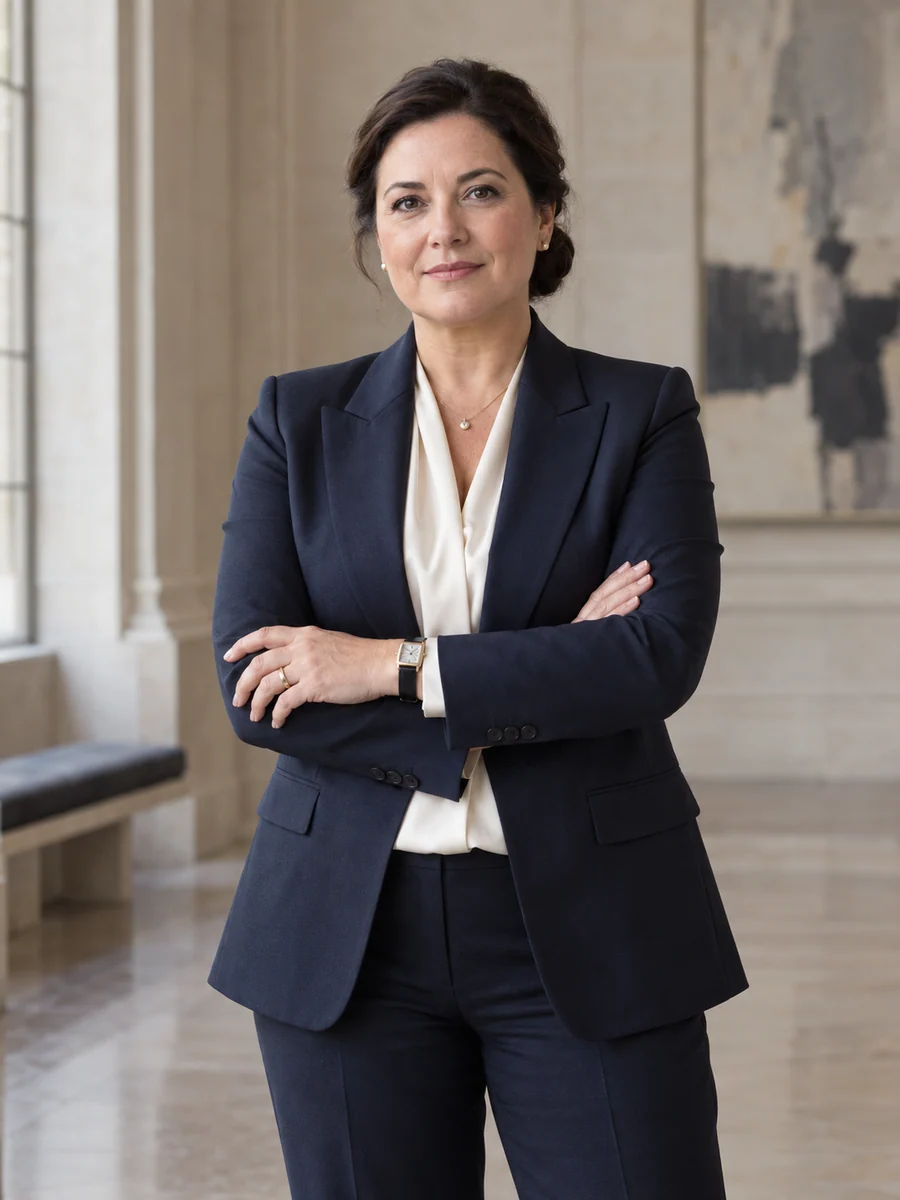
In my own words
I connect a technology's physical behaviour with the service the business intends to promise, and keep the conditions visible when that promise is examined.
Elise Keller
Education
Formation
- Degree in electrical engineeringMerovald Institute1992
Working languagesGerman · English