The person behind the perspective
The station carried the responsibility after the service team left.
My first job was in a service team, not a station leadership office. I joined the fictional Iravela Power Services in August 1992 after completing mechanical engineering at Tavishan Institute of Technology. I helped prepare work records, follow material requirements and support experienced engineers during maintenance assignments. I was responsible for the accuracy of my contribution, not the release of equipment or a station’s operating decision. That distinction between useful participation and actual authority remains important to how I describe my career.
The service business taught me how many separate commitments meet during a planned outage. A component had to suit an application. The people needed for a task had to be available at the relevant stage. Inspection could establish something the original programme had not anticipated. A revised sequence then affected other work. I learned to ask what an apparently completed activity allowed the next person to do, rather than treating the signed record as the entire result.
In April 1999 I became an outage coordination manager. I could now influence the arrangement of people, material and supplier support across assignments, but could not turn commercial urgency into technical permission. I learned to retain the specialist’s conclusion in the account even when it complicated an attractive schedule. The service company also had its own financial limits. Extra attendance and standby cost money; ignoring those costs did not make the programme more responsible. Coordination required an explanation of what we were buying and which uncertainty remained.
I moved into the generating business in July 2006 as station maintenance manager at Varnedra Energy. The change made the period after a contractor’s departure much more visible to me. The station carried the continuing operating responsibility. A difficult restart or a recurring defect could not be filed away as somebody else’s completed assignment. I began to examine maintenance preparation, execution and subsequent observation as connected parts of an operating account, while preserving the separate authorities involved in each.
My record includes a support-contract reduction in 2010 that I initially defended too confidently. I supported an annual saving proposal of ₹48 lakh against a ₹2.4 Cr agreement without giving sufficient weight to the pattern of specialist attendance the station would still require. Additional callout and standby over the next four months cost ₹39 lakh. Those periods are different and I do not combine them into a convenient net figure. The more useful admission is that my proposed service scope had left an important operating requirement underexamined.
The correction changed how I worked with station teams. I asked them to make the practical consequences of a reduced scope visible before I took a saving proposal forward. That did not mean preserving every supplier arrangement indefinitely. It meant distinguishing work that could stop, work that our own qualified people could assume and work for which outside support would still be needed. I also had to acknowledge the colleagues whose concerns I had heard without adequately reflecting them in the decision. When I later moved to fleet responsibility, I carried that conversation into the way I compared station proposals. A shared supplier or specialist could connect two programmes that looked independent on paper. Understanding the dependency required listening to both local accounts before making a wider commitment.
From September 2013 I led generation operations across a growing fleet. A spare-parts review in 2016 reinforced the same discipline from another direction: possession of an assembly did not establish its suitability for every proposed application. Later, as COO from January 2020, I supported an extension to a major outage when inspection changed the work that needed to be completed. The revised date and incremental expense remained in the report. I did not describe the extension as schedule success or claim that it eliminated future operating uncertainty.
Today my remit covers 980 operating colleagues in a company with four 300 MW units. I want the fleet account to distinguish installed capacity, actual generation, internal consumption and the energy measured at the station boundary. None is interchangeable with revenue or customer supply. My proposed first-board contribution draws on this practical experience of interrogating an operating plan. It remains conditional on preparation, conflicts, employer consent and the requirements of an actual appointment. I have not held a statutory directorship, and the functional director title in my employment history should never be read as one.
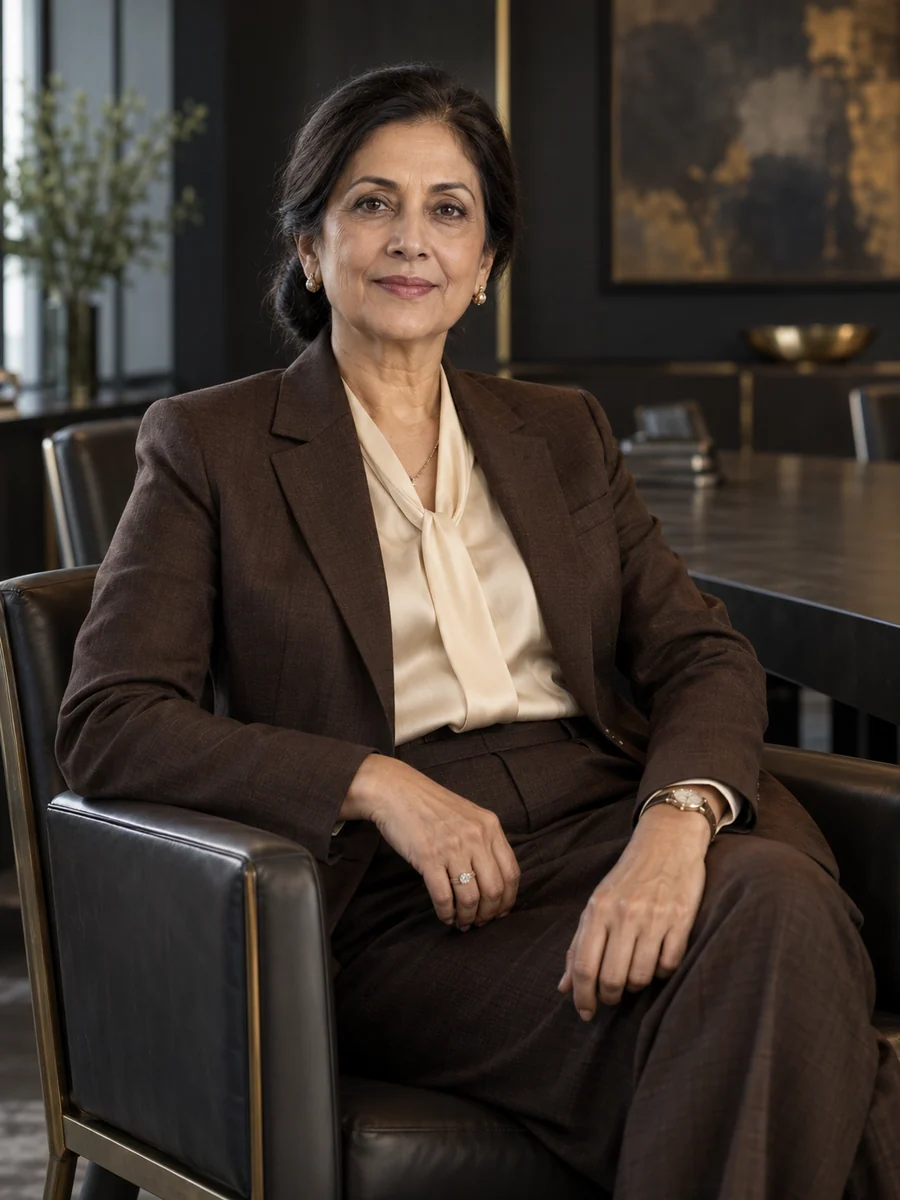
In my own words
I judge a maintenance programme by the operating responsibility it leaves behind. The calendar, the technical finding and the commercial account each tell part of the story. My work is to bring those accounts together without allowing a preferred date to settle a question that properly belongs to a qualified specialist. A difficult explanation today is better than a completion claim that the next operating period cannot support.
Aparna Vardekar
Career
Chapters of accountability
2020 — present
Chief Operating Officer
Varnedra Energy
I lead 980 operating colleagues across four 300 MW units, with a ₹480 Cr FY 2026–27 non-fuel expense delegation and six direct reports.
2013 —2019
Generation Operations Director
Varnedra Energy
I coordinated a growing fleet and challenged spare suitability and overlapping maintenance commitments. This was a functional employment title, not a statutory directorship.
2006 —2013
Station Maintenance Manager
Varnedra Energy
I managed maintenance at one 600 MW station and owned a support-scope reduction that required additional callout and standby expense.
1999 —2006
Outage Coordination Manager
Iravela Power Services
I coordinated specialist attendance, material and supplier commitments while retaining technical decisions with the responsible engineers.
1992 —1999
Service Engineer
Iravela Power Services
I began in an eight-person service team, learning to connect work records with the next task without claiming operating or release authority.
Education
Formation
- Bachelor of mechanical engineeringTavishan Institute of Technology1992
Working languagesEnglish · Hindi · Marathi