File sectionThe person behind the perspective
I learned to look beyond the tidy employment number.
My first insurance job concerned the records behind employment, not the promises inside a policy. I completed an industrial-relations degree at the fictional Montserac College in May 1991 and joined Corvellan Mutual in June. I maintained personnel information, answered routine questions and prepared material for more experienced colleagues. The work taught me that an administrative answer could be technically consistent while still leaving an employee unable to understand what would happen next. I learned to explain the decision and recognise when I lacked authority to make one.
In September 1997 I moved into a people-adviser role supporting claims teams. I spent more time with supervisors whose work was shaped by incoming events they could not fully predict. A staffing plan could look sufficient in aggregate and still leave a particular team without the experience needed for difficult conversations. I began to see the difference between counting employees and understanding the work they were expected to carry. Claims managers owned the technical decisions; my task was to understand the employment consequences without pretending to become a claims specialist.
One early lesson concerned temporary support. I initially treated a request for additional people as a recruitment problem. The receiving team needed something more specific: colleagues who knew which questions they could answer, who could supervise them and how unfinished work would return to the permanent team. Hiring alone did not resolve those requirements. I became more interested in the arrangements around a role, including the time a supervisor needed to help someone perform it. That interest later shaped my approach to both reward and organisational change.
I joined Vaurenne Assurance in January 2005 as director of reward and people planning. The move took me from supporting a business function to examining decisions that affected several parts of an insurer. I worked with finance and operating leaders on pay, workforce proposals and the assumptions used in planning. I was not responsible for the company’s premium volume or investment assets. My delegated expenditure covered the work of my own function. Keeping those scopes separate helped me make more precise arguments about the choices for which I was actually accountable.
In 2008 I supported an attendance measure that looked administratively simple. It did not adequately distinguish different approved working arrangements. A review of 73 disputed records led us to correct 28 and explain the remaining 45, with CAD 84,000 of corrective administration and supervisor support. I had accepted an overly neat comparison before understanding the underlying records. The lesson was not that measurement should stop. It was that a comparable number requires a defensible account of what has been compared, particularly when it affects an individual employment judgement.
My appointment as vice president of people and organisation in July 2012 brought a wider remit. I worked on the division of responsibilities between central functions and service teams, including a 2016 consolidation involving 138 employees. We retained a bilingual service capability that the first plan had assumed could be absorbed immediately elsewhere. The revised arrangement cost more and left some efficiencies for a later stage. I learned to distinguish a structural change announced on an organisation chart from a service capability that had actually been transferred and supported.
I became CHRO in January 2020. The role required me to connect employment choices with the decisions taken by the executive team, while preserving the responsibilities of claims, underwriting, risk and compliance colleagues. In 2021 we revised a claims reward pilot because an individual speed measure could pull against the judgement required in a complicated file. We did not abandon service expectations. We changed the way an employee’s reward was determined and kept the technical assessment with the people qualified to make it. I could explain the people decision without claiming to have resolved every customer-service question.
The 2023 workload response and 2024 digital redesign tested the same discipline in different circumstances. One required paid relief and a plan for work that continued while employees took recovery time. The other required acknowledging that automated document handling had not removed the conversations and exceptions surrounding it. In both cases, I had to support a more expensive arrangement than the initial proposal. I also had to resist a favourable story that attributed broad operating results to a people intervention for which the evidence was narrower.
Today I lead 58 people colleagues through five direct reports. Vaurenne’s 2,900 employees and CAD 2.18 billion of 2025 gross written premium describe the employer; CAD 12.6 million of delegated 2026 function expense describes my financial remit. I report to Claire Vaudrisse and present people matters to the board and its remuneration committee as an executive. I hold no directorships. A future board role would require learning a different institution and contributing to collective oversight. I would bring practical questions about the work behind an insurance promise, together with an understanding of where my experience ends.
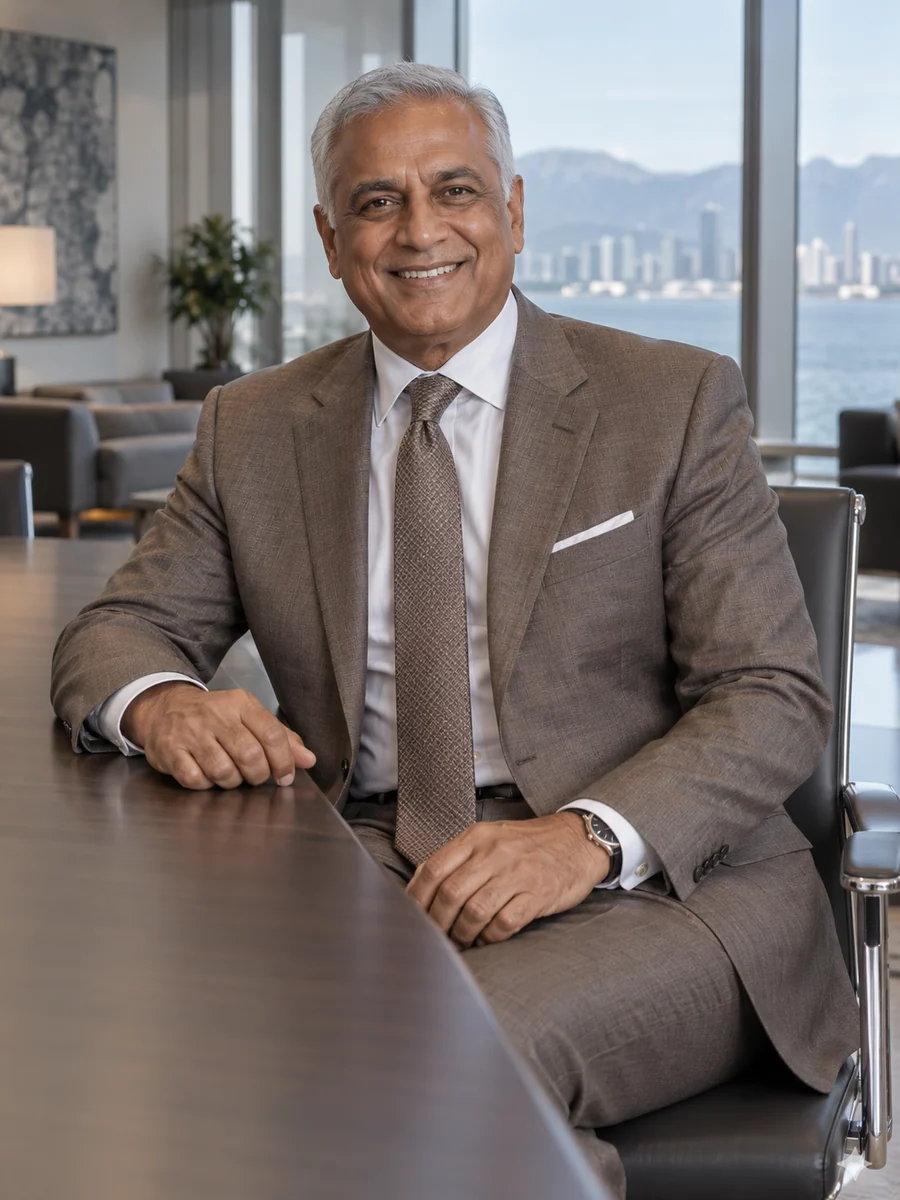
In my own words
I want an insurer’s expectations of employees to agree with its commitments to customers. A colleague should not have to choose between the judgement the work requires and the result the performance system rewards. My responsibility is to help make that tension discussable, and to change the employment arrangement when a better instruction alone would leave it intact.
Samuel Bellerive
Career
Chapters of accountability
Jan 2020 — Present
Chief Human Resources Officer
Vaurenne Assurance
I connect employment decisions with the work behind insurance service. My remit covers 58 people colleagues and CAD 12.6 million of annual function expense.
Jul 2012 — Dec 2019
Vice President, People and Organisation
Vaurenne Assurance
I examined the capability behind proposed structures, including a service consolidation that retained a defined bilingual support team rather than assuming an immediate transfer.
Jan 2005 — Jun 2012
Director, Reward and People Planning
Vaurenne Assurance
I learned to question apparently comparable employee measures after an attendance review exposed differences the initial report had removed.
Sep 1997 — Dec 2004
People Adviser, Claims
Corvellan Mutual
I worked alongside claims supervisors to understand staffing requests, local employment decisions and the supervisory capacity around temporary support.
Jun 1991 — Aug 1997
Personnel Administrator
Corvellan Mutual
I began with employment records and routine enquiries, learning the difference between an administratively consistent answer and an explanation an employee could use.
Education
Formation
- Degree in industrial relationsMontserac College1991
Working languagesEnglish · French